


Healthiest Baby Formula





Healthiest Baby Formula: European Organic Options
With so many baby formulas available, knowing what separates a high-quality option from the rest can feel overwhelming. Once you understand what to look for on the label, finding the healthiest baby formula becomes a clear, manageable decision. At Organic Formula Europe, we believe every baby deserves a clean start built on full transparency about what goes into every tin.
European Organic Certification Standards
A truly healthy formula goes beyond the ingredient list. It starts with how the milk is sourced, how the farming is done, and the standards governing every step of production. European organic baby formulas are made under some of the world's strictest food-safety and agricultural standards.
Certification limits or prohibits synthetic pesticides, artificial preservatives, added sugars, routine antibiotics, growth hormones, and GMOs. These rules span the entire supply chain, from how animals are raised and fed to how the finished powder is packaged.
Additives common in American formulas, including artificial sweeteners, corn syrup solids, and synthetic growth hormones, are not allowed. A significant share of the milk must come from organically raised cows or goats, typically pasture-raised on land kept free of chemical pesticides and fertilizers.
Milk from grass-fed animals differs meaningfully from conventional milk. Beyond sourcing, the healthiest options also prioritize ingredient quality, from the carbohydrate type and fat blend to nutrients chosen for their role in infant nutrition under European feeding standards.
Trusted European Organic Formula Brands
Leading European producers like HiPP, Holle, and Kendamil have crafted organic infant nutrition for decades. Their reputations rest on consistency, transparency, and a dedication to infant wellbeing that spans generations.
That long tradition of careful sourcing and ingredient quality is one of the most compelling reasons families around the world trust European formulas over conventional alternatives.
Organic and Biodynamic Farming Practices
Choosing organic formula is also a choice about the kind of farming you support. European organic methods emphasize soil health, animal welfare, biodiversity, and reduced chemical inputs, preserving land and natural resources for future generations.
Holle's Demeter certification goes further still, covering biodynamic farming practices that exceed standard organic requirements. For many of the brands we carry, sustainability is a core part of how they operate, from farm management through to packaging choices, rather than a marketing message.
Key Ingredients in Organic Baby Formula
Understanding the core ingredients of an organic formula helps you make a confident, informed choice. Here is what matters most when comparing the healthiest organic options.
Organic Milk Base: Cow and Goat Options
The milk source is the foundation of any infant formula. Certified organic cow or goat milk comes from animals raised without synthetic hormones or routine antibiotics, in line with European standards.
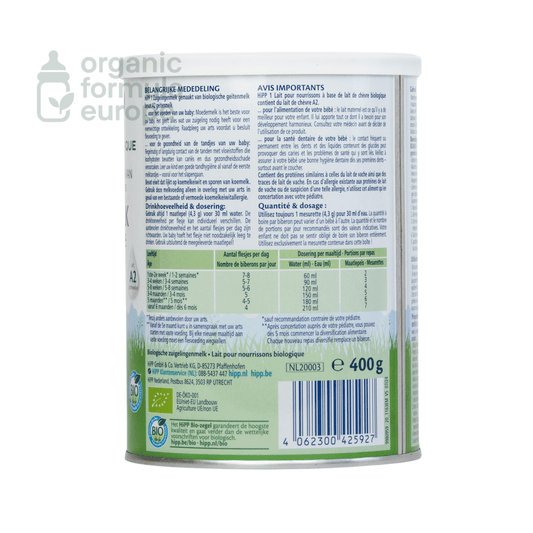
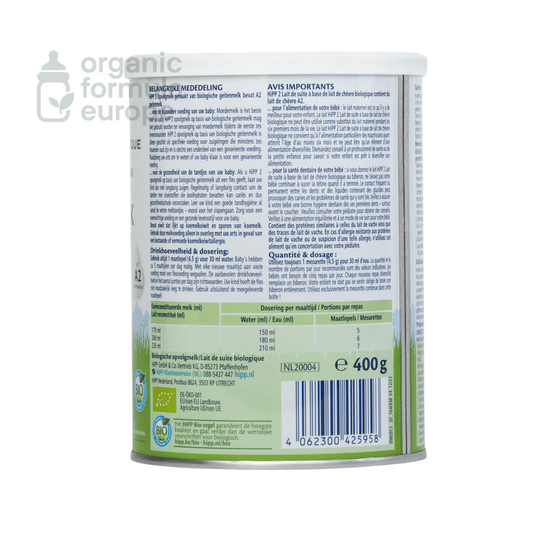
Goat milk has a naturally different protein structure, with A2 casein as its primary beta-casein, and some families find caprine milk easier for their baby to digest. Explore our Organic Goat Milk Formula or cow milk options to compare.
Carbohydrate and Fat Sources
European formulas follow established infant nutrition guidelines. The fat blend usually combines vegetable oils chosen for their fatty-acid profiles, while the main carbohydrate is lactose, the primary sugar in breast milk. Lactose-based formulas are a cleaner choice than those using alternative sweeteners. Kendamil also uses whole milk, adding natural milk fat alongside plant oils, not only reconstituted skimmed milk.
Vitamins, Minerals, and Nutrients
Organic European formulas include vitamins and minerals, such as A, D, K, and C, plus zinc, copper, and magnesium, at levels set by regulatory guidelines to support general development. Many also add prebiotics like GOS for a balanced gut, and DHA, an omega-3 recognized for its role in infant nutrition. These additions are purposeful and grounded in European formula standards.
Stage-Based Nutrition by Baby's Age
A major strength of European formula is its stage-based system. Rather than one recipe from birth through the toddler years, brands create distinct stage recipes tailored to a baby's changing needs, so feeding stays aligned with each phase of development.
- Stage 1 for newborns and young infants up to about six months.
- Stage 2 typically from around six months, once solids are introduced.
- Stage 3 and 4 for older babies and toddlers as activity increases and diets expand.
Always consult your pediatrician before moving between stages or changing your baby's feeding routine, since individual needs vary, especially for sensitive babies.
Shopping for Formula at Organic Formula Europe
Every baby is unique, and what suits one family may not be the right fit for another. The best approach is to start with a formula that matches your baby's age and milk preference, whether cow or goat, then watch how your baby responds over the first days and weeks.
If you have concerns about digestion, feeding patterns, or wellbeing, speak with your pediatrician before making changes, since a professional can offer guidance based on your baby's specific needs. At OFE, we offer a curated selection of clean formulas sourced exclusively from trusted European organic brands and delivered to your door.
Frequently Asked Questions
What is the healthiest baby formula available?
The healthiest options are typically certified organic, free from artificial additives, synthetic pesticides, and added sugars, and made under rigorous safety standards. European formulas from HiPP, Holle, and Kendamil consistently meet these criteria. Look for lactose as the primary carbohydrate, an organic milk base, and a balanced blend of fats and nutrients aligned with recognized feeding guidelines.
What makes European organic formula different from conventional formula?
European organic formulas follow strict standards covering how cows or goats are raised and what the final product may contain, in line with EU regulations. Conventional formulas may include corn syrup solids, artificial preservatives, or milk from animals raised with synthetic hormones, all of which European organic rules prohibit. The result is a cleaner, more transparent product.
Is organic baby formula better than non-organic baby formula?
Organic formula offers certified organic ingredients, no synthetic pesticides, no GMOs, and no artificial additives. Whether it is right for your baby depends on your family's values, your baby's needs, and your pediatrician's guidance. For parents who prioritize ingredient transparency and clean sourcing, European organic formula, especially palm-oil-free options, is widely considered an excellent choice.
Can I switch from breast milk to a European organic formula?
Many families use European organic formula alongside breastfeeding or as a full feeding solution when breastfeeding is not possible or not chosen. These formulas provide complete infant nutrition in line with European guidelines. When transitioning or introducing formula for the first time, consult your pediatrician on timing, quantities, and what to expect.
How do I know which European infant formula stage is right for my baby?
Stages are built around age-based needs: Stage 1 for newborns, Stage 2 from around six months, and Stage 3 and beyond for older babies and toddlers. Each has a formulation tailored to that phase of growth. Your pediatrician is the best resource, especially if your baby was born early or has specific nutritional needs.
Are European organic baby formulas safe to order online for use in the United States?
Yes. The formulas sold through Organic Formula Europe are genuine, properly sourced products from certified manufacturers, and all comply with European food-safety standards for infant nutrition. For questions about storage, preparation, or your local water supply, check the formula instructions and your healthcare provider.
What is the difference between organic goat milk and organic cow milk baby formula?
Both provide a nutritious base. Goat milk has a different protein composition, with A2 casein as the primary beta-casein, that some families find suits their baby well. Both are available in certified European versions formulated to the same nutritional standards. Speaking with your pediatrician is always the most reliable first step.
European Baby Formula Brands
-

HiPP Formula
HiPP Formula, Organic European Infant Nutrition from Birth to Toddler For more...
-

Holle Formula
Confused About Holle Formula? Start Here There’s no shortage of options when...
-

Kendamil Formula
Kendamil Formula, British Whole Milk Infant Nutrition Choosing the right formula is...


