


Organic Goat Milk Formula

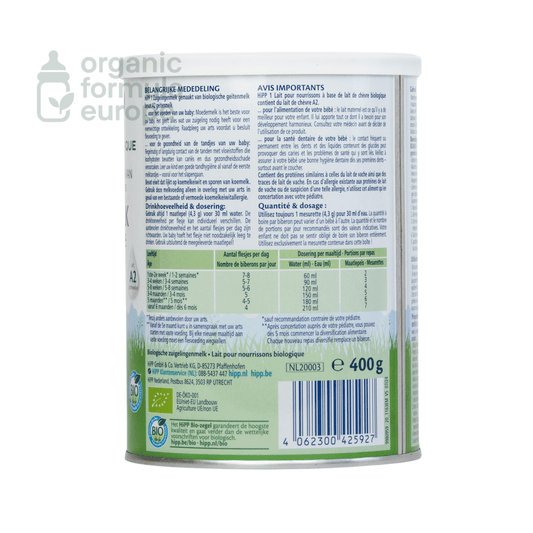

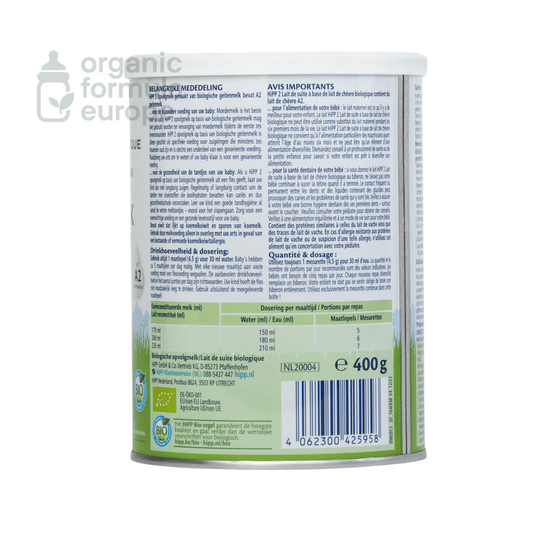

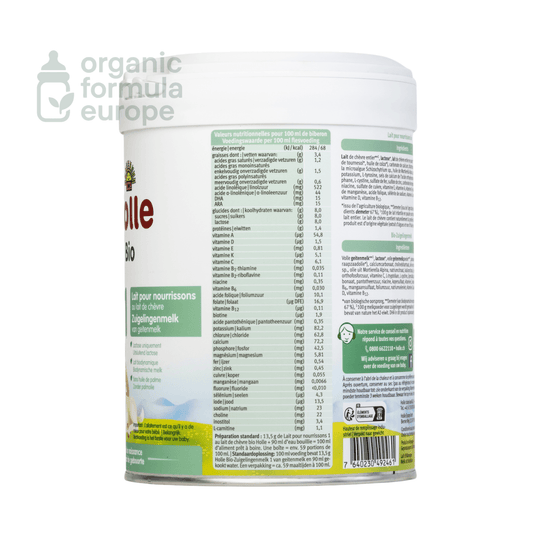









Organic Goat Milk Formula EU Certification Standards
The word organic means something specific in the context of European baby formula. EU organic certification bans GMOs and synthetic pesticides across the entire supply chain, including the pastures where the goats graze, the feed they eat, and the production facilities where the formula is made.
This is a stricter standard than US organic regulations and it applies to every tin of organic goat milk baby formula we sell.
At Organic Formula Europe, every product we carry is sourced directly from verified European suppliers. We do not work through intermediaries, which means you receive authentic formula that has been stored and handled correctly from the moment it leaves the European facility to the moment it arrives at your door.
Parents who choose organic goat milk formula are not just opting for a different protein source. They are choosing a product made under a farm management philosophy that prioritizes soil health, animal welfare, and the absence of synthetic chemical inputs throughout the system.
Organic Goat Milk Baby Formula Brands
Three leading European brands each bring a distinct approach to organic goat milk formula.
- HiPP is a family-owned brand with over 125 years of history in organic farming. Its goat milk range carries EU organic certification and is formulated with prebiotics to support digestive comfort. The range covers Stage 1 from birth and Stage 2 from around six months.
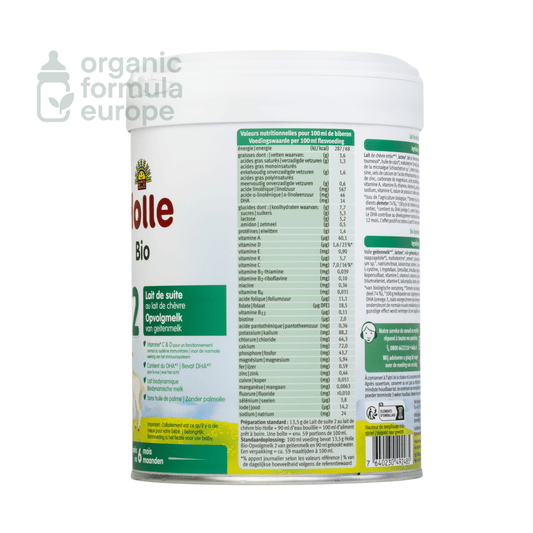
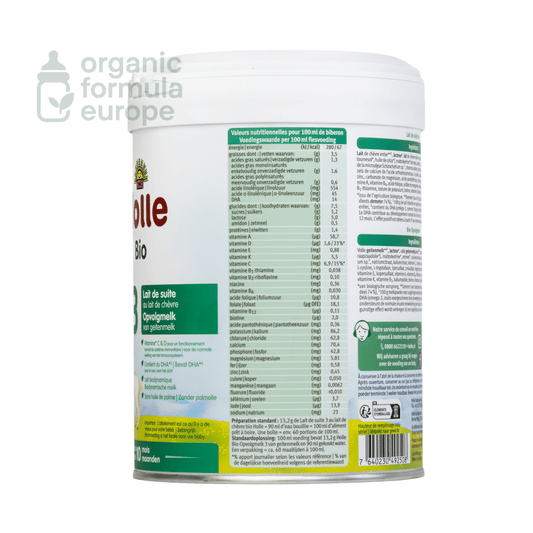
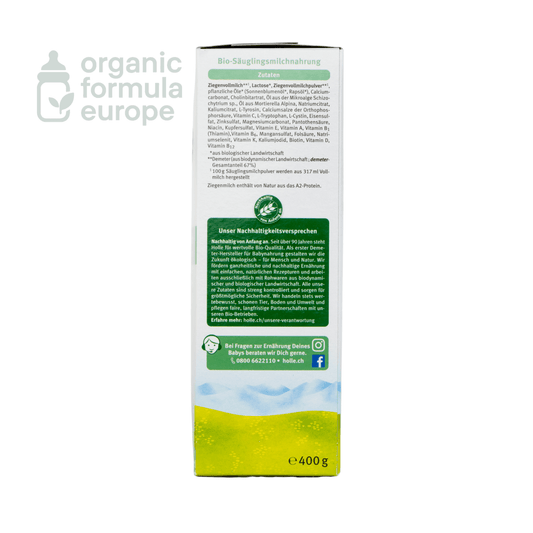
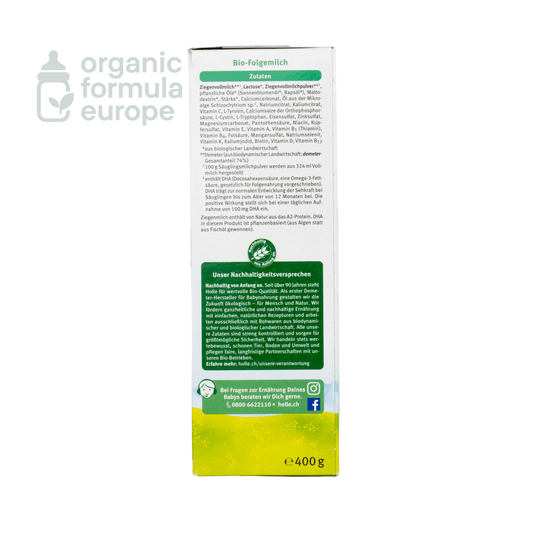
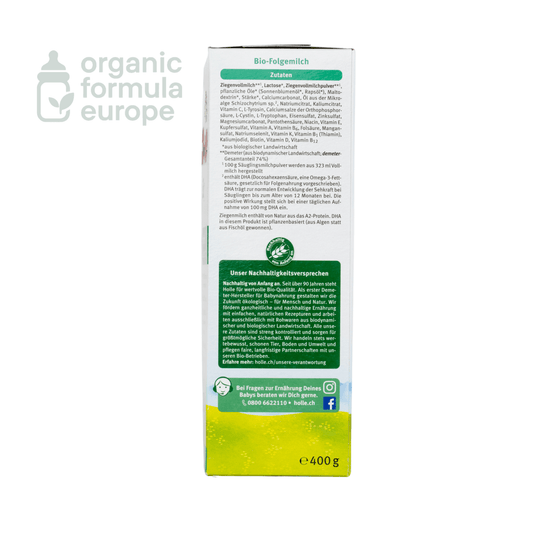
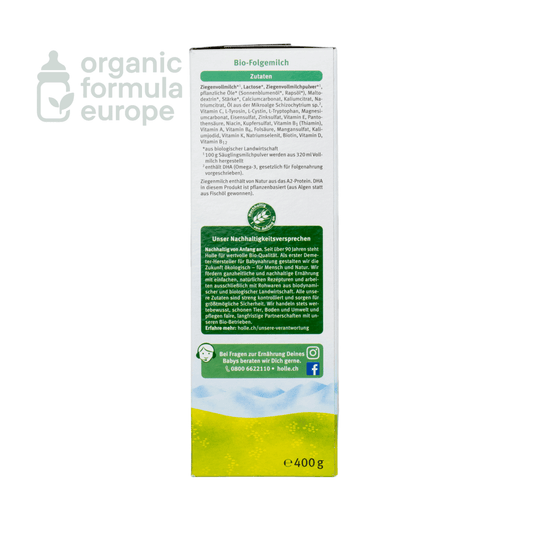
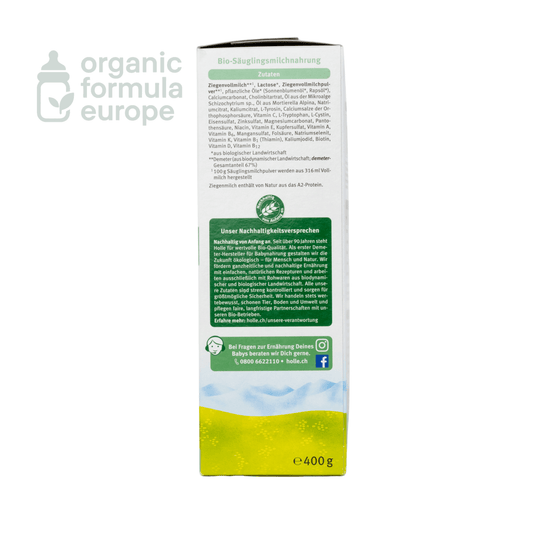
- Holle is a family-owned company headquartered in Riehen, Switzerland, with manufacturing in Germany and over 90 years of experience. It stands out for Demeter biodynamic certification, the gold standard in organic agriculture, which covers soil health, biodiversity, and animal welfare in ways that standard certification does not.
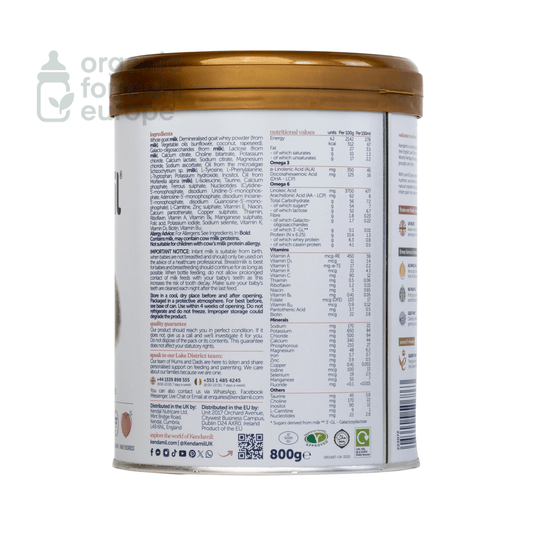
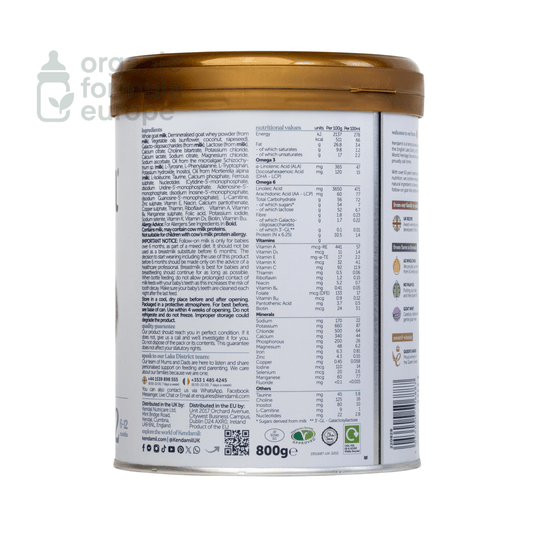
- Kendamil takes a distinct approach, using whole goat milk rather than skimmed milk and deliberately excluding palm oil. It sources DHA from marine algae rather than fish oil, making it a popular choice for parents who want a whole-milk-based product with a clean ingredients philosophy.
Organic Goat Milk Formula Ingredients and Sourcing
Organic goat milk infant formula starts with caprine milk from goats raised on certified organic pastures. The goats are not given synthetic hormones or routine antibiotics, and their feed must meet strict organic standards.
Goat milk is naturally higher in A2 beta-casein protein compared to standard cow milk, and forms softer curds that some parents find gentler on their baby's digestion.
Kendamil goat milk formula sources its DHA from marine algae rather than fish oil, while HiPP uses a prebiotic blend to further support gut health. The result in each case is a complete infant nutrition product that meets all EU standards for the relevant age stage.
One thing that unites all three brands is transparency about sourcing. Each company publishes information about its farming partners, certification auditors, and production standards.
Organic Goat Milk Infant Formula vs Non-Organic
Choosing an organic goat milk infant formula over a non-organic version adds a meaningful layer of assurance about what your baby is not getting. Non-organic formulas may use milk from farms that allow synthetic feed additives, pesticide residues on feed crops, or GMO feed. Organic certification eliminates those risks at the source.
The brands on this page go through annual audits and third-party verification to maintain their certifications, so the label is not just marketing language. It represents a documented and independently verified commitment to farming and production practices held to a high standard.
The cost difference between organic and non-organic goat milk formula is real, and it is worth acknowledging. Certified organic production is more expensive. But for parents who are prioritizing ingredient transparency and clean sourcing for their infant's first food, that premium reflects genuine differences in how the product is made.
Organic Goat Milk Formula and Sensitive Digestion
One reason many families seek out organic goat milk formula is the perception that it is gentler on digestion. Goat milk naturally forms smaller, softer curds in the stomach compared to cow milk, which may support easier digestion for some infants.
It is also naturally higher in A2 beta-casein, a protein type with a favorable whey-to-casein ratio associated with easier tolerance in some research.
That said, goat milk formula is not the same as a hypoallergenic formula. If your baby has been diagnosed with a cow's milk protein allergy, goat milk is not a safe swap without speaking to your pediatrician first, because cross-reactivity is possible.
For general tummy sensitivity without a confirmed allergy, your doctor may also suggest exploring sensitive baby formula options alongside the organic goat milk range.
Organic Goat Milk Formula Stages
The European organic goat milk formulas we carry cover every stage of your baby's first years. Stage Pre and Stage 1 are designed from birth for newborns and young infants. Stage 2 begins around six months as solids are introduced.
Stage 3 starts around ten to twelve months as a follow-on formula. Toddler formulas support children from twelve months onward alongside a varied diet.
Not every brand offers every stage in their goat milk line, so browsing by brand is helpful if you want to stay consistent across the first year and beyond. Visit our goat milk infant formula page for first-year options or our goat milk toddler formula page for older children.
Your pediatrician is your best partner in deciding when to move between stages and whether organic goat milk formula is the right long-term choice for your child's nutritional needs.
Frequently Asked Questions
What is organic goat milk formula
Organic goat milk formula is an infant formula that uses caprine milk certified to EU organic standards as its protein and fat base. EU organic certification bans GMOs and synthetic pesticides throughout the supply chain, from the farm to the finished tin, and requires annual third-party audits.
Which brands make organic goat milk formula
HiPP, Holle, and Kendamil all produce certified organic goat milk formulas available at Organic Formula Europe. HiPP is a family-owned German brand with over 125 years of history. Holle is headquartered in Riehen, Switzerland and holds Demeter biodynamic certification. Kendamil uses whole goat milk with no palm oil.
Is organic goat milk formula better than regular goat milk formula
Organic certification guarantees that the goats are raised on pesticide-free, non-GMO feed and that no synthetic additives enter the supply chain. For parents who prioritize clean ingredients, certified organic formula provides an independently verified assurance that a non-organic product simply cannot match.
Can I use organic goat milk formula from birth
Yes. Stage Pre and Stage 1 organic goat milk formulas from HiPP and Holle are designed for use from birth. Always verify the stage on the tin matches your baby's age and consult your pediatrician if you have any questions about starting or switching.
Is organic goat milk formula safe for babies with cow's milk allergy
Goat milk formula is not hypoallergenic. Babies with a diagnosed cow's milk protein allergy may still react to goat milk due to shared protein structures. You must consult your pediatrician before switching to any goat milk formula if an allergy has been confirmed.
Do you ship organic goat milk formula to the US
Yes. Organic Formula Europe ships authentic European organic goat milk formula directly to the United States. We source from verified European suppliers to ensure every order is genuine and arrives in perfect condition, with no gray market middlemen.
What does EU organic certification mean
EU organic certification bans GMOs, synthetic pesticides, and synthetic feed additives across the entire supply chain. It requires annual third-party audits and covers the farms, the animals, and the manufacturing process, setting a higher standard than US organic rules.
European Baby Formula Brands
-

HiPP Formula
HiPP Formula, Organic European Infant Nutrition from Birth to Toddler For more...
-

Holle Formula
Confused About Holle Formula? Start Here There’s no shortage of options when...
-

Kendamil Formula
Kendamil Formula, British Whole Milk Infant Nutrition Choosing the right formula is...


