


Holle Formula












Confused About Holle Formula? Start Here
There’s no shortage of options when it comes to feeding your baby. Some people swear by goat milk, while others swear by cow’s milk formulas. And maybe your hoity-toity friend says you need to decode formula ingredients like you’re cramming for a final exam. Meanwhile, you’re just trying to find a formula for your little one.
That confusion is a big reason why so many US parents search for Holle formula. This European milk powder is known for its organic standards and stage-based options, making it a go-to for parents who want a more thoughtful approach to organic baby formula.
But once you start comparing Holle goat milk formula to cow’s milk options - not to mention picking the right stage for your baby - shopping can get overwhelming, fast. Check out this guide to learn what Holle formula actually is, what’s in it, and how to pick the right formulation for your baby.
What Is Holle Formula?
If you’ve spent any time researching organic baby formula, you’ve probably seen Holle pop up again and again, and not by accident. Holle is one of the best-known European formula brands and has been making organic infant formula for decades.
Holle organic formula designs milk formula for different ages and feeding stages, from newborns to toddlers. So, whether you’re expecting a baby soon or just want an age-appropriate formula for a one-year-old, Holle provides clear guidance on where to go.
You might also see parents call these products “Holle bio formula” or “Holle bio.” In Europe, “bio” simply means organic. The big upside to Holle’s formulas is that they’re made to meet strict EU organic standards.
Another reason parents gravitate toward Holle infant formula is that the brand offers flexibility without complicating things. You can find Holle milk formula made with cow’s milk, plus goat’s milk formula options for families who prefer a different milk base.
Put simply, Holle is a popular option because it checks a lot of boxes for stressed-out parents. If you’re not happy with what’s available at your local supermarket, Holle makes organic baby nutrition accessible for your family.
What’s In Holle Baby Formula?
When parents look at a formula label, they’re usually asking a pretty simple question: “What am I actually feeding my baby?” Fair question. And with Holle baby food, the approach is straightforward: give babies the nutrition they need without adding a bunch of unnecessary additives.
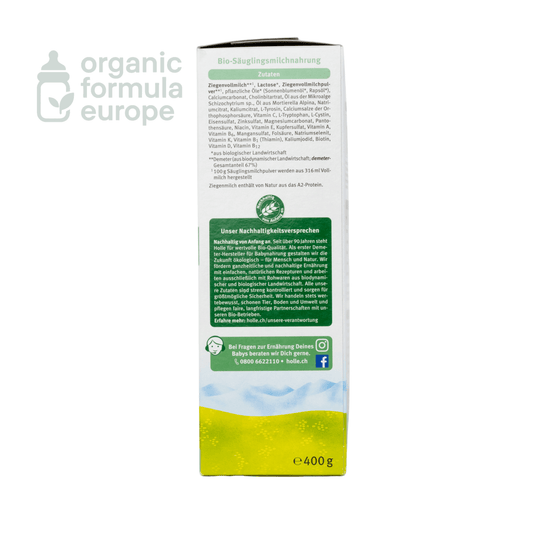
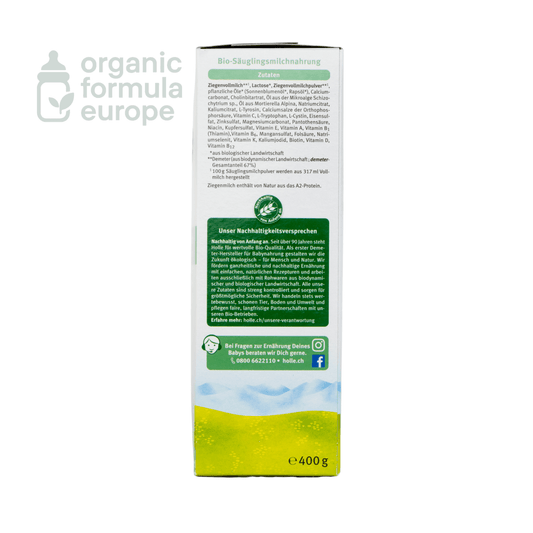
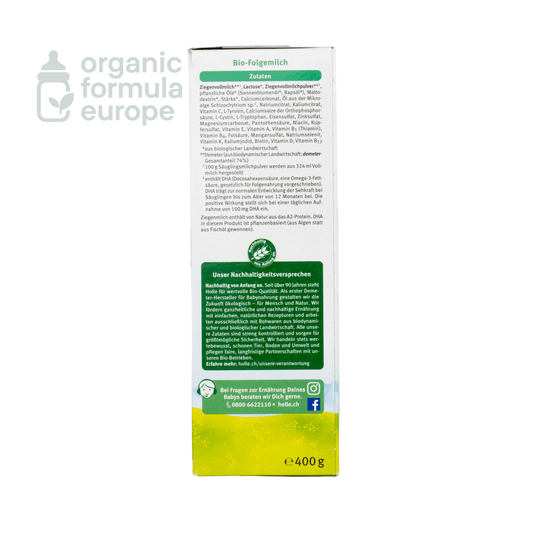
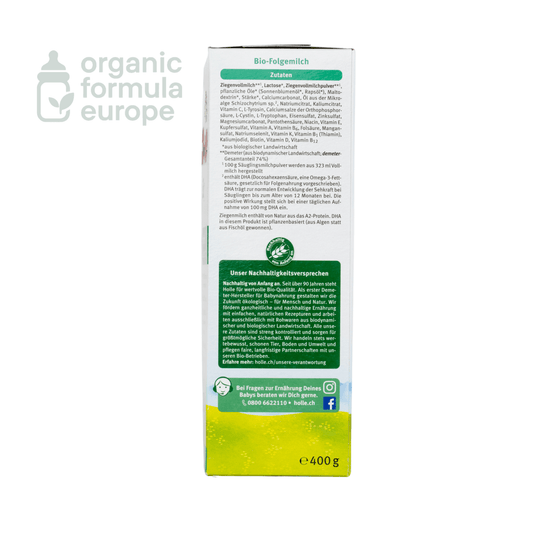
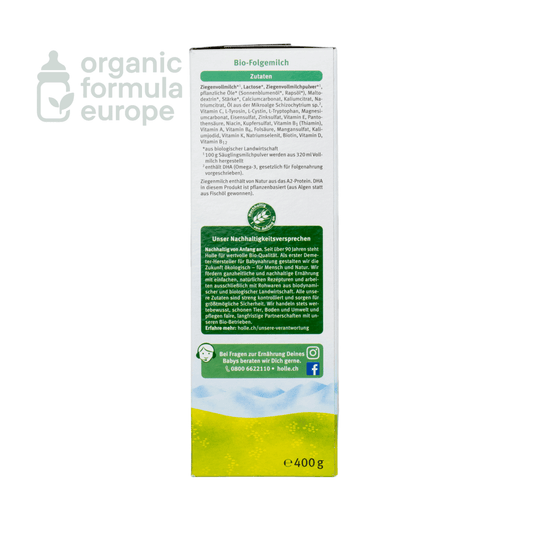
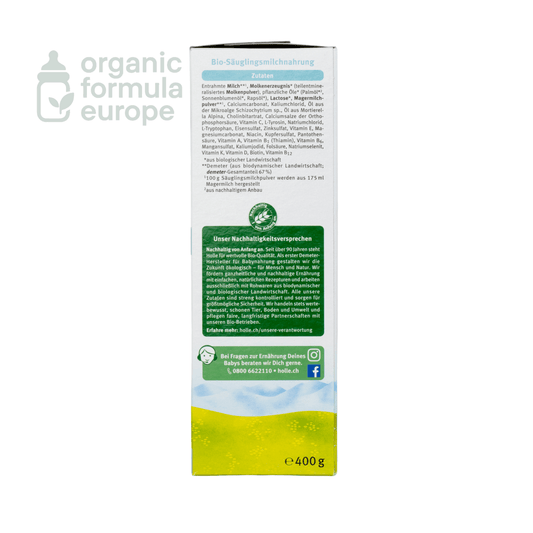
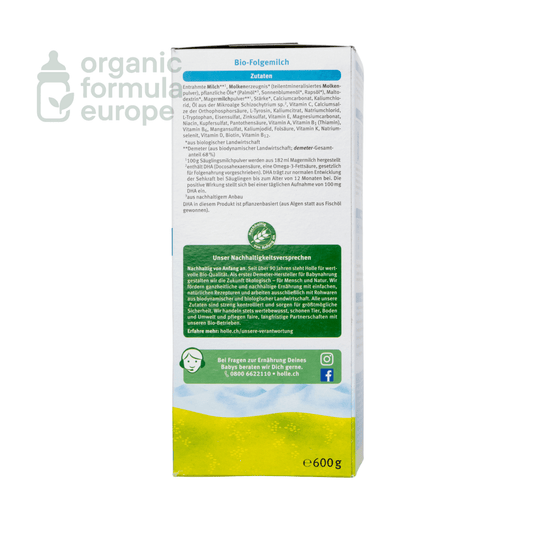
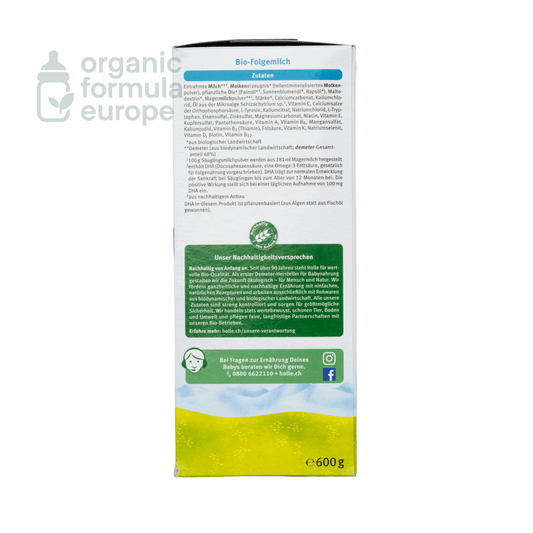
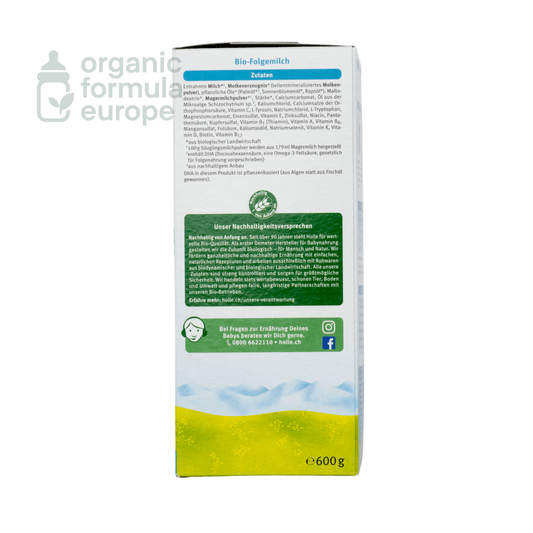
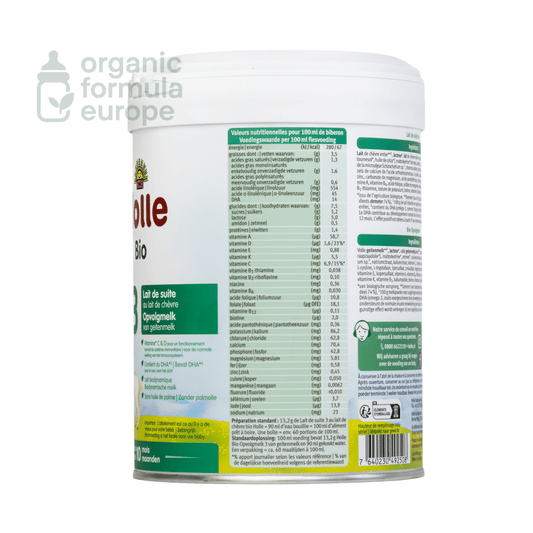
Holle formulas contain an organic milk base from cows or goats, depending on the product, and many formulas use ingredients sourced from biodynamic, Demeter certified farms. Skimmed milk is usually the main ingredient, but you might also see organic whey powder added at some stages. For the goat line they use whole goat's milk as a base. All Holle products are free from GMOs, artificial preservatives, colors, and flavors.
This formula also includes a blend of organic vegetable oils to provide essential fats. Depending on the line, you might see fat sources like organic sunflower oil, organic rapeseed oil, or organic palm oil. Note that the goat milk formulas are palm-oil-free. These fats matter because they help support everything from brain development to the absorption of fat-soluble vitamins.

From there, the ingredient list includes the vitamins and minerals your baby needs for healthy growth. Holle formulas include nutrients like vitamins A, D, and E, along with minerals such as iron, calcium, zinc, and magnesium.
Holle Cow Milk vs Holle Goat Milk Formula
Deciding between cow or goat milk can feel like a surprisingly loaded decision. The good news is that both Holle cow and Holle goat milk formulas are made to meet strict European nutrition standards.
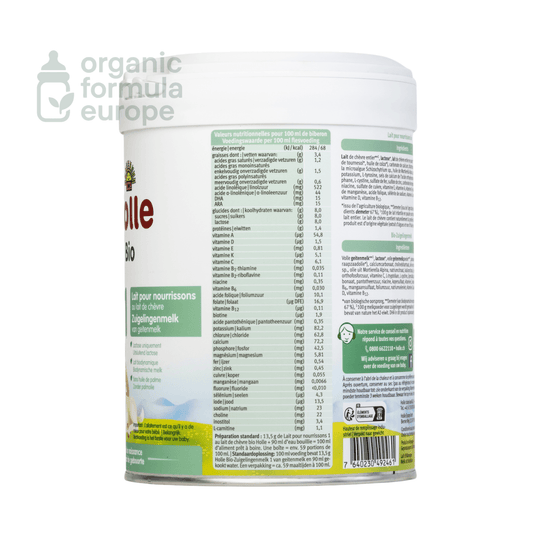
The biggest difference between the two is the milk base. Holle goat milk formula uses organic whole goat milk powder as its primary ingredient, while the cow option uses (you guessed it) organic cow’s milk.
On a molecular level, goat and cow milk are built differently, and that can affect your baby’s digestion. Goat milk has a different protein structure than cow’s milk, naturally smaller fat globules, and less alpha-s1 casein.
Some babies tolerate goat milk a little better, so if your little one struggles at mealtime, ask your pediatrician if a goat milk formula could be a good option to explore. Goat milk formulas are not suitable for babies with a confirmed cow's milk protein allergy.
For the goat milk line Holle offers a 400 g German version as well as a 800 g Dutch version. Both versions are very similar in terms of ingredients, nutritional composition, and quality standards.
Choosing The Appropriate Holle Stage For Your Baby
Picking a Holle formula stage can feel weirdly high-stakes when you’re juggling feeding times and naps. Fortunately, Holle has a straightforward formula stage system to help you match a general age range and feeding phase for your baby:
-
Holle Pre: This is best for babies from birth. Pre formula is nutritionally complete, but you can also use it as a supplement to breast milk.

-
Holle Stage 1: Stage 1 is also suitable from birth. Like Pre, it is lactose-based with no added starch; the main difference from Pre is the vitamin/mineral profile.
-
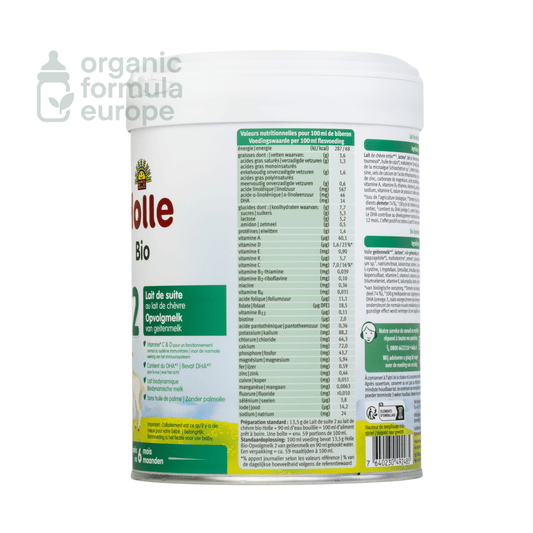
Holle Stage 2: Usually introduced around six months, Stage 2 is for babies who eat some solids and are ready for a follow-on infant milk formula.
-
Holle Stage 3: Designed for babies ten months and older, Holle formula Stage 3 includes nutrition for babies who are eating more solids.
-
Holle Stage 4: This later formula stage is intended for toddlers. It’s a great option if you want to continue with Holle organic baby formula beyond infancy as your little one transitions to table foods.
However, remember that these stage guidelines are just rules of thumb. There’s no one-size-fits-all feeding journey for all babies. When in doubt, consult your pediatrician to pick the best Holle formula stage option for your child.
At the end of the day, choosing the right infant formula is less about finding a single “perfect” option and more about finding what works best for your baby’s unique needs. If you’re deciding between Holle baby formula stages or deciphering formula ingredients, Organic Formula Europe is here to help. Browse our selection of pre-vetted European formula brands to get reliable, organic formula delivered right to your door.
Explore the Holle Range
Holle offers formulas across all stages. Holle Pre formula and Holle Formula Stage 1 are labeled for use from birth, Holle Formula Stage 2 from six months, and Holle Formula Stage 4 from twelve months. The lineup includes the Holle German formula version, and our Holle formula in the USA overview lists every Holle product available in our store.
Frequently Asked Questions
Is Holle formula suitable for newborns?
Yes! You just have to use the right stage. Holle Pre and Holle Stage 1 are both suitable for newborns. Chat with your pediatrician to find the best option for your baby.
Are Holle formulas free from GMOs and artificial additives?
Yes. Holle formulas are made without genetically modified ingredients and don’t contain artificial flavors, artificial colors, or synthetic preservatives.
Can I switch between Holle cow milk and goat formula?
Some families make the switch, but you need to do it thoughtfully. It can take a few weeks for your baby’s tummy to adjust to a new formula, so it’s best to make the switch after consulting with your pediatrician, just to be safe. That’s especially true if you suspect food allergies or sensitivities.
How should I store and prepare Holle formula?
Store Holle formula in a cool, dry place like a pantry, not a refrigerator. Once you open it, you should use it within two to three weeks, depending on the container’s instructions. Always follow the directions on the package. It’s tempting to eyeball measurements when you’re exhausted, but prepared formula really does need the correct powder-to-water ratio. That ensures your baby gets the nutrition the formula is supposed to provide.
European Baby Formula Brands
-

HiPP Formula
HiPP Formula, Organic European Infant Nutrition from Birth to Toddler For more...
-

Holle Formula
Confused About Holle Formula? Start Here There’s no shortage of options when...
-

Kendamil Formula
Kendamil Formula, British Whole Milk Infant Nutrition Choosing the right formula is...


