



Holle BIO Formula












Inside Holle Bio Formula: What Parents Should Know Before Buying
Choosing an organic baby formula can feel like doing research for a college thesis while running on two hours of sleep. Every brand promises it has the best ingredients, and you’re somehow expected to figure out the best choice.
If you’re looking into Holle Bio formula, you’re probably trying to answer a few simple questions: What makes it different? Which stage should I choose?

Check out this guide to learn why US parents are choosing Holle Bio formula, what it contains, and clear English preparation instructions.
Why American Parents Choose Holle Bio Formula
Choosing a formula can feel overwhelming, especially when you just want something you can trust. Many parents choose European formula brands because they keep things simple, not to mention the emphasis on organic ingredients.
While there’s no such thing as the “perfect” formula for all babies, more American parents are choosing options like Holle Bio formula for several reasons:
-
Straightforward organic ingredients: Holle Bio baby formula meets strict European organic standards. For many parents, that means fewer unnecessary additives and a cleaner ingredient list compared to other options.
-
Eco-friendly farming: Some Holle products come from Demeter-certified farms that follow organic and biodynamic methods. These farms focus on animal welfare, soil health, and sustainable farming.
-
Simple stages: European formulas include a simple staging system to remove the guesswork of infant nutrition. The range moves clearly from Holle Bio Pre formula for babies from birth through later formula stages. Instead of switching brands, you can move through the Holle stages as your baby grows.
-
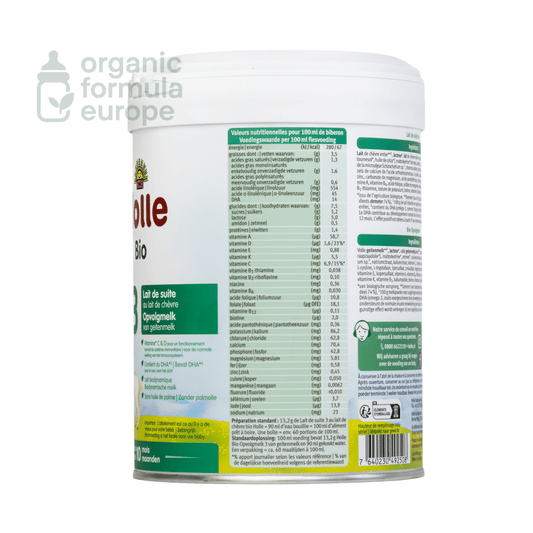
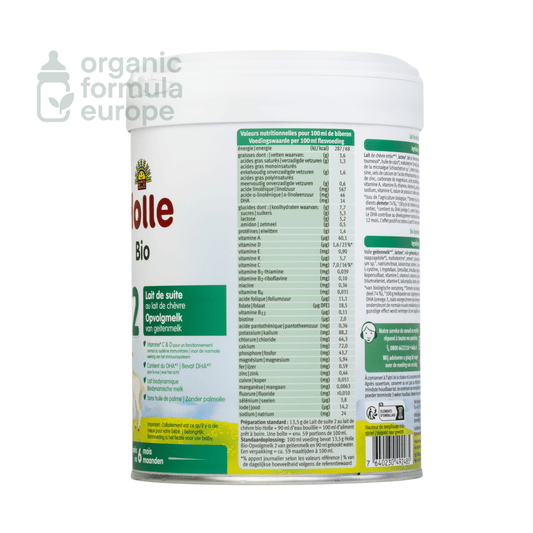
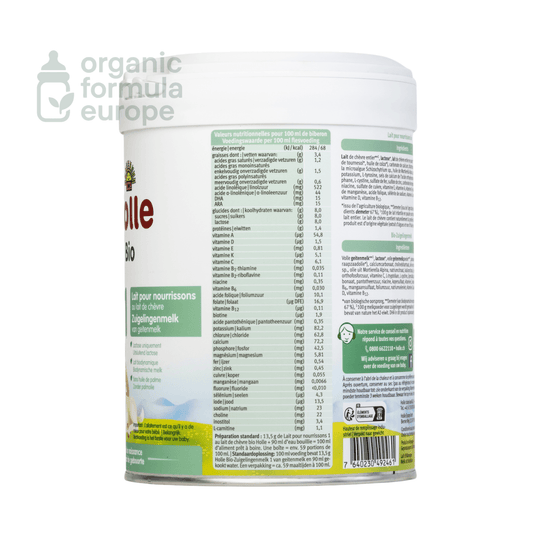
Ingredient transparency: Holle formulas contain nutrients needed for normal growth and development, including key vitamins and minerals. Ingredients like organic lactose, milk powder, and carefully selected oils help create a balanced infant formula that aligns with European nutrition standards.
Ultimately, parents often choose Holle Bio formula because it's reliable and trustworthy. Clear labeling, consistent stages, and organic sourcing make everyday bottle prep feel a little less stressful.
What’s Actually Inside Holle Bio Formula?
Let’s break down what’s actually inside Holle Bio formula, so you know what you’re looking at (and why it’s there).
-
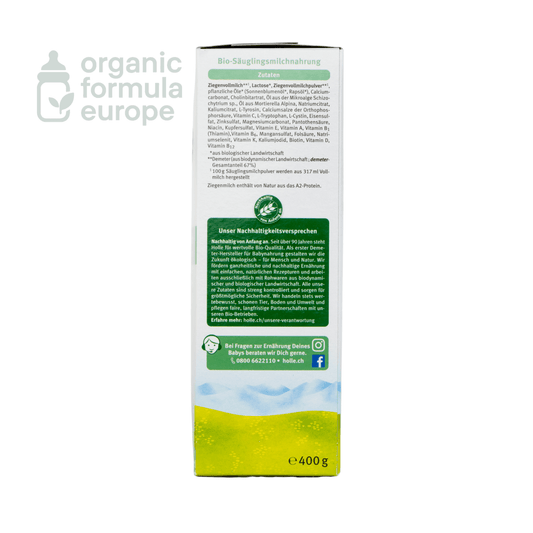
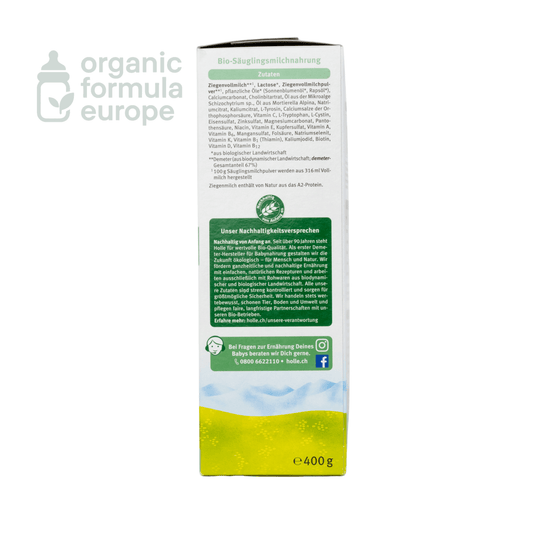
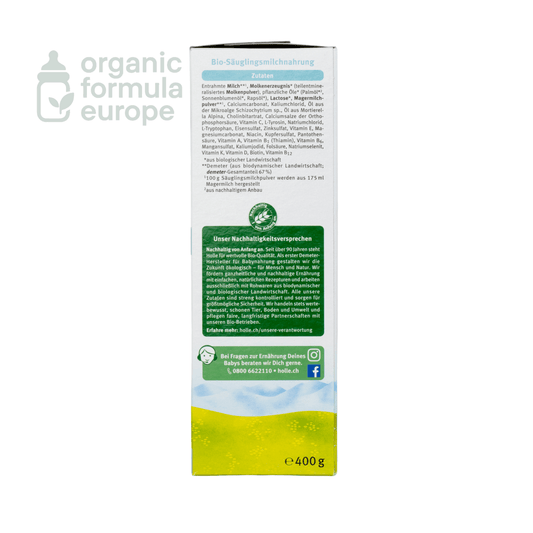
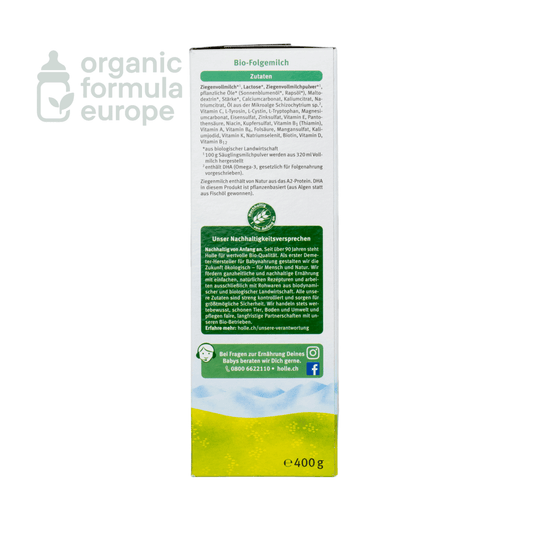
Cow or goat milk: One of the first things you’ll probably notice is that Holle offers both cow milk formula and goat milk formula options. Cow milk formulas typically use organic skim milk and whey powder, along with lactose and a blend of organic vegetable oils. Goat milk formulas use full-cream goat milk, which naturally contains A2 protein. Some parents prefer a goat milk formula, but it's worth knowing that goat milk is not hypoallergenic and is not suitable for babies with a diagnosed cow's-milk protein allergy. If you're unsure which base is right for your baby, talk to your pediatrician.
-
Fat sources: You’ll see ingredients like organic sunflower oil, organic rapeseed oil, and sometimes organic palm oil, which help create a fat profile that babies need for energy and development.
-
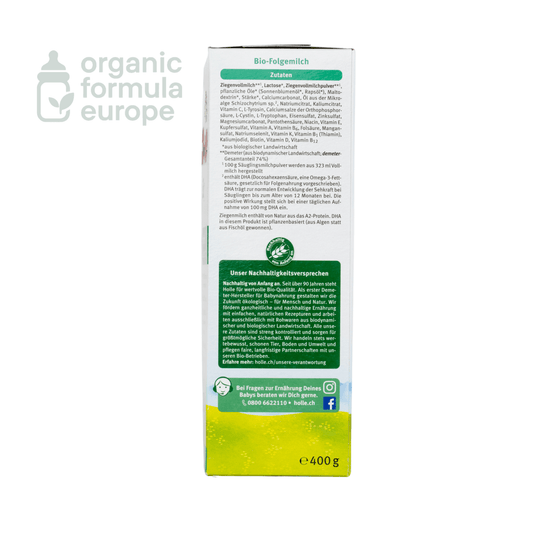
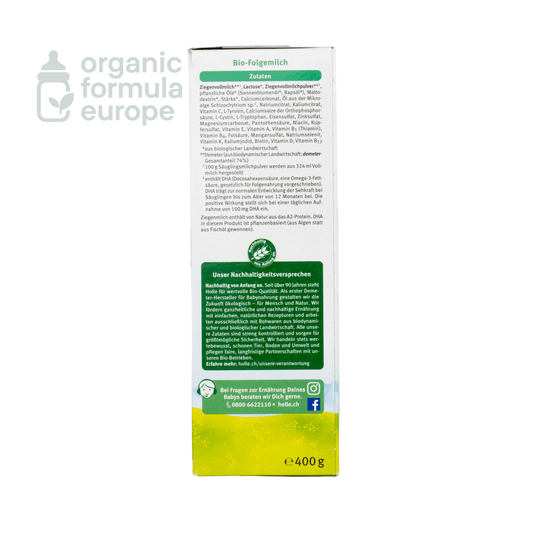
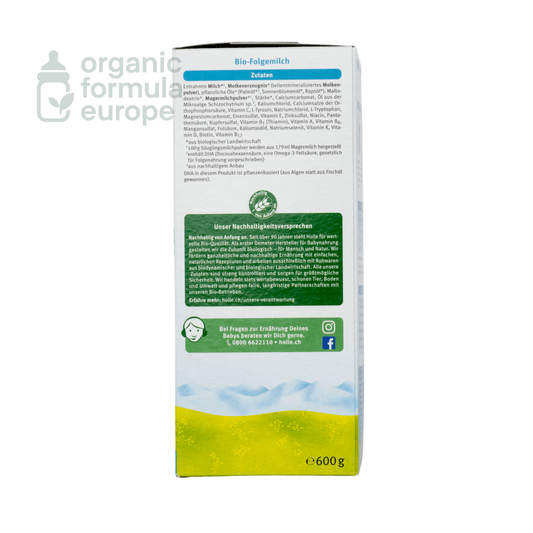
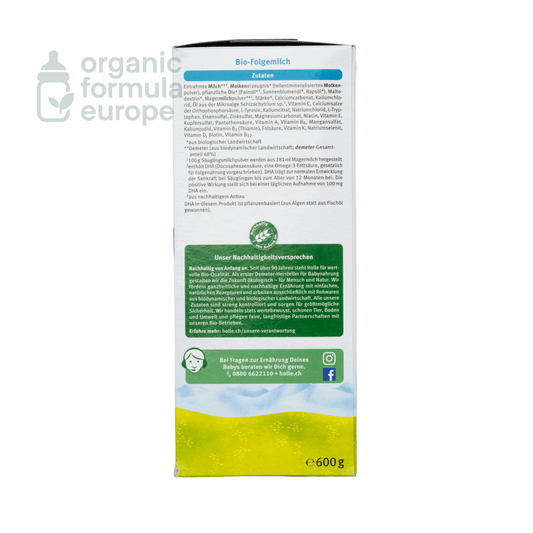
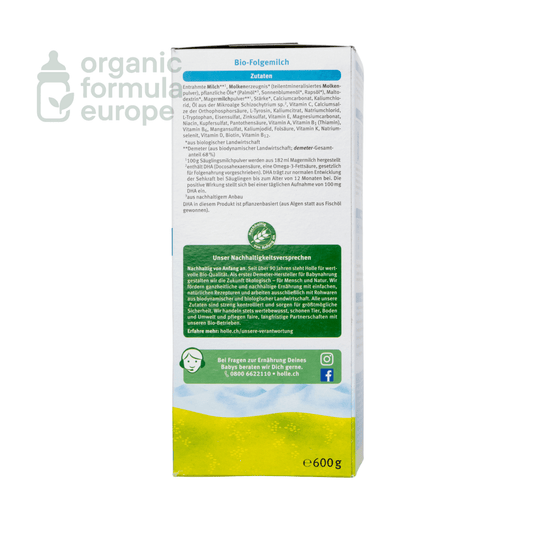
Vitamins: Like all regulated infant milk formulas, Holle includes key vitamins and minerals required for infant nutrition. You’ll also notice DHA (an omega-3 fatty acid) sourced from microalgae. On the label, it’s listed as oil from the microalgae Schizochytrium. This is included to meet European nutrition requirements for infant formulas.
What’s not included in Holle organic formula is just as important as what it includes. You won’t typically find:
-
Artificial flavors
-
Artificial preservatives
-
Unnecessary additives

Instead, the focus is on organic ingredients and clear labeling.
Understanding Holle Formula Stages
One of the things parents appreciate most about Holle Formula is that the stages are clearly laid out. But let’s be real: labels like “Pre,” “1,” and “2” don’t mean much when you’re figuring out this parenting thing. Here’s the simple, easy-to-skim breakdown of how the Holle Bio formula stages work.
-
Holle Bio Pre formula: This formula is suitable for babies from birth. Pre formula is designed to be as straightforward as possible, which is why many parents start with Holle Bio Pre.
-
Stage 1: Holle Bio Stage 1 is also suitable from birth. Like Pre, lactose is its only carbohydrate, with no added starch or maltodextrin. Added starch is introduced only from Stage 2 onward.
-
Stage 2: Most parents move to Stage 2 after introducing some solids, usually at the six-month mark. Instead of using formula as a sole source of nutrition, Stage 2 is used along with baby food.
-
Stage 3: Around 10 months, babies move to Stage 3 formula. It’s more of a nutritional supplement at this stage rather than a complete meal.
- Stage 4: Holle Stage 4 is a toddler milk suitable from around 12 months, used alongside a varied family diet.
Keep in mind that the available stages differ by line: the goat range runs from Pre through Stage 4, while the cow range starts at Stage 1. Choose the line that suits your baby and move through its stages as they grow.
Holle Bio Formula Instructions (English Preparation Guide)
If you’ve ever looked at a formula tin and wondered, “Wait… am I doing this right?”, you’re not alone. Parents frequently search for Holle Bio formula instructions in English, especially since some packaging may be printed in German or Dutch. Here’s how to prepare Holle Bio formula:
-
Sterilize: Wash your hands thoroughly before preparing the bottle. Sterilize bottles, nipples, and all feeding equipment.
-
Prepare the water: Boil fresh drinking water and let it cool to the temperature stated on your Holle tin (around 122°F/50°C). Pour the amount of water specified in the feeding table into the bottle.
-
Add formula: Add the exact number of level scoops of Holle Bio formula powder using the scoop provided in the tin. Always follow the feeding table for your specific Holle Bio formula stage to ensure the correct water-to-powder ratio. Close the bottle and shake well until the formula fully dissolves.
-
Test the temperature, then feed: Check the temperature on your wrist before feeding. It should feel lukewarm, not hot. Feed immediately after preparation whenever possible. If your baby doesn’t finish the formula, discard it. Never reuse unfinished formula.
Safety note: Powdered infant formula is not sterile. The CDC recommends preparing it with water at around 158°F/70°C to reduce the rare risk of Cronobacter infection, which is most serious for newborns and babies with weakened immune systems. The temperature on your tin may be lower, so follow your tin's instructions and ask your pediatrician if you're unsure.
If you’re looking for authentic Holle Bio formula, clear English instructions, and guidance on choosing the right stage for your baby, explore the full range at Organic Formula Europe. You’ll find trusted European formulas, helpful resources, and everything you need to feel more confident at feeding time.
Frequently Asked Questions
What’s the difference between Holle Bio Pre formula and Stage 1?
Both Holle Bio Pre and Stage 1 are suitable from birth, and on the carbohydrate side they are essentially the same: lactose is the only carbohydrate in both, with no added starch or maltodextrin. Added starch is introduced only from Stage 2 onward.
Are Holle Bio formula instructions available in English?
Yes. While some tins may include German or Dutch labeling, Holle Bio formula instructions in English are available through trusted retailers like Organic Formula Europe. Always follow the preparation instructions on your specific tin to ensure correct mixing.
Does Holle Bio formula contain DHA?
Yes. All stages of Holle Bio formula include DHA, an omega-3 fatty acid required under European infant formula standards. The DHA used in Holle formulas comes from microalgae, which is a plant-based source.
How should I store Holle Bio formula?
After opening the formula, keep the tin tightly sealed and store it in a cool, dry place like a pantry, not in your refrigerator. Avoid storing it near heat or direct sunlight. Always use the formula within the timeframe listed on the packaging (usually three weeks). Always check the expiration date before use and never use formula from a damaged tin.
Can I combine Holle Bio formula with breast milk?
Yes. But you may want to prepare breast milk and formula separately so you don’t waste breast milk if your baby doesn’t finish the bottle. If you’re mixing feeding methods, your pediatrician can help you create a plan that works best for your baby.
Can I switch between Holle formula stages?
Yes. The Holle formula stages are designed to follow your baby’s development, usually moving from Pre or Stage 1 to Stage 2 and Stage 3 as you introduce solids. Transitions don’t have to happen overnight. Many parents switch gradually to help their baby adjust.
European Baby Formula Brands
-

HiPP Formula
HiPP Formula, Organic European Infant Nutrition from Birth to Toddler For more...
-

Holle Formula
Confused About Holle Formula? Start Here There’s no shortage of options when...
-

Kendamil Formula
Kendamil Formula, British Whole Milk Infant Nutrition Choosing the right formula is...


