


Organic Milk for Babies





Organic Milk for Babies
Organic milk for babies starts with one fundamental principle. The cows or goats producing the milk are raised on certified organic farms, grazed on pastures free of synthetic pesticides and chemical fertilizers, and never fed genetically modified livestock feed.
What the animals eat directly influences the quality of the milk they produce and, in turn, what your baby receives in every feed.
The organic certification symbol on a European formula label carries real weight. European organic standards are widely recognized as among the most thorough in the world, governing how farms operate, how animals are cared for, and how each formula is produced.
When you browse Organic Formulas from trusted European infant formula brands, you are exploring a curated collection that represents decades of commitment to quality. For parents who want clarity and confidence when choosing a baby formula milk, this transparency is everything.
Beyond organic certification, all infant formulas sold within Europe must contain a strictly regulated set of nutrients to support a baby's growth and development, whether the formula is organic or conventional. Organic formulas achieve this while using ingredients sourced under cleaner, more natural conditions.
Organic Cow Milk vs. Goat Milk Formula
The first decision parents face is whether to choose a formula made with cow's milk or goat's milk. Both are widely used in European organic infant nutrition and come with distinct nutritional profiles and characteristics.

Organic Cow Milk Formula: Familiar and Calcium-Rich
Cow milk formula is the most commonly used base in European infant nutrition. It is naturally rich in protein, fat, and calcium. Whole milk sourced from organically grazed cows tends to have a richer nutritional profile than its conventionally raised counterpart, contributing to a cleaner and more natural composition in the finished formula.
Parents in the United States often prefer cow milk formula simply because it is more familiar than goat milk in North American feeding culture. For most babies, a cow milk-based organic formula is a perfectly gentle and complete option. Many of the most trusted European brands have been producing high-quality versions for generations, with careful attention to ingredient sourcing and manufacturing transparency.
Organic Goat Milk Formula: A Popular Alternative for Sensitive Tummies
Organic goat milk formula has grown significantly in popularity among parents in the United States seeking an alternative that may be more comfortable on tender tummies. Goat's milk naturally contains smaller fat globules and a different protein structure compared with cow's milk, both of which can ease digestion.
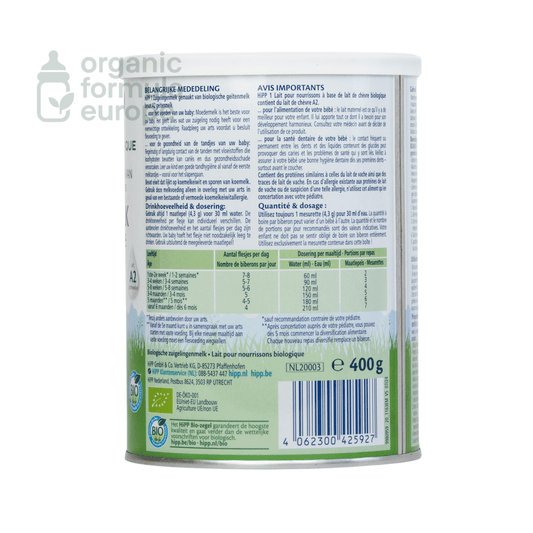
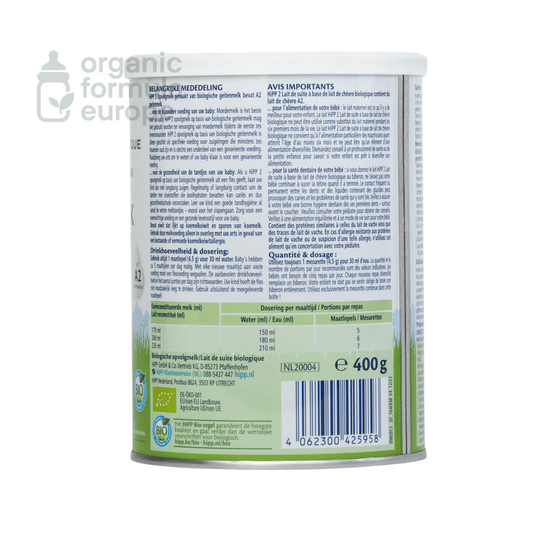
For families curious about exploring organic goat milk formula options: European brands producing these products apply the same rigorous organic standards as their cow milk counterparts, ensuring the goat milk is sourced from organically raised animals on certified farms, like those used by HiPP and Holle.
When weighing the two milk types, discuss the options with your pediatrician, particularly if you are considering a switch, to find the best fit for your individual baby.
Why European Organic Certification Sets These Formulas Apart
Not all organic labels carry the same weight. European certification frameworks require that a meaningful percentage of agricultural ingredients are certified organic, with full traceability from farm to can. This means you can know where the milk comes from, how the animals were kept, and what standards govern every step of production.
Beyond certification, European formulas are subject to strict regulations on what may and may not be included. Synthetic additives, unnecessary fillers, and artificial preservatives that appear in some non-European products are not permitted under EU frameworks. The result is a cleaner, more transparent ingredient list that many parents find reassuring.
European producers also place a strong emphasis on sustainable and ethical farming. The farms supplying milk to organic formula brands are typically small to mid-sized operations where animal welfare is central to land management. Choosing a formula from brands like Kendamil, HiPP, or Holle means supporting a model of farming that is kinder to the environment.
Formula Stages and Your Baby's Evolving Nutritional Needs
European organic formulas for babies are structured into developmental stages that reflect a growing infant's changing needs. A newborn has different requirements from a six-month-old, who in turn needs different nutritional support than a toddler.
Stage 1 formulas are designed for babies from birth, using a whey-dominant protein profile that reflects the balance found in early breast milk. As babies grow, introduce solids, and begin weaning, Stage 2 and Stage 3 shift in protein ratios and caloric density to match a baby's evolving dietary intake.
By the toddler phase, Stage 3 and Stage 4 act more as nutritional supplements to a varied diet rather than a primary nourishment source.
Both cow milk and goat milk options are available across multiple stages, from Stage 1 through Stage 3 or 4, so parents can maintain consistency with the milk source their baby tolerates well. Consistency in feeding can be especially valuable for babies who have settled comfortably into a particular formula.
Tips for Choosing the Right Organic Milk Formula
The wide range of options available can feel overwhelming for new parents. A few guiding principles can help you feel more confident in your decision.
Consider the milk source. Both cow and goat milk-based formulas from European organic brands are nutritionally complete and produced under strict organic standards. Your choice may come down to your baby's individual response or your own preference for one over the other.
Match the stage. Always select a formula that aligns with your baby's current developmental stage to ensure they receive the appropriate nutrients, vitamins, and minerals for their age.
Check the ingredients. Organic formulas tend to have clean, recognizable ingredient lists. Lactose — the carbohydrate that naturally occurs in breast milk — is the main carbohydrate in many organic formulas, though some also use other carbohydrate sources. A short, clearly labeled ingredient list is generally a positive sign.
Consider farming practices. Many European organic brands go beyond minimum certification, investing in biodynamic farming, animal welfare programs, and lower-carbon production. If these values matter to your family, they are worth exploring when selecting a brand.
As always, your pediatrician is your best resource for personalized guidance on which formula type is most appropriate for your baby.
Organic Goat Milk Formula Across Every Stage
European goat milk formula is now available in a full range of stages, from newborns aged 0–6 months through the toddler years for children 12 months and up. Parents who start with a Stage 1 goat milk formula can maintain that consistency right through Stage 3 and Stage 4.
Brands such as HiPP and Holle apply the same certified organic sourcing principles across their goat milk lines: goats are raised on organic pastures, free from synthetic inputs, and milk is processed carefully to preserve its natural nutritional composition while meeting all regulatory requirements.
If you are considering a transition from cow milk to goat milk formula, either to ease digestive discomfort or for personal reasons, do so gradually and observe how your baby settles and grows, alongside the advice of a trusted medical professional.
You can explore the full range of organic goat milk formula collection to compare options across both milk types and all developmental stages.
You may also want to explore our Organic Formula Shop, Kendamil Infant Formula, and Formula for 12 Months and Older collections.
Frequently Asked Questions
What is organic milk formula for babies?
Organic milk formula is infant formula made using milk from organically raised cows or goats on certified farms where synthetic pesticides, chemical fertilizers, and GMO feed are not permitted. The resulting milk forms the base of a nutritionally complete formula that meets all regulatory standards for infant nutrition.
What is the difference between organic cow milk and goat milk formula?
The primary difference lies in the milk composition. Cow milk formula has long been the standard and is familiar to most parents. Goat milk formula uses a different protein structure and fat composition that can be easier to digest. Both types are produced under strict European organic standards and are formulated to provide complete infant nutrition. Which suits your baby best depends on individual response, discuss with your pediatrician.
Is organic whole milk formula better than standard formula?
Organic whole milk formula starts with milk from animals raised under certified organic conditions, generally resulting in a cleaner ingredient profile. That said, both organic and non-organic formulas sold in Europe must meet the same regulatory nutritional standards. The choice of organic is often about ingredient transparency and farming practices as much as nutritional content.
At what age can babies start drinking whole milk instead of formula?
Most pediatric guidelines recommend transitioning from infant formula to whole cow's milk at around 12 months. Before this point, formula remains the appropriate choice as it is specifically formulated to meet a baby's complete nutritional needs. Between 6 and 12 months, as solid foods are introduced alongside formula, the balance gradually shifts, but formula should remain the primary milk source until your baby's first birthday. Always consult your pediatrician before making any changes to your baby's feeding plan.
Are European organic milk formulas safe?
Yes. European organic infant formulas are subject to some of the most rigorous food safety and nutritional standards in the world. Every formula sold legally within Europe must meet strict compositional requirements governing nutrient levels, permitted ingredients, and labeling. Organic certification adds an additional layer of agricultural and sourcing standards on top of this baseline.
Can I switch between cow milk and goat milk organic formula?
Switching between formula types is possible, but it is generally recommended to do so gradually and with pediatric guidance. Every baby is different, and what works well for one may not suit another. Introducing the new formula gradually over several days while monitoring your baby's response, including how they feed, settle, and grow, is a commonly suggested approach. Your pediatrician can advise on timing and pacing.
How do I know which organic milk formula is right for my baby?
The right formula depends on your baby's age, developmental stage, and individual needs. Start with the stage that matches your baby's current age. From there, consider whether a cow or goat milk base feels right for your family, and review the ingredient list to ensure it aligns with your values. If you are unsure, a recognizable, short ingredient list is a helpful positive indicator. Most importantly, speak with your pediatrician if you have any questions or if your baby shows signs of not tolerating their current formula well.
European Baby Formula Brands
-

HiPP Formula
HiPP Formula, Organic European Infant Nutrition from Birth to Toddler For more...
-

Holle Formula
Confused About Holle Formula? Start Here There’s no shortage of options when...
-

Kendamil Formula
Kendamil Formula, British Whole Milk Infant Nutrition Choosing the right formula is...


