


Holle Organic Baby Formula












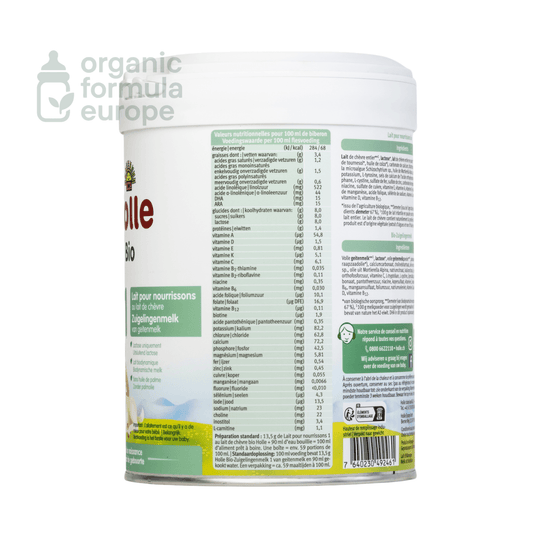
How to Choose Holle Organic Baby Formula for Your Baby
You only want what’s best for your baby. But if you’ve already spent hours researching formulas, you’re probably at your wits’ end. The simplest way forward is to choose a trustworthy option that’s free of unnecessary extras - just the nutrition your baby needs to thrive.
Holle organic baby formula is a popular choice in the EU, but more parents in the US are making the switch to this brand. Learn about Holle’s philosophy for baby food, how this formula differs from conventional options in the supermarket, and how to pick a nutritious milk powder for your baby.
Why Do Some Families Switch To Holle Organic Baby Formula?
A lot of parents aren’t looking for something trendy. They’re looking for a baby formula that’s trustworthy, simple, and a good fit for their baby. More US parents are embracing Holle’s organic infant formula because it’s:
-
Organic: All Holle formulas follow strict organic standards from the EU, which are not automatically the same as the USDA organic rules but just as strict if not even stricter.
-
Flexible: Holle offers both cow and goat milk formula options. Some babies digest goat milk more easily, so it’s helpful to know that there’s an alternative if one formula doesn’t work for your little one.
-
Sustainable: Holle organic products are known for their adherence to biodynamic farming and Demeter standards, which go beyond standard organic certification.
-
Simpler: Many parents like that Holle baby formula is made with an organic milk base and avoids a lot of the extras, like artificial colors and preservatives.
Whether you need a newborn formula, a milk supplement for a rambunctious toddler, or a specialty option for a baby with a sensitive stomach, Holle has something for every feeding journey.
How Does Holle Bio Formula Differ From Conventional Formula?
If you’ve seen websites call this formula “Holle bio,” all that means is that it’s organic. “Bio” is the EU designation for organic.
So, how do Holle's organic options compare to, say, a conventional formula you can get at the grocery store? Is there really that big of a difference?
Absolutely. Here’s how organic formula differs:
-
It only uses organic ingredients: This is the biggest difference. All Holle organic baby formula contains organic ingredients that meet strict European organic standards. If you want a formula produced without conventional pesticides, you may prefer the organic route.
-
It supports natural farming: Are you trying to be more eco-friendly? Holle organic ingredients are produced according to biodynamic farming and Demeter principles, which go beyond standard organic certification. Only their organic toddler milk is not Demeter-certified.
-
It’s stage-based: Like many European brands, Holle has clearly labeled formula stages, which can make it easier to choose the right baby formula for your child.
With that said, fed is best. All regulated infant formula is designed to support babies nutritionally. The difference usually comes down to ingredient sourcing, milk type, and what kind of feeding approach feels right for your family. Ultimately, you and your pediatrician are the experts in what’s best for your child.
What’s in Holle Organic Baby Formula?
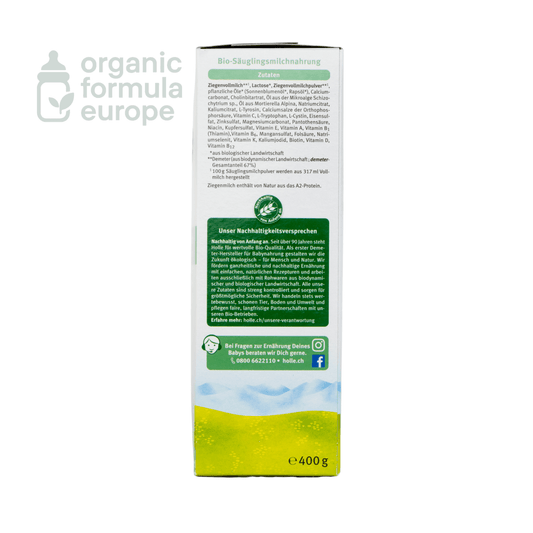
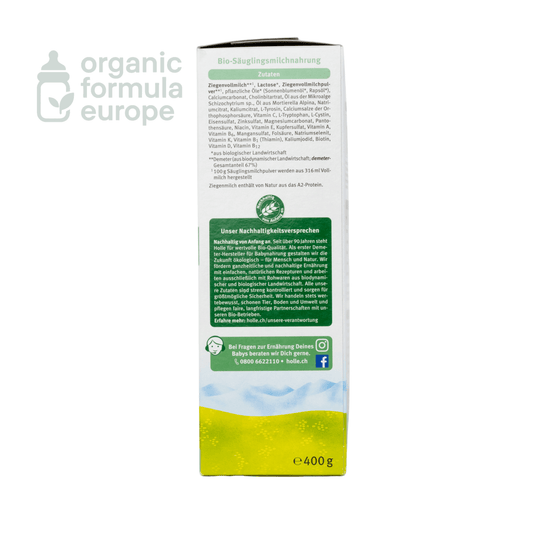
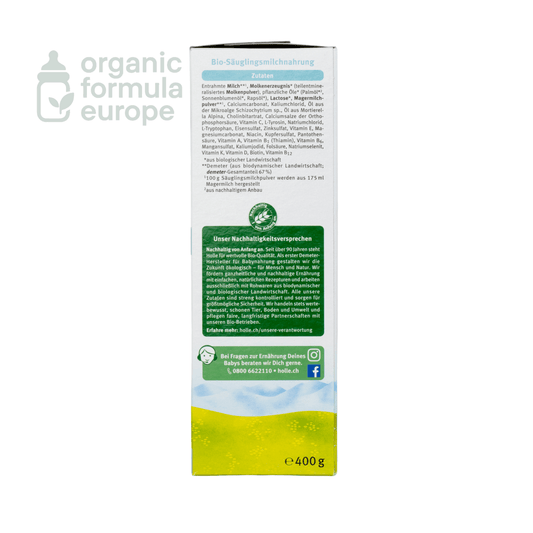
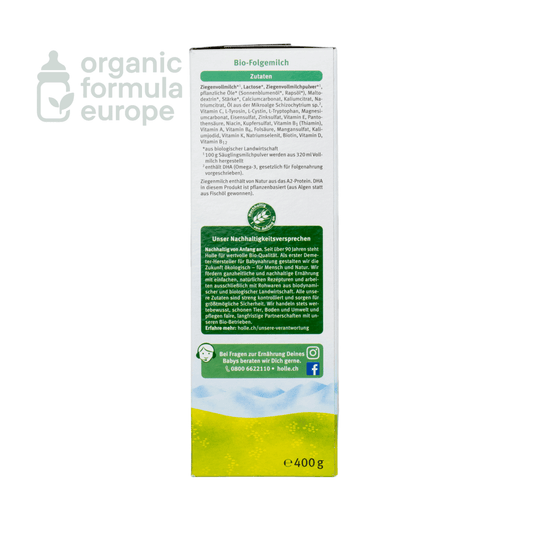
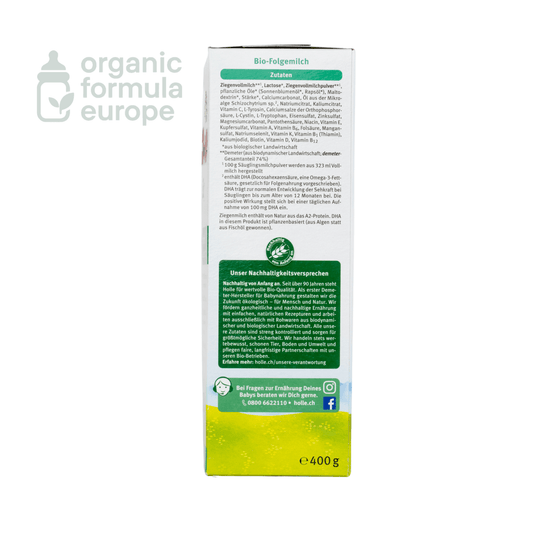
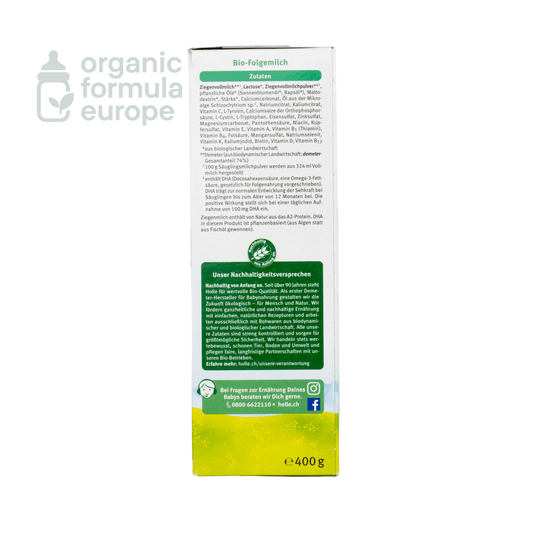
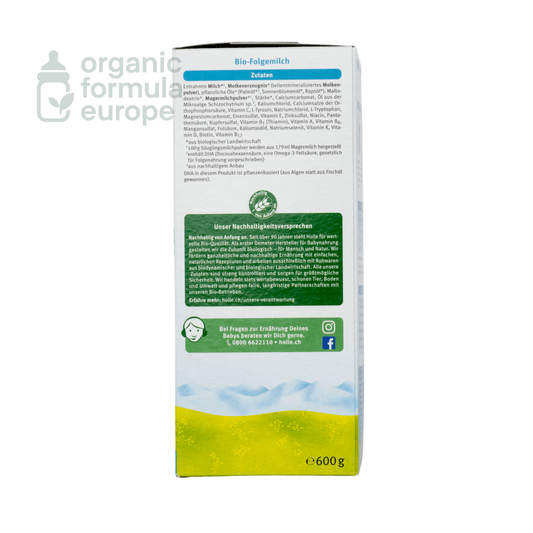
The exact recipe depends on the stage and type, but most Holle baby formula products contain:
-
Organic milk base: Depending on the product, that may be cow milk or goat's milk. In other words, the milk base varies, but quality sourcing is a big part of the brand’s appeal.
-
Lactose: In many Holle organic baby formula options, lactose is the main carbohydrate, which is the same carb found in breast milk.
-
Organic vegetable oils: These help provide important fats that support your baby’s healthy development.
-
Vitamins and minerals: Like other organic infant formulas, Holle Bio products are fortified to support normal growth and development.
-
Stage-specific adjustments: A Stage 1 formula won’t be the same as Stage 2 or Stage 3, because babies’ needs change as they grow.
How To Choose A Trustworthy Formula for Your Baby
Picking a formula can feel overwhelming, but you’ve got this. Just keep these rules of thumb in mind when you’re formula shopping:
-
Start with your baby’s age and stage: A newborn has different needs than an older baby, so look for the right formula stages, whether that’s Stage Pre, Stage 1, Stage 2, or Stage 3.
-
Check the ingredients: Some parents prefer an organic formula with a simple ingredient list and clearly labeled sources for the milk base, fats, and carbohydrates.
-
Look at the milk type: Some babies are fine with cow milk formulas, while others might do better with goat’s milk. Chat with your pediatrician if your baby has regular digestive problems.
-
Find a trustworthy source: If you’re ordering online, make sure the seller is reputable and ships European formulas straight from the warehouse to your front door. There shouldn’t be a middleman.
If this process feels overwhelming, you’re not alone. Organic Formula Europe curates pre-vetted Holle formulas to help you find the best option for your baby without the overwhelm. Find a trusted option for your child: Shop our organic infant formula collection.
Frequently Asked Questions
How do I know when it’s time to move up a formula stage?
It usually comes down to your baby’s age, feeding habits, and how they’re progressing with solids. For example, Stage 2 is generally meant for babies around 6-10 months old, while Stage 3 is for older babies. If you’re unsure when to switch, your pediatrician can help you decide if your baby is ready.
Does choosing an organic formula mean I’m choosing a “better” formula?
Not necessarily. It depends on what you mean by “better.” Many parents prefer organic sourcing and ingredient standards, but both conventional and organic formulas will keep your baby fed. The best choice is the one that works well for your baby, aligns with your values, and gives you confidence during feeding.
Is Holle goat formula meant for babies with a milk allergy?
No. Goat milk formula is still milk-based, so it’s not appropriate for babies with a diagnosed cow’s milk protein allergy, unless your pediatrician specifically says otherwise. Some parents simply prefer goat milk as a different milk base, but it’s not the same thing as a hypoallergenic (HA) formula.
European Baby Formula Brands
-

HiPP Formula
HiPP Formula, Organic European Infant Nutrition from Birth to Toddler For more...
-

Holle Formula
Confused About Holle Formula? Start Here There’s no shortage of options when...
-

Kendamil Formula
Kendamil Formula, British Whole Milk Infant Nutrition Choosing the right formula is...


