



Formula For Sensitive Tummies




Formula for Sensitive Tummies: What to Know
If feeding time has started to feel more stressful than sweet, you're not alone. Many parents wonder whether gas and fussiness is just part of the newborn phase or a sign that something needs to change. Learn how to spot digestive issues, what ingredients can make a difference, and how to choose a formula for sensitive tummies with confidence.
Sensitive Tummy Signs vs. Normal Baby Digestion
All babies' digestion is a little messy at first. Gas is normal. Baby digestive systems are still learning how to process food and coordinate all those tiny muscles involved in feeding. Gurgling bellies, occasional spit-up, and some fussiness after bottles are usually part of the learning curve.
If your baby has an actual intolerance, you may notice patterns like:
- Persistent crying during or after feeds
- Ongoing bloating or constipation that doesn't improve
- Frequent spit-up paired with obvious distress
- Unusual stool changes that stick around
- Difficulty settling after nearly every feeding
Signs Your Baby Might Benefit from a Gentler Formula
The first three months are often called the "fourth trimester", your baby's body is still adjusting to life outside the womb. During this stage, it's completely normal to see cluster feeding, extra evening gassiness, random fussiness, stool changes, and occasional spit-up. Many babies simply outgrow these symptoms as their digestive system matures, so experts often recommend observing patterns over time before changing anything.
Always consult your pediatrician if you notice:
- Blood or mucus in stool
- Persistent vomiting
- Poor weight gain or feeding refusal
- Rash or eczema alongside digestive symptoms
- Extreme or inconsolable crying
Your doctor can determine whether you're dealing with normal digestion, a mild sensitivity, or something requiring a more specialized approach.
Ingredients That Make Sensitive Formula Different
Not all formulas labeled "gentle" are made the same. When parents search for the best formula for sensitive tummies, they're looking for easier digestion and the difference usually comes down to how proteins, sugars, and gut-supportive ingredients are structured.
Partially Hydrolyzed Proteins
In standard formulas, proteins are intact and larger in structure. Hydrolysed proteins are broken down into smaller pieces before they reach your baby's bottle, which can make them easier to digest. In this range, HiPP Comfort and the HiPP HA (hypoallergenic) formulas use hydrolysed protein. HiPP Anti-Reflux, by contrast, uses intact protein and works by thickening the milk rather than breaking the protein down.
Reduced Lactose
Lactose is the natural sugar found in milk and is beneficial for most babies. However, some comfort formulas have lower lactose content to ease digestive load while maintaining proper nutrition. These formulas partially replace lactose with other easily digestible carbohydrates to create a gentler balance.
Prebiotic Fibre (GOS)
Prebiotics are fibres that feed the beneficial bacteria already present in your baby's gut. Several formulas in this range, such as HiPP Comfort and the HiPP Dutch Goat formulas, include the prebiotic GOS (galacto-oligosaccharides). Probiotics are live cultures added to some other formulas; the formulas in this collection use prebiotic fibre rather than added probiotic cultures.
Types of Gentle Formula for Sensitive Babies
Here are the most common formula options for babies with sensitive tummies and how they differ:
- Comfort formulas: A good starting point when a baby seems especially gassy or bloated after most feeds, without a confirmed allergy. Options like HiPP Comfort Formula use hydrolysed protein and have reduced lactose, which can make them easier to digest.
- Hypoallergenic formulas: Used on a doctor's advice when cow's milk protein sensitivity is suspected. Formulas like HiPP HA (Hypoallergenic) use partially hydrolysed protein, broken down into smaller pieces. Partially hydrolysed formula is not suitable for babies with a diagnosed cow's milk protein allergy, which needs an extensively hydrolysed or amino-acid formula prescribed by a doctor.
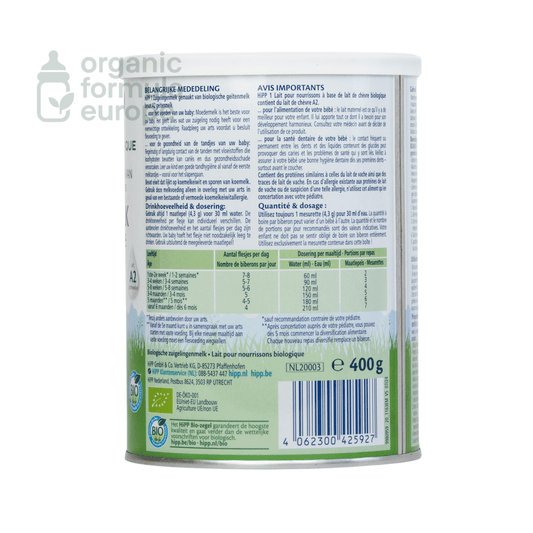
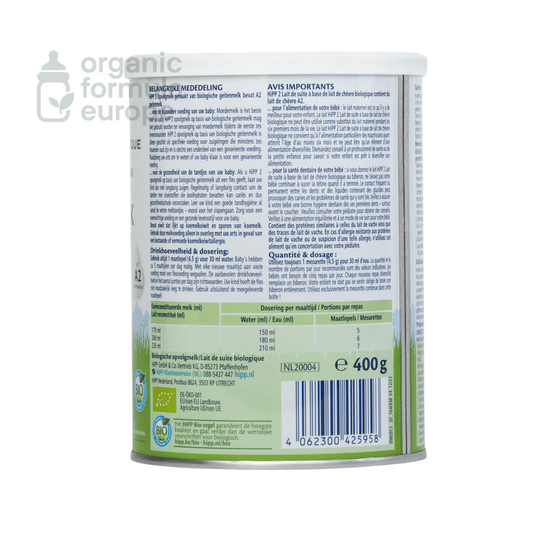
- Goat milk formulas: HiPP Dutch Goat formula is made from A2 goat milk, giving it a naturally different protein profile from standard cow's milk. It is a standard organic milk-based formula, not a hypoallergenic one, so it is not suitable for babies with a diagnosed cow's milk protein allergy, because goat and cow milk proteins cross-react.
- Anti-reflux formulas: HiPP Anti-Reflux is thickened with natural locust bean gum (carob bean flour) to help the milk stay down for babies who frequently spit up forcefully. It uses intact cow's milk protein rather than hydrolysed protein.
Note: HiPP Comfort and HiPP Anti-Reflux are Foods for Special Medical Purposes for the dietary management of digestive problems. Use them from birth only under the guidance of a healthcare professional.
Where to Buy Organic Formula for Sensitive Tummies
When choosing where to buy, trust matters as much as ingredients. Look for clear sourcing, transparent policies, and reliable delivery. Organic Formula Europe ships directly from EU warehouses with secure packaging and freshness protocols, and openly shares sourcing details, shipping timelines, and quality standards.
Finding the right baby formula for sensitive tummies can take trial and error, but where you buy it shouldn't add uncertainty.
Frequently Asked Questions
What is formula for sensitive tummies, and how is it different from regular infant formula?
Sensitive formula is designed to be easier on a baby's developing digestive system. Depending on the type, it may use partially hydrolyzed proteins, adjusted lactose content, added prebiotics or probiotics, or a different milk base like caprine milk. Regular formulas suit many babies well; sensitive formulas provide extra support when digestion needs help.
How do I know if a sensitive formula can help my baby?
Signs that may point toward a gentler formula include frequent gas after feedings, ongoing fussiness tied to digestion, or uncomfortable stools. That said, many babies experience these things as part of normal development, especially in the first few months. A pediatrician can help you determine whether it's a formula issue or a passing stage.
Is European organic formula better for sensitive babies?
European organic standards are strict, and many everyday European formulas are certified organic. For sensitive digestion, though, the right choice usually depends on the type of formula rather than the organic label. In this range, the HiPP Dutch Goat formula is EU-organic certified, while the HA (hypoallergenic), Comfort and Anti-Reflux formulas use specialised ingredients that are not available in organic quality, so they are not organic-certified. No single formula suits every baby, so the best fit comes down to your baby's individual needs, ideally with input from your pediatrician.
Can I switch my baby to a sensitive formula on my own?
Many parents do try a gentler formula when feeding isn't going smoothly. It's always smart to check with your doctor first, especially if symptoms are strong or ongoing. If you do make a change, transition slowly over several days by mixing the new formula with the old one to give your baby's system time to adjust.
Are the formulas for sensitive tummies at Organic Formula Europe certified organic?
Not all of them. In this range, only the HiPP Dutch Goat formula is EU-organic certified. HiPP Comfort and HiPP Anti-Reflux are Foods for Special Medical Purposes, and the HiPP HA (hypoallergenic) formulas use hydrolysed protein. These rely on specialised ingredients that are not available in organic quality, so they are not certified organic. All are produced to strict EU food-safety standards and are free from GMOs and artificial additives. Comfort and Anti-Reflux should be used under medical supervision.
How long does it take to see if a sensitive formula is working?
Give a new formula about two to four weeks before deciding whether it's the right fit. Improvements often happen gradually. Better comfort, calmer feeds, or more regular stools happen over time rather than overnight. Keeping notes on feeding patterns can help you and your doctor spot changes more clearly.
European Baby Formula Brands
-

HiPP Formula
HiPP Formula, Organic European Infant Nutrition from Birth to Toddler For more...
-

Holle Formula
Confused About Holle Formula? Start Here There’s no shortage of options when...
-

Kendamil Formula
Kendamil Formula, British Whole Milk Infant Nutrition Choosing the right formula is...


