


Stage 1 Goat Milk Formula




Stage 1 Goat Milk Formula from Europe's Most Trusted Brands
Whether you plan to exclusively formula-feed your newborn or supplement breastfeeding, a Stage 1 goat milk formula from Europe offers an organically certified option for babies from birth through approximately 6 months of age.
At Organic Formula Europe, we bring together a carefully selected collection of European Organic Formulas, held to some of the most rigorous agricultural and nutritional standards in the world.
This page is your complete guide to understanding what Stage 1 goat milk formula is, how it is made, what to look for, and which trusted brands carry it.
Stage 1 Goat Formula Designed for Infants from Birth to 6 Months
Stage 1 goat milk formula is an infant formula specifically designed for newborns from birth up to around 6 months of age.
It is formulated to serve as a sole source of nutrition during this critical early window, when a baby's digestive system is still maturing and nutritional needs are both precise and significant.
The Stage 1 designation refers to the developmental phase, not a quality ranking. These European formulas are nutrient-dense by design, satisfying the full daily nutrient requirements of a growing newborn without the need for complementary foods.
They are produced under strict European organic standards, which means the goat milk used comes from farms that follow certified organic practices, avoiding synthetic pesticides, artificial growth hormones, and GMOs.
In addition, Stage 1 goat milk formula from Europe must meet EU infant nutrition standards, which many parents consider stricter than the guidelines applied to American-made baby formula.
Goat milk has a naturally distinct protein structure and fat profile compared to cow milk, which is one reason many families find it appealing. The goat milk base offers a different whey-to-casein ratio than conventional cow milk, and its fat globules are smaller in size.
While goat milk-based formulas are often easier for babies with sensitive tummies to digest, it is important to note that no formula can replace breast milk. Always consult your pediatrician before making any decisions about infant feeding.
Nutritional Profile of European Goat Milk Stage 1 Formula
Core Ingredients, Goat Milk, Lactose, Vitamins, and DHA
Many European Stage 1 goat milk formulas, including those from Holle and Kendamil, use whole goat milk as their primary ingredient, which naturally contains a balanced mix of proteins and fats.
Others, such as HiPP, use skimmed goat milk combined with vegetable oils. Where whole goat milk is used, it retains its naturally occurring fat content, which is then complemented with plant-based oils to meet the fatty acid requirements for infant nutrition.
Lactose serves as the primary carbohydrate source in most Stage 1 goat milk formulas, reflecting the carbohydrate naturally found in human breast milk. This makes the energy profile familiar to a newborn's digestive system from the very beginning.
Essential vitamins and minerals are carefully added to meet European infant nutrition requirements, including iron, calcium, iodine, vitamins A, C, D, and E, as well as B vitamins.
Many formulas in this category also include DHA, an omega-3 fatty acid, with brands such as Holle and Kendamil sourcing it from algae rather than fish oil, while some others use fish oil. Goat milk is naturally predominantly A2-type in its beta-casein, in contrast to the mix of A1 and A2 proteins common in standard cow milk.
Prebiotics for Infant Gut Health
Some Stage 1 goat milk formulas from European producers incorporate prebiotic fibers such as GOS (galacto-oligosaccharides) to support healthy digestion. Prebiotics are non-digestible food components that support the growth of beneficial bacteria in the infant gut microbiome.
Their inclusion reflects a broader nutritional philosophy rooted in supporting gut flora diversity from the earliest weeks of life.
This is an area where European formula producers have long invested in research and formulation innovation. Most brands available through Organic Formula Europe include prebiotics as a standard part of their Stage 1 goat milk offerings.
Why Parents Choose European Organic Goat Milk Formula
One of the most compelling reasons parents choose European Stage 1 goat milk formula is the quality of organic certification that governs how these products are made.
European organic standards require that dairy animals are raised on organically managed pastures with access to outdoor space, that their feed is free from synthetic pesticides and GMOs, and that no artificial additives are used in production.
These requirements apply to the farms themselves, not just the final product, which means quality assurance begins long before the formula reaches the tin. It encompasses animal welfare and agricultural practices.
European formula producers are also required to meet precise nutritional composition standards, ensuring that every can of Stage 1 goat milk formula contains the correct balance of macronutrients and micronutrients for a newborn.
For parents who want to know exactly what they are feeding their baby and where it comes from, European organic goat milk formula offers a level of traceability and ingredient transparency that is reassuring.
Goat Stage 1 Brands, HiPP, Holle, and Kendamil Compared
HiPP, Holle, and Kendamil each produce certified organic Stage 1 goat milk formula with a distinct recipe and ingredient philosophy.
HiPP Stage 1 Goat Milk Formula
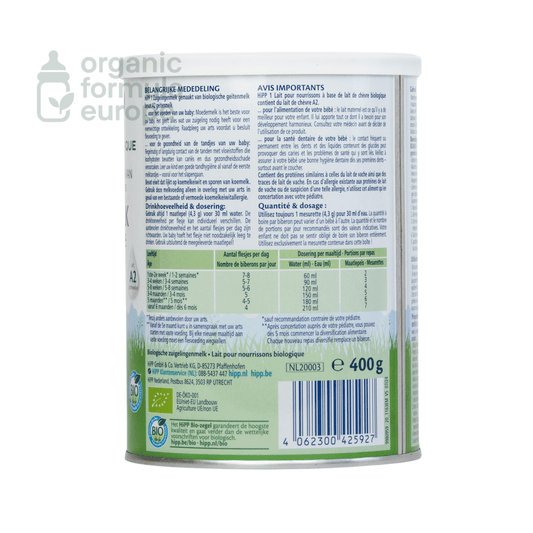
HiPP from Germany is a widely respected name in organic infant nutrition. Their goat milk Stage 1 formula is built on organic skimmed goat milk and uses lactose as its main carbohydrate, with no starch or maltodextrin. The HiPP Goat Milk Formula line also incorporates prebiotic GOS fibers, and its DHA is sourced from fish oil rather than algae. HiPP's Combiotic formulation philosophy combines prebiotics and probiotics to support gut health from birth.
Holle Stage 1 Goat Milk Formula
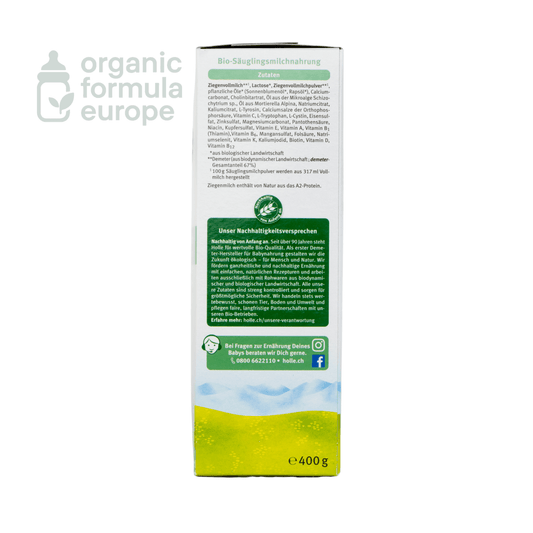
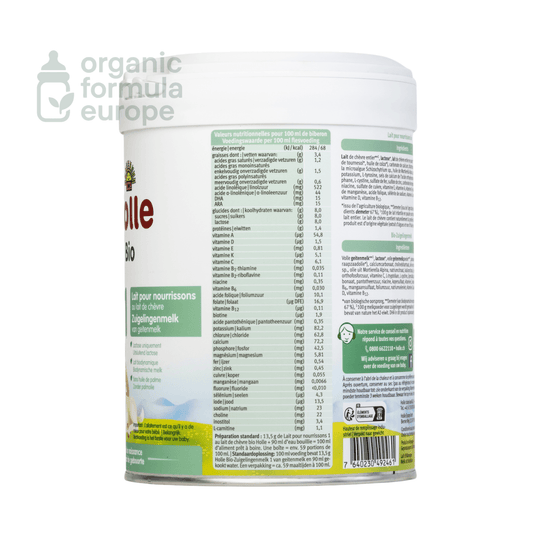
Holle, based in Switzerland, follows Demeter biodynamic farming standards, which are considered among the most stringent organic certification frameworks in the world, exceeding Europe's already tough organic standards. Holle's Stage 1 goat milk formula contains no palm oil, uses whole goat milk, and sources DHA from algae, making it a practical choice for families who prioritize both organic integrity and sustainable sourcing. Furthermore, Holle offers two Stage 1 goat options: The German/Swiss Demeter line with 400g tins and the Holle Dutch goat line that come in 800g tins.
Kendamil Stage 1 Goat Milk Formula
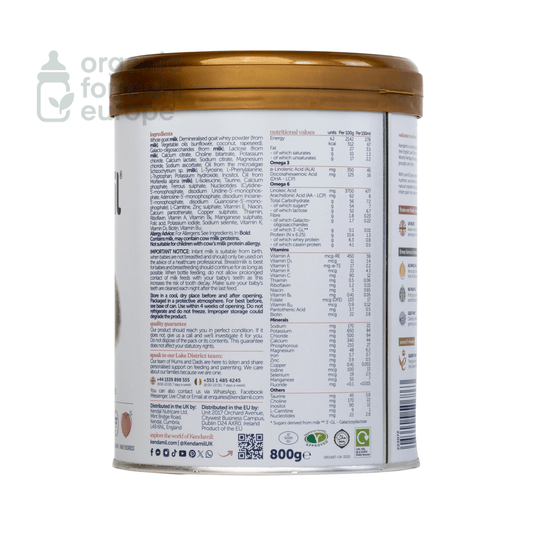
Kendamil, produced in the United Kingdom, is notable for using whole goat milk rather than skimmed milk with added fat.
Their goat milk range is free from palm oil and fish oil, relying instead on whole milk fat and plant-derived DHA. Kendamil adjusts the whey-to-casein ratio toward that of early breast milk, and the formula benefits from the medium-chain fatty acids naturally present in goat milk.
Choosing between them often comes down to your baby's individual response and your family's ingredient preferences. Your pediatrician can advise on which profile may suit your newborn best.
From Stage 1 through Stage 3, Your Baby's Goat Formula Journey
Stage 1 is just the beginning of your baby's goat milk formula journey. As babies grow, their nutritional needs evolve alongside them. Around 6 months of age, when babies are typically introduced to solid foods, many parents transition to a Stage 2 formula with adjusted protein, fat, and carbohydrate levels to support a growing diet.
Understanding the staging system helps parents make informed decisions at each phase. Stage 1 is designed for the newborn period when formula, or a combination of formula and breast milk, serves as the sole source of nutrition.
It is the most carefully calibrated of all stages in terms of meeting complete infant nutritional requirements independently.
For families who wish to continue with goat milk formula as their baby grows, there are dedicated Stage 2 goat milk formula options that build naturally on what Stage 1 establishes.
Continuity of a single brand or milk base can offer consistency, though switching between appropriate formulas is perfectly normal when guided by a healthcare provider.
Ordering Stage 1 Goat Formula from Organic Formula Europe
At Organic Formula Europe, we source baby formula directly from trusted European producers and ship to families across the United States. Every product in our collection is authentic, handled with care, and shipped with sufficient shelf life to give you peace of mind from the moment you order to the moment it arrives.
We focus on a curated, transparent selection rather than an overwhelming range. Whether you are exploring goat milk formula for the first time or returning for a new baby, our team is here to help. Our broader organic goat milk formula collection gives you a complete overview of what we carry.
Frequently Asked Questions
What age is Stage 1 goat milk formula suitable for?
Stage 1 goat milk formula is designed for newborns from birth through approximately six months of age. It is formulated to serve as a complete source of nutrition during this phase, providing all the vitamins, minerals, proteins, and fats a newborn needs. If you are unsure whether Stage 1 is right for your baby's developmental stage, your pediatrician can offer personalized guidance.
Is goat milk formula safe for newborns?
Yes. Certified European organic and classic goat milk formulas are produced specifically for newborns and meet strict nutritional standards set for infant formula. They are not the same as regular goat milk from a grocery store, which is not suitable for infants. Infant formula, including goat milk-based varieties, is specially processed and nutritionally complete for the newborn stage. Always consult your pediatrician before introducing any formula to your newborn.
How is goat milk formula different from cow milk formula?
Goat milk and cow milk both serve as nutritious bases for infant formula, but they have different protein and fat compositions. Goat milk naturally contains a higher proportion of medium-chain fatty acids and a distinct whey-to-casein ratio. Goat milk is naturally predominantly A2-type in its beta-casein, unlike the A1 proteins more common in standard cow milk. Both types of formula must meet the same European nutritional standards for infant formula, so both are complete and appropriate for newborns. It is important to note that goat milk formulas are not intended to replace medically prescribed formula for babies with cow-milk allergies.
Do European goat milk formulas contain palm oil?
This varies by brand. Some European Stage 1 goat milk formulas, such as those from Holle and Kendamil, are specifically formulated without palm oil, sourcing fat from whole goat milk and plant-based oils such as rapeseed or sunflower oil. Others, such as HiPP, do include organic palm oil. Check the individual product descriptions on our site, where ingredient information is clearly listed for each product.
Can I use Stage 1 goat milk formula while also breastfeeding?
Many families use infant formula alongside breastfeeding, a practice often called combination feeding. Stage 1 goat milk formula is suitable for this purpose, as it is designed to complement or replace breast milk during the first six months. Speaking with a lactation consultant or your pediatrician can help you find an approach that works well for both you and your baby.
How long does an opened tin of Stage 1 goat milk formula last?
Most European infant formulas, including Stage 1 goat milk formulas, should be used within two to four weeks of opening, depending on the brand. Always follow the manufacturer's guidance printed on the packaging, as this may vary slightly between brands. Store opened tins in a cool, dry place with the lid securely closed to maintain freshness.
When should I move from Stage 1 to Stage 2 goat milk formula?
The transition from Stage 1 to Stage 2 typically occurs around six months of age, which also coincides with the introduction of complementary solid foods. Stage 2 formulas are adjusted in their nutritional composition to support babies who are no longer relying solely on formula for their nutrition. Every baby develops at their own pace, so discuss the timing of this transition with your pediatrician.
European Baby Formula Brands
-

HiPP Formula
HiPP Formula, Organic European Infant Nutrition from Birth to Toddler For more...
-

Holle Formula
Confused About Holle Formula? Start Here There’s no shortage of options when...
-

Kendamil Formula
Kendamil Formula, British Whole Milk Infant Nutrition Choosing the right formula is...


