


HiPP Dutch Formula



Is HiPP Dutch Formula Right For Your Baby? Here’s How To Decide
Choosing a formula can feel surprisingly overwhelming, especially when every parent seems to have a different recommendation, and every label looks different. If you’re ditching American formula in favor of stricter standards, HiPP Dutch formula is a popular starting point.
But how do these Dutch formulas differ from what’s available in the US? And do the ingredients really differ that much?
Check out this guide to learn about the ingredients in HiPP Dutch baby formula, how they compare to other options, and how to decide whether HiPP is a good option for your newborn.
How is HiPP Dutch Formula Different?
If you’ve been Googling organic baby formula at odd hours of the night, you’ve probably noticed there are multiple HiPP versions floating around — Dutch, German, UK. So what actually makes the Dutch one… Dutch?
Developed for Dutch Guidelines
HiPP Dutch powder is made specifically to meet infant nutrition regulations in the Netherlands. That means its ingredient balance and labeling all follow Dutch and broader European Union standards. It’s not “better” by default; it just fits this country’s nutritional requirements.
Organic EU Standards
When you see “organic” on a European formula, it’s not just a marketing word.
EU organic regulations govern:
-
How cows (or goats) are raised
-
What they’re fed
-
Restrictions on synthetic pesticides
-
Prohibitions on GMOs
-
Strict processing standards
It’s a tightly controlled system from farm to tin, and some US parents prefer that transparency.
“Combiotic” Formula
Dutch formula powders use the word “combiotic” on their labels. That sounds fancy, but all it means is that they combine prebiotics (fibers that feed gut bacteria) and probiotics (live cultures of beneficial bacteria). The idea is to mirror, in a very small way, the natural support system found in breast milk.
Decoding the Label
HiPP formula ingredients are different from conventional baby formula. Let’s break it down without the chemistry jargon:
-
Protein source: In the cow’s milk versions of HiPP Dutch organic formula, the primary protein comes from organic milk combined with organic whey. Whey can be easier for some babies to digest than whole milk protein alone. Some formulas also use goat milk protein, which has a different structure and may be easier for babies with sensitive tummies.
-
Carbohydrates: You won’t find added table sugar or corn syrup solids here. Instead, lactose is the main carbohydrate. This is the natural sugar found in milk and provides steady energy for your baby.
-
Fats: Fat is essential for infant growth and brain development. HiPP formulas use a blend of organic rapeseed oil, organic sunflower oil, organic palm oil, or other organic vegetable oils to create a balanced fatty acid profile.
-
DHA requirement: DHA is a long-chain omega-3 fatty acid that supports brain and eye development. Under current EU regulations, DHA is mandatory in all infant formulas. This is not a requirement for American formulas, which makes all European options different than what’s available at your local supermarket.
Every HiPP Dutch Formula Stage Explained
One of the things parents like about HiPP baby food is that the stages follow your baby’s development in a pretty straightforward way.
HiPP Stage 1: Birth–6 Months
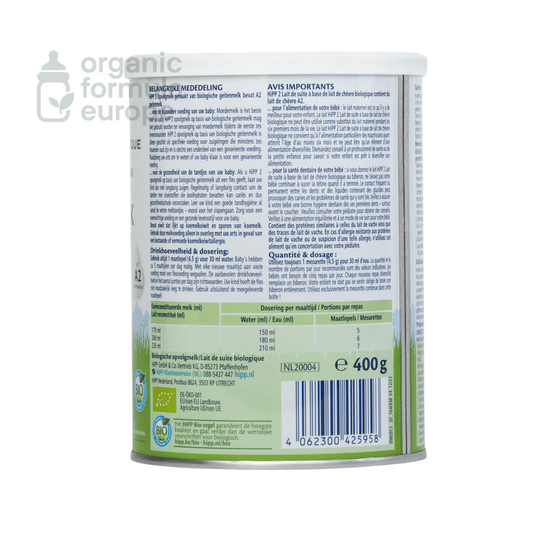
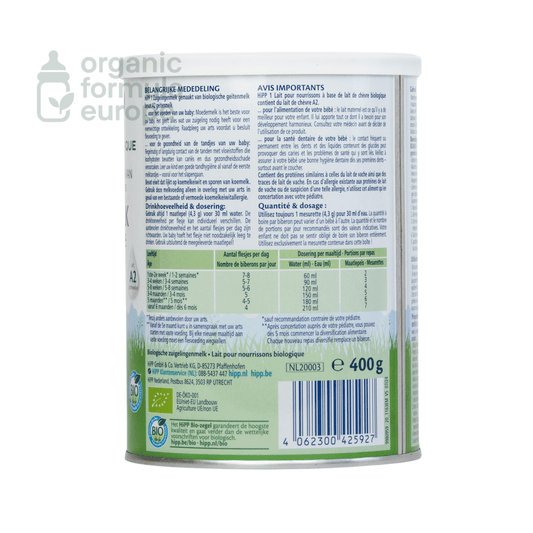
HiPP Dutch Formula Stage 1 is designed for newborns, either as a sole source of nutrition or as a supplement to breastfeeding. Many parents start here and stay with it until around six months, depending on their pediatrician’s guidance and baby’s feeding patterns.
HiPP Stage 2: 6-10 Months
Around six months, babies typically begin experimenting with purees and first foods — messy high-chair moments included. HiPP Dutch Stage 2 formula is designed to complement this new phase. It’s adapted to fit a baby who’s becoming more active and starting to get nutrition from more than just milk.
HiPP Stage 3: 10-12 Months
At this point, babies are usually crawling, standing, or at least plotting their next big adventure. HiPP Dutch Stage 3 formulations support this more active phase while continuing to serve as an important nutritional anchor. The familiar taste makes it easier to start transitioning to more solid foods.
HiPP Stage 4: 12+ Months
Stage 4 is sometimes called a follow-on or toddler formula. At this age, your little one is eating more family foods, but formula can still help fill nutritional gaps, especially during picky phases (which, let’s be honest, tend to arrive unannounced).
How to Know if HiPP Formula Is Right for Your Baby
There’s no universally “perfect” formula for all babies. What works beautifully for one little one might not be the right fit for another, and that’s normal. Instead of searching for the best formula, it’s more helpful to think about whether a formula matches your baby’s needs and your comfort level.
You might consider HiPP formula if you want to prioritize:
-
Organic certifications
-
Lactose as the main carbohydrate (no added sugars)
-
A gentle formula designed for smoother digestion
Your baby is the priority, but opting for a Dutch formula also comes with added perks like EU farming standards, minimal processing, and ingredient transparency.
Of course, you should never switch your baby’s food without professional guidance. Always consult your pediatrician for advice tailored to your little one’s needs and medical history.
Where to Buy HiPP Formula
When ordering European formula, authenticity and freshness matter. At Organic Formula Europe, we carry the full range of HiPP Dutch organic formula, including Stage 1 through Stage 4 and goat milk options. Every product is sourced directly from Europe and shipped straight to your door, so you can feel confident about quality and authenticity.
Because once you find a formula that works for your baby, the last thing you should have to stress about is finding it again. Check out our HiPP Dutch formulas to enjoy greater peace of mind when feeding your baby.
Frequently Asked Questions
What is HiPP Dutch formula, and how does it differ from other HiPP versions?
HiPP Dutch formula is made specifically for the Netherlands and follows both Netherland and EU standards. The biggest differences between Dutch, German, and UK versions usually come down to stage structure and small ingredient variations. Many parents choose the Dutch version because it includes both prebiotics and probiotics in most stages and keeps the formulation relatively simple.
Is HiPP formula suitable for newborns?
Yes. HiPP Formula Stage 1 is designed for use from birth and can be used as a complete source of nutrition or alongside breastfeeding. If you’re starting formula from day one or supplementing early on, this is typically where parents begin. As always, your pediatrician can help confirm the right choice for your baby’s specific needs.
What stages does HiPP Dutch formula come in?
Our HiPP Dutch formula comes in all four stages, from newborn to the toddler stage. There’s also a goat milk version available in multiple stages for families who prefer that milk base.
Does HiPP formula contain probiotics?
Yes, most do. Prebiotics help feed beneficial gut bacteria, while probiotics introduce beneficial cultures. Together, they’re intended to support digestive balance. Still, they aren’t a cure-all, and you should always talk to your pediatrician if you’re concerned about your baby’s health.
Is HiPP Dutch Formula certified organic?
Yes. HiPP formula follows strict European organic regulations. It sources milk from certified organic farms, forbids the use of GMOs, and has tight restrictions on pesticides and fertilizers. EU organic standards are clearly defined and regulated from farm to finished product, which is reassuring for ingredient-conscious parents.
Can I switch between HiPP Dutch Formula stages without any special preparation?
In most cases, yes. Most parents transition gradually over a few days, mixing the new formula with the current one so your baby can adjust. Because the formulas within the same range share a similar base, transitions are usually smooth.
But if your baby has a sensitive tummy or you’re unsure about the timing, a quick check-in with your pediatrician is always a smart move.
How should I store HiPP formula once the tin is opened?
Unopened tins are usually good for one to two years when stored properly. After opening the milk formula, always close the tin tightly after use. Store it in a cool, dry place, like an indoor pantry, not a refrigerator. Opened tins should be used within 21 days.
Prepared bottles should be used within two hours at room temperature or stored in the refrigerator and used within 24 hours. And as hard as it is to toss leftover milk, any unfinished bottle should be discarded after a feed.
Where can I buy authentic HiPP Dutch Formula?
Organic Formula Europe carries the full range of organic milk powder, sourced directly from Europe and shipped straight to your door. That way, once you find a formula that works for your baby, you don’t have to stress about where to find it next.
European Baby Formula Brands
-

Holle Formula
Confused About Holle Formula? Start Here There’s no shortage of options when...
-

Kendamil Formula
Kendamil Formula, a European Baby Formula Produced in the United Kingdom, Is...


