


Stage 3 Goat Milk Formula



Stage 3 Goat Milk Formula from Trusted European Brands
As your little one grows, their nutritional needs evolve right alongside them. Stage 3 goat milk formula, certified organic from Europe, is designed for babies from around 10 months onward, offering a gentle and nourishing milk to fill nutritional gaps when your little one starts eating a varied diet of solid foods.
At Organic Formula Europe, we bring you a curated selection of certified organic goat milk formula from Europe's most trusted brands.
Stage 3 Goat Formula, What Makes It Different
As your baby transitions into their second year, their appetite grows, their activity increases, and their body requires a different combination of nutrients to support bone and muscle growth. Stage 3 formulas are carefully tailored to bridge the gap between infant formula and a fully diverse toddler diet.
Goat milk has been a staple of infant diets for generations across Europe, yet many families in the United States are only now discovering its benefits. Goat milk has a naturally distinct protein structure and fat composition compared to cow milk.
Its fat globules are smaller, and its protein profile is predominantly A2-type, distinct from the A1 casein predominant in conventional cow milk. Goat milk-based formulas are made with whole goat milk or goat milk powder, preserving many of the naturally occurring nutrients that come with full-fat dairy, including medium-chain fatty acids.
Why Parents Choose Goat Milk for Stage 3 Formula
The decision to choose a goat milk-based follow-on formula is often shaped by a combination of preference, experience, and your baby's individual feeding journey.
Many parents who started on goat milk formula from Stage 1 continue naturally through to Stage 3 for consistency. Others discover goat milk formula during weaning and appreciate its naturally gentle composition.
Goat milk formula is not a substitute for medical advice. If you have specific concerns about your baby's nutritional needs or feeding development, a pediatrician is always your most valuable guide.
That said, choosing an organically certified, carefully formulated European Stage 3 goat milk formula is a decision many parents make with great peace of mind.
The goat milk base offers a distinct whey-to-casein ratio compared to cow milk, and the fat profile, including medium-chain fatty acids and smaller fat globules, contributes to its characteristic gentle texture.
These qualities make Stage 3 goat milk formula a genuinely interesting choice for families who prefer an alternative to standard cow milk-based options.
Organic Certification, a Key Reason Parents Choose European Stage 3
The Holle Stage 3 goat milk formulas available through Organic Formula Europe are sourced from farms that adhere to Europe's strict certified organic standards, widely considered among the most rigorous in the world.
This means the goats are raised on European farms without synthetic pesticides, without routine antibiotics or growth hormones, and without GMOs at any point in the production chain.
Key Nutrients to Look for in Stage 3 Goat Formula
When comparing Stage 3 goat milk formulas, it helps to understand which nutritional components are typically present and why they matter during this developmental window. European brands including HiPP and Holle are committed to transparency, so the ingredient list will outline exactly what is in each tin.
Fats and Fatty Acids
Whole goat milk-based formulas contain a naturally rich fat profile. Many Stage 3 baby formulas in this category are complemented with high-quality plant-based oils such as rapeseed and sunflower oil. DHA, important for general nutritional completeness, is commonly included. Some brands, such as Holle, derive it from algae rather than fish, while others, such as HiPP, use fish oil.
Proteins
Goat milk contains proteins that differ structurally from those in standard cow milk formulas. Goat milk is naturally predominantly A2-type in its casein, one of the reasons some families choose goat milk-based formula. Stage 3 formulas generally adjust the protein level to reflect the growing needs of an older baby without overstimulating protein intake.
Vitamins and Minerals
Stage 3 baby formulas are typically enriched with higher levels of key vitamins and minerals compared to earlier stages. Iron, calcium, vitamin D, and vitamin C are among the nutrients found in adjusted quantities, reflecting the changing nutritional priorities of a baby moving deeper into the weaning period.
Prebiotics and Digestive Support
Many premium European Stage 3 goat milk formulas include added prebiotics, such as GOS derived from lactose. Prebiotics play a supportive role in promoting a balanced gut environment by encouraging the growth of beneficial bacteria, a feature that distinguishes many European formulas from conventional counterparts.
Stage 3 Formula and Your Baby's Weaning Journey
Stage 3 formula is designed to complement a diet of solid foods, not replace it. It serves as a meaningful nutritional bridge, helping ensure that even picky toddlers receive the recommended daily intake of vitamins, minerals, micronutrients, and protein needed to thrive.
Many parents offer Stage 3 goat milk formula alongside breakfast, mix the powder into morning rice cereal or porridge, or serve it as an afternoon or bedtime drink. The slightly thicker consistency of some Stage 3 formulas, often achieved through the addition of starch or maltodextrin, can help babies feel fuller between feeds.
Consistency in preparation helps your baby receive the correct nutrient concentration at every feed, so it is always worth measuring carefully.
If you want to understand the full staging system of European formula, you can explore the Stage 2 Goat Milk Formula collection, which covers the previous developmental phase.
Holle and HiPP, Leading Stage 3 Goat Milk Brands
At Organic Formula Europe, we stock premium Stage 3 goat milk formula from brands with decades of quality, transparency, and commitment to clean, organic ingredients.
Holle Stage 3 Goat Milk Formula
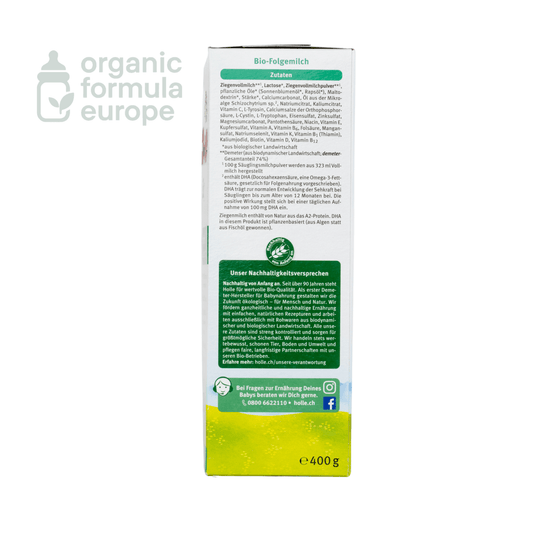
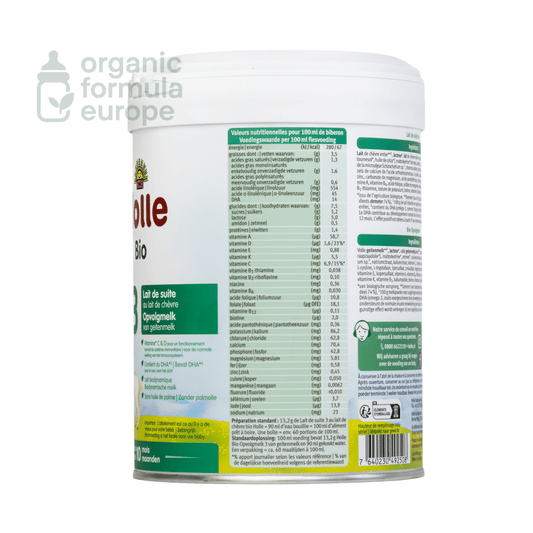
Holle is one of the most established names in European organic baby nutrition. Their goat milk Stage 3 formula is made with Demeter-certified biodynamic goat milk, representing the highest tier of organic farming available.
Holle's goat formulas contain no palm oil, no artificial flavors, and no added sugar, a natural starting point for parents seeking the purest possible ingredient list, with DHA sourced from algae.
Kendamil Stage 3 Goat Milk Formula
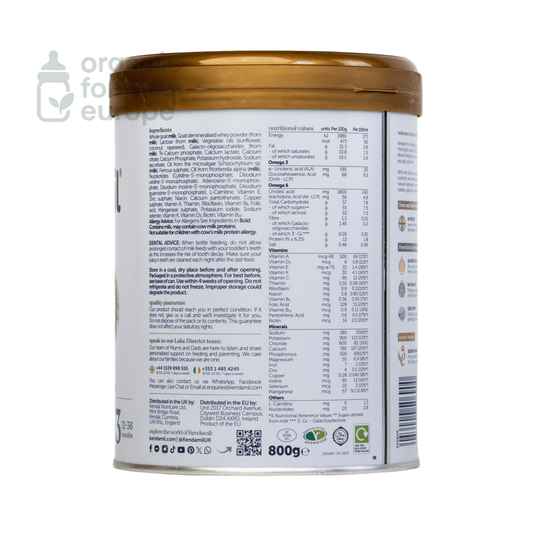
Kendamil is one of the UK's most popular baby formula brands, known for using high-quality whole milk ingredients and avoiding unnecessary additives. Their Stage 3 Goat Milk Formula is made with full-cream goat milk and is designed to support toddlers as part of a balanced diet.
Kendamil's goat milk formula contains no palm oil, no fish oil, and no soy oil. Instead, it includes plant-based DHA sourced from algae and provides a creamy, naturally nourishing option for families who prefer goat milk-based nutrition.
Both brands are available through Organic Formula Europe with reliable shipping across the United States.
Preparing and Storing Stage 3 Goat Formula
Always follow the preparation instructions printed on the packaging, as volumes and ratios can vary between brands. The World Health Organization recommends mixing powdered formula with water at around 70 degrees Celsius to reduce bacterial risk, while some European brands specify a lower temperature to protect live probiotic cultures, so use the temperature stated on your tin or box.
Never use a microwave to warm prepared formula, as this can create uneven hot spots. Prepared formula should be used within two hours at room temperature, or within 24 hours if stored at the back of the refrigerator. Store formula tins in a cool, dry place and seal after each use. Always use the scoop provided and level it off without pressing or packing the powder down.
Frequently Asked Questions
What age is Stage 3 goat milk formula suitable for?
Stage 3 goat milk formula is generally intended for babies from around 10 months of age. At this stage, most babies are actively engaged in weaning and eating a growing variety of solid foods alongside their milk feeds. Stage 3 formula is designed to complement this dietary transition, not to serve as the sole source of nutrition. Always check the specific age guidance on your chosen brand's packaging and speak with your pediatrician if you are unsure when to make the transition.
Is goat milk formula easier to digest than cow milk formula?
Goat milk has a naturally distinct protein and fat structure compared to cow milk. Its fat globules are smaller, and its casein is predominantly A2-type, which differs from that of standard cow milk. Some parents find that goat milk-based formulas suit their baby's digestion well. However, every baby is unique, and what works well for one child may not be right for another. If you have concerns about digestion or feeding, consult your healthcare provider before switching formulas. Also, goat milk is not suitable for babies with a diagnosed cow milk protein allergy.
Are European Stage 3 goat milk formulas safe for babies in the US?
Yes. European organic infant formulas meet rigorous standards under EU regulations governing composition, safety, and labeling. Brands like Holle and HiPP have a long track record of quality and transparency. While European formulas are not always formally registered with the FDA, they meet internationally recognized nutritional benchmarks. Many families across the US choose European formulas for their clean ingredient lists and organic sourcing.
Do Stage 3 goat milk formulas contain palm oil?
This varies by brand. But Holle's Stage 3 formula as well as Kendamil's Stage 3 goat milk formula are formulated without palm oil, using plant-based oils such as rapeseed and sunflower oil. Always check the ingredient list on the specific product page.
Can I switch from a cow milk formula to Stage 3 goat milk formula?
Switching formula types is something many parents do at various stages, and moving to a goat milk-based Stage 3 formula is a transition some families make during weaning. It is generally recommended to introduce any new formula gradually, mixing it with the previous formula over a number of days to allow your baby to adjust comfortably. Your pediatrician is the best guide through any formula change, particularly if your baby has any known sensitivities.
How long does a Stage 3 goat milk formula tin last?
The duration of a tin depends on the size of packaging and how many feeds your baby takes per day. Most manufacturers include a feeding guide outlining estimated daily volumes by age, which can help you calculate how long each tin will last. Once opened, formula tins should generally be used within two to four weeks, depending on the brand. Always check the best-before date before opening and follow the storage guidance on your specific product.
European Baby Formula Brands
-

HiPP Formula
HiPP Formula, Organic European Infant Nutrition from Birth to Toddler For more...
-

Holle Formula
Confused About Holle Formula? Start Here There’s no shortage of options when...
-

Kendamil Formula
Kendamil Formula, British Whole Milk Infant Nutrition Choosing the right formula is...


