


Holle Cow Milk Formula




What Parents Should Know About Holle Cow Milk Formula
If you’ve been researching formula for more than 20 minutes, you already know how fast it can turn into a rabbit hole. One minute you’re comparing formula stages, and the next you’re knee-deep in ingredient lists and message board debates.
That’s exactly why this guide exists. We’re breaking down what’s in Holle organic cow milk formula, how it differs from goat milk options, and how to find the right stage for your baby.

What’s In Holle Cow Milk Formula, and Why Do Some Parents Choose It?
If you’re like other parents, the ingredients list is the first place you look when shopping for a reliable formula. You want to know what’s in the bottle and whether it aligns with your values.
So, what’s inside Holle’s cow milk formula? Here’s a simple breakdown:
-
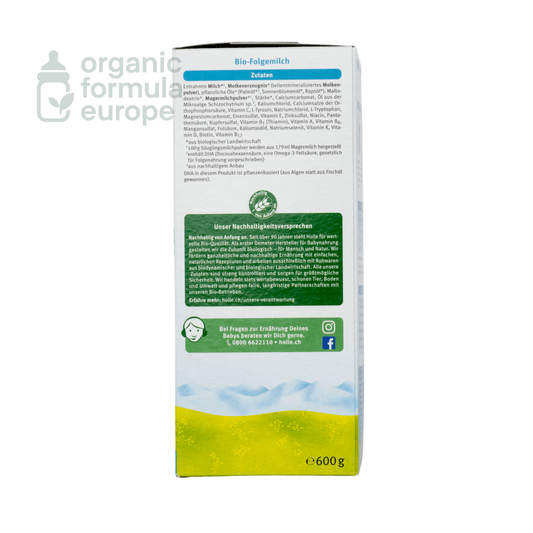
Milk base: Depending on the Holle line you buy and your child’s age and preferences, you’ll see cow milk sources like skimmed milk powder, demineralized whey, or whey powder.
-
Carbohydrates: Don’t fear carbs! Babies need them for energy. Most Holle stages use lactose as the main carbohydrate to imitate breast milk, but more filling formulas also include starch or maltodextrin.
-
Healthy fats: Your baby’s body needs a healthy fat source to grow. Holle formulas include organic vegetable oils as the fat base, usually with ingredients like sunflower oil, rapeseed oil, or palm oil.
-
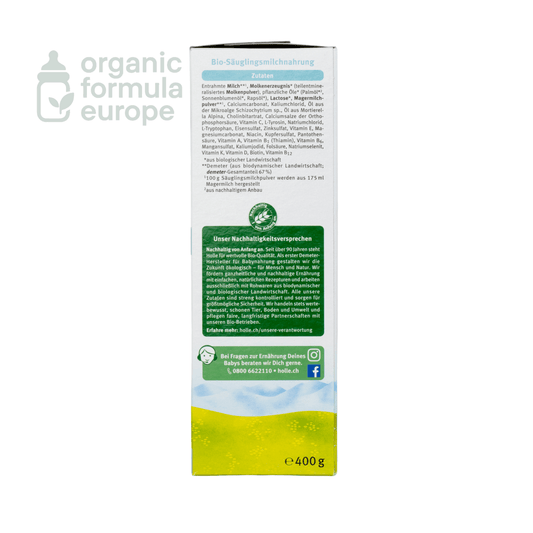
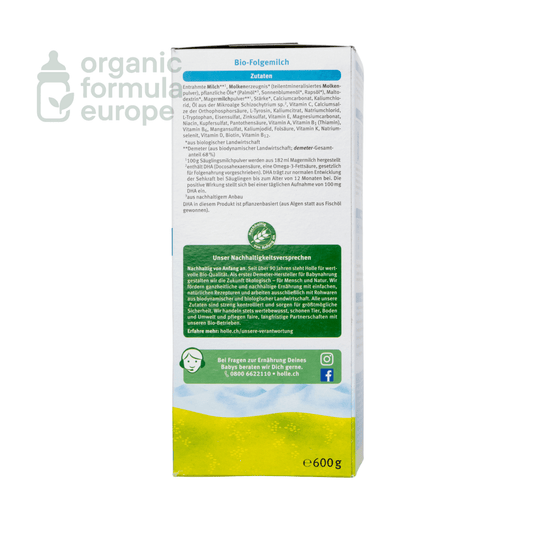
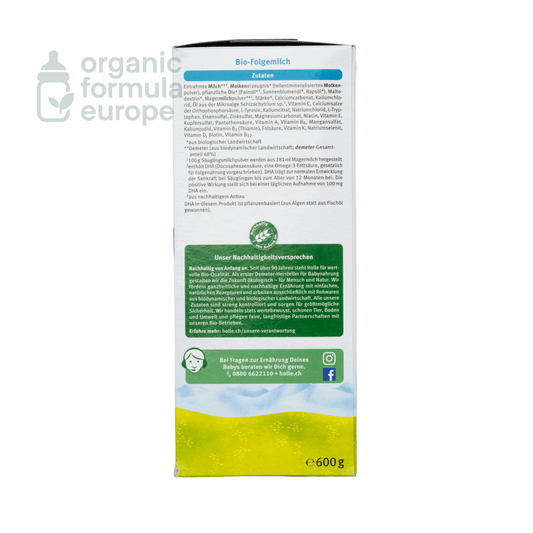
Added vitamins and minerals: European formulas include nutrients like folic acid, vitamin E, calcium carbonate, magnesium carbonate, potassium chloride, potassium iodide, sodium selenite, manganese, and l-tryptophan on the label. That sounds like a lot, but remember, Holle doesn’t put anything in the formula unless experts deem it necessary.
Aside from the straightforward ingredients list, parents love Holle for its sustainable, organic farming standards. Holle organic formulas are made to strict European standards, and many are Demeter-certified. Demeter is the standard for biodynamic farming, so you can rest assured that your baby is getting the best of the best.
Holle's organic and Demeter certifications do not permit GMOs, artificial flavors, preservatives, or added sweeteners in their formulas.
How Cow Milk Formula Differs From Goat Formula
Not sure whether your baby needs goat or cow milk? Both options are nutritionally complete, and Holle offers stage-based nutrition for both. They both carry EU organic and Demeter biodynamic certifications (expect for stage 4 which has no Demeter certification), so there are no differences in quality.
If you’re comparing Holle cow and goat options, the biggest difference is pretty simple: one is made with organic cow’s milk, and the other is made with whole organic goat's milk.
For many parents, the choice comes down to your preferences and how well your baby tolerates a particular formula. Some families stick with Holle cow milk formula because it feels familiar and straightforward. Others are curious about Holle goat milk formula because it has a different protein and fat makeup, which some babies may tolerate better.
If your little one has tummy troubles at feeding time, goat milk may be an option to consider, as many parents describe it as easier on the tummy of their babies. However, regular stomach issues could indicate trouble, so consult your pediatrician to decide which organic baby food is the best fit.
Choosing the Right Cow Milk Formula Stage For Your Baby
Babies’ nutritional needs change as they grow up. Instead of offering one formula for the entirety of infancy, Holle offers baby formulas that grow along with your child’s needs.
-
Holle Stage 1: Stage 1 is made for babies from birth to 6 months, so it’s a newborn-friendly option.
-
Holle Stage 2: Stage 2 is generally used once your baby is around 6 months old and starting to move and experiment with solids.
-
Holle Stage 3: Stage 3 is usually the next step for older babies who are eating more solids but still relying on formula as part of their daily routine.
-
Holle Stage 4: Stage 4 is a toddler drink made for children 12 months and older, and it’s more of a complement to a solid-food diet instead of a meal replacement.
Choosing formula can feel like a high-stakes decision, but you don’t have to be perfect. What matters is making a thoughtful choice with the information you have and adjusting as your baby grows. When in doubt, call your pediatrician for feeding advice tailored to your baby.
If you need additional support, check out Organic Formula Europe. Our curated line of Holle cow's milk formulas not only brings vetted formulas straight to your door but also offers guidance on choosing stages and comparing ingredients.
Frequently Asked Questions
Do European formulas come with different labeling than US formulas?
Yes. You might notice different prep instructions, packaging formats, or measurements from those in the US. That’s because Europe has different standards than the US. That’s why it’s helpful to buy from a retailer that knows these products and can help you find reliable formula from Europe.
How do I switch my baby from one formula to another?
If you’re changing formulas, try to do it gradually instead of all at once. That can make the transition feel a little easier for both you and your baby. It’s always smart to check with your pediatrician before making a switch, especially if your baby has a sensitive stomach or feeding concerns.
Can I use Holle cow milk formula while breastfeeding?
Absolutely! Infant formula is nutritionally complete, but you can also use it for combo feeding, especially if your little one wants more filling meals or your milk supply is low. Since every feeding journey looks different, ask your pediatrician or lactation consultant for guidance.
How should I store and prepare Holle cow milk formula?
Store the formula in a cool, dry place and keep the lid on after opening. For preparation, always follow the instructions on the box and make each bottle as directed. Since formula prep matters, this is one of those times when it’s worth being a little extra precise.
European Baby Formula Brands
-

HiPP Formula
HiPP Formula, Organic European Infant Nutrition from Birth to Toddler For more...
-

Holle Formula
Confused About Holle Formula? Start Here There’s no shortage of options when...
-

Kendamil Formula
Kendamil Formula, British Whole Milk Infant Nutrition Choosing the right formula is...


