


What Is Organic Baby Formula? Ingredients, Standards & Benefits
Table of contents

Ashlen Wilder
Ashlen Wilder is a freelance writer with over seven years of experience covering food, nutrition, business, and consumer products. Her articles on infant nutrition draw from reputable medical and government sources, with an emphasis on evidence-based information to help parents make informed decisions.
Overview
Organic baby formula is made with certified organic ingredients that meet specific farming and production standards.
Both organic and conventional baby formulas must meet strict nutritional and safety requirements.
Organic formula is not inherently more nutritious or healthier for your baby.
Choosing a baby formula can feel overwhelming, especially when labels include terms like organic, grass-fed, non-GMO, or European organic. For parents interested in organic baby formula, understanding what the label actually means can make it easier to compare formula options.
Organic infant formula is produced according to specific organic farming and manufacturing standards. Depending on where the formula is made and sold, these requirements may be established by governing bodies like the U.S. Department of Agriculture (USDA) or the European Union (EU). While organic and conventional formulas must both meet nutritional requirements for infants in their respective markets, organic certification places additional requirements on how certain ingredients are produced.
Here's what parents should know about organic formula ingredients, certification standards, and the potential benefits of choosing an organic option.


What Is Organic Baby Formula?
Organic baby formula is infant formula made with ingredients that meet established organic standards. In the United States, products carrying the USDA Organic seal must comply with USDA organic certification requirements.¹ In Europe, organic baby formula is subject to EU organic regulations in addition to the general rules governing infant nutrition.⁴˒²
The difference between organic and non-organic formula primarily concerns how agricultural ingredients are produced, not whether the formula provides essential nutrition. For example:
- Organic dairy ingredients must come from animals raised according to applicable organic farming standards
- Crops used to produce organic ingredients are grown under restrictions on certain synthetic pesticides and fertilizers.
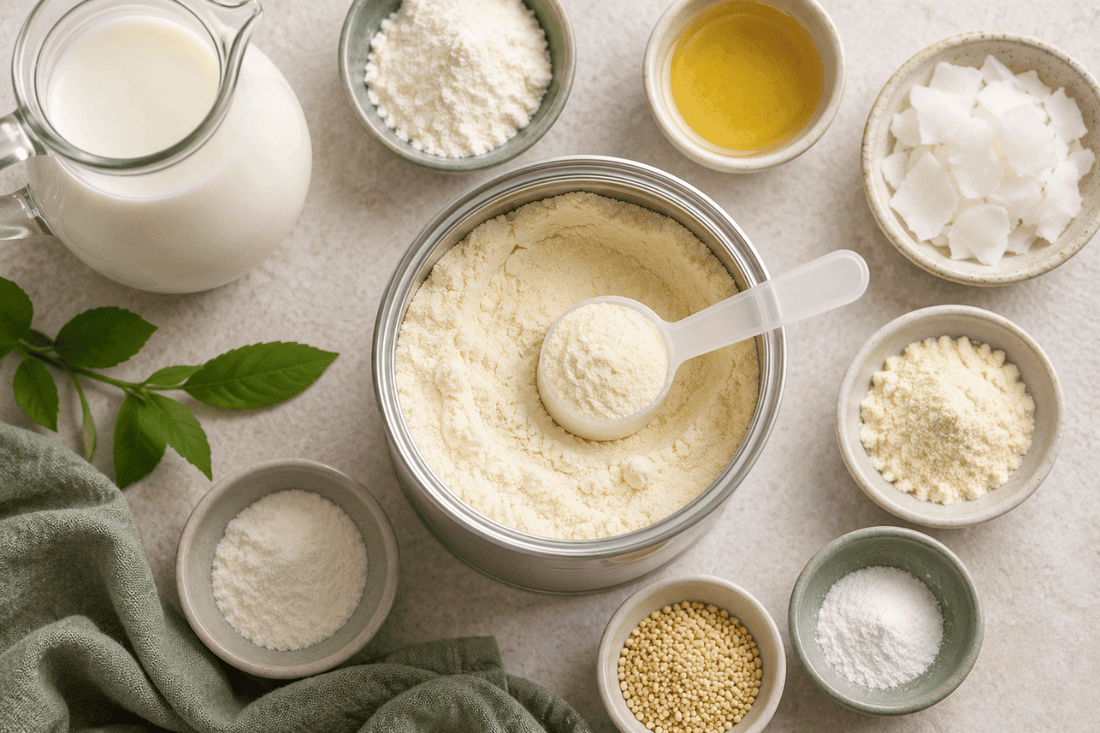
Organic formula must still provide the nutrients babies need. Depending on the product, a formula may contain carbohydrates such as lactose, milk proteins, fats, vitamins, minerals, and essential fatty acids.
Organic certification also doesn't automatically mean a particular formula is the best formula for every baby. An infant's nutritional and medical needs should come first when comparing formula options.
What Ingredients Are in Organic Baby Formula?
The formula ingredients vary by formula brand and product, but most milk-based formulas contain similar categories of nutrients.
Organic Cow's Milk or Goat Milk
Cow's milk is the foundation of many organic infant formulas. Depending on the product and brand, the ingredient list might include organic skim milk, organic nonfat milk, organic whole milk, organic whey, or organic whey protein concentrate.
Some formulas use goat milk instead. Goat milk formula still contains milk protein and isn't appropriate simply because a baby has a cow's milk protein allergy. Parents of babies with a diagnosed or suspected milk protein allergy should speak with their pediatrician about an appropriate formula.
Organic Lactose
Lactose is the primary carbohydrate naturally found in breast milk. In formula, lactose is derived from organic cow or goat milk and is commonly used as the main carbohydrate in organic European formulas.
Fats and Fatty Acids
Babies need dietary fat for growth and development, so infant formulas contain a carefully designed blend of fats. A formula may use milk fat, vegetable oils, or a combination of both.
Organic vegetable oils may include oils such as sunflower, rapeseed, or coconut oil, depending on the formula. Some formulas also contain long-chain polyunsaturated fatty acids, including DHA.
Vitamins, Minerals, and Other Nutrients
Organic infant formula still needs added vitamins and minerals to meet infants' nutritional requirements. Not every ingredient in a certified organic formula can necessarily be agricultural and organic; some essential nutrients, such as vitamins and minerals, aren't agricultural products.
USDA Organic vs. EU Organic Baby Formula
One of the biggest questions for parents comparing organic formula options is how USDA Organic and EU Organic standards differ.
What Does USDA Organic Mean?
In the U.S., the USDA regulates the use of the organic label. A product labeled organic generally must contain at least 95% certified organic ingredients, excluding salt and water. The remaining ingredients must meet applicable requirements.
Products meeting these requirements can display the USDA Organic seal. For baby formula, USDA organic certification defines how organic ingredients are grown, raised, and processed. Infant formula sold in the U.S. must also comply with separate federal requirements governing infant formula.


What Does EU Organic Mean?
European organic formula must comply with production requirements under EU 2018/848 to carry the EU organic logo.⁵ These standards address agricultural production, animal welfare, genetically modified organisms, and restrictions on certain pesticides and fertilizers. It's important to note that in Europe, even formula that is not certified organic bans the use of ingredients grown with pesticides or any trace of pesticides in the formula.²
As with U.S. formula, European baby formula is also governed by regulations separate from its organic certification. A European formula therefore needs to comply with applicable infant formula requirements in addition to EU organic certification standards.

Sources used ¹˒²˒⁴
Organic vs. Conventional Formula: What's the Difference?
The main difference between organic and conventional formulas is the production standards applied to qualifying agricultural ingredients.
Organic farming restricts the use of certain synthetic pesticides and fertilizers and establishes requirements for livestock management and feed. Certified organic products must also comply with rules surrounding genetically modified organisms.
Non-organic formulas aren't inherently less nutritious or unsafe. Both organic and conventional formulas must comply with the infant formula regulations applicable in the market where they're legally sold.
The ingredient lists can also overlap significantly. Both organic and conventional formulas may contain lactose, whey protein, vegetable oils, DHA, vitamins, and minerals.
For this reason, parents comparing organic vs. conventional formula may want to look beyond the organic seal and examine the complete formulation. For families that want to change their conventional formula for an organic one, here's how to transition to a new formula.
What Are the Benefits of Organic Baby Formula?
One of the clearest benefits of choosing certified organic baby formula is knowing that qualifying ingredients were produced according to defined organic standards.
Parents may prefer an organic option because they want dairy produced under organic livestock requirements or crops grown without pesticides. Organic certification also provides a regulated standard behind the label rather than relying solely on marketing language.
However, organic certification doesn't mean a formula will necessarily be easier to digest, prevent allergies, or work better for a baby. Babies respond differently to formulas, and characteristics such as the protein structure, carbohydrate source, and overall formulation may matter more for an individual infant than whether the product carries an organic seal.
How to Choose the Best Organic Baby Formula for Your Baby
There isn't one best organic baby formula for every infant. Instead, the best baby formula is one that is nutritionally appropriate for your baby's age and needs, prepared correctly, and tolerated well.
When comparing baby formula brands, parents can consider:
- The protein source
- Carbohydrate source
- Fat blend
- Organic certification
- Availability of formula
Special nutritional needs should take priority over organic preferences. For example, HiPP HA (hypoallergenic) and HiPP Comfort do not carry the organic label because hydrolyzed milk protein is an ingredient that cannot be certified organic.
Takeaway
Choosing between organic and conventional formulas is a personal decision. Both can provide appropriate nutrition when they meet applicable infant formula standards. Organic certification simply gives parents an additional set of standards regarding how many of the formula's agricultural ingredients were produced.
FAQs
Is organic baby formula better than conventional formula?
Organic formula is made with certified organic ingredients, but it isn't necessarily healthier or more nutritious than conventional formula.
What is the difference between organic and non-organic baby formula?
The main difference is how the ingredients are produced. Both must meet applicable nutritional and safety standards.
Does organic baby formula contain pesticides?
Organic farming restricts most synthetic pesticides, but organic formula isn't guaranteed to be completely pesticide-free.
Is European organic baby formula better than American organic formula?
Both follow strict but different organic certification standards. Neither is inherently better, and nutritional requirements vary by region.
Can organic baby formula help with allergies or sensitive stomachs?
No, it is not made for that. Organic formulas still contain milk proteins, which are a common allergy trigger. Babies with diagnosed allergies typically need specialized formulas.
Citations
1. US Department of Agriculture. Organic certification and accreditation. Agricultural Marketing Service. https://www.ams.usda.gov/services/organic-certification
2. European Commission. Food for infants and young children. https://food.ec.europa.eu/food-safety/labelling-and-nutrition/specific-groups/food-infants-and-young-children_en
3. Children's Hospital Colorado. European baby formula. https://www.childrenscolorado.org/just-ask-childrens/articles/european-baby-formula/
4. European Commission. Organic production and products. https://agriculture.ec.europa.eu/farming/organic-farming/organic-production-and-products_en
5. Bio Eco Actual. Organic certification: EU requirements, labels and controls. https://www.bioecoactual.com/en/2026/09/06/organic-certification-eu-requirements-labels-controls/