


Holle BIO Stage 3



Is Holle Bio Stage 3 Right for Your Baby? What to Know at 10 Months
It seems like you blinked and your little baby turned into a busy toddler, exploring the world. They’re eating solids, grabbing snacks on their own, and keeping you on your toes all day long.
Around this stage, many parents start asking the same question: Is it time to move to a Stage 3 formula?
Options like Holle Bio Stage 3 support this energetic phase in your child’s life, but it’s natural to have questions. You want to know what’s inside, how it compares to earlier stages, when to switch, and whether it’s actually a good fit for your growing baby.
Check out this guide to learn how Holle’s organic formula stacks up against other options, when it’s time to switch formula stages, and how to prep formula with less fuss.
What Is Holle Bio Stage 3?
If you’re staring at the formula shelf (or your browser tabs) wondering when your baby suddenly needed a new formula stage, you’re not alone. Around the 10-month mark, many parents start looking at European formula brands as their little one becomes more active, eats more solid baby food, and still relies on milk feeds throughout the day.
Holle Bio Stage 3 is a European organic formula designed for babies from about 10 months onward. It’s considered a follow-on formula, so it’s meant to support babies who have moved beyond early infant formula stages and are now balancing milk feeds with solid meals and snacks.
You’ll often see families move through a natural progression with Holle Bio formulas. They start with Holle Pre or a Stage 1 formula, then move into a Stage 2 formula, and eventually land here at milk Stage 3 formulas. At this point, your baby is more mobile and burning more energy, which is why Holle toddler formula works alongside a mixed diet rather than replacing it entirely.
Holle Bio Stage 3 Ingredients
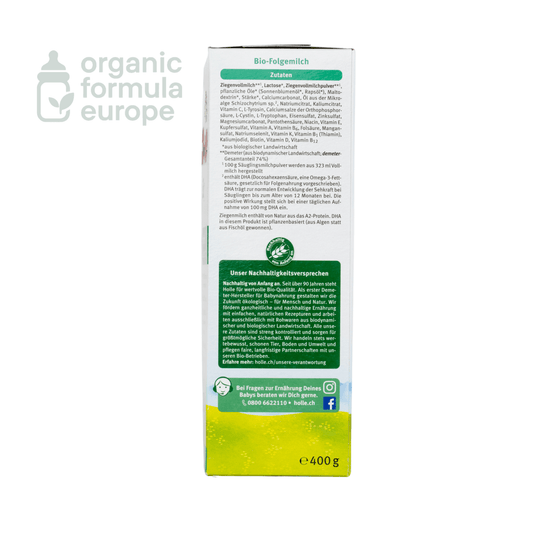
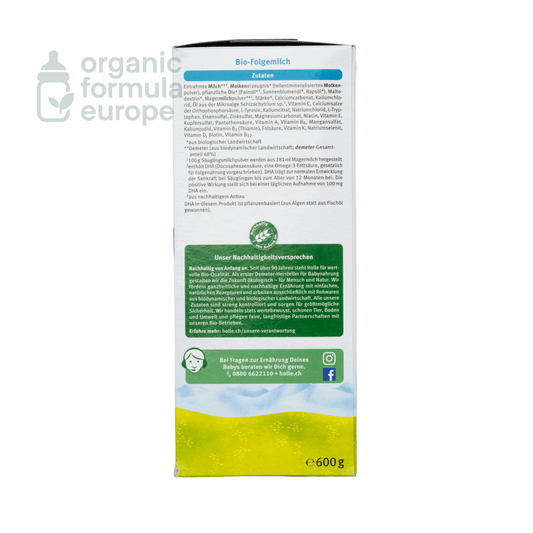
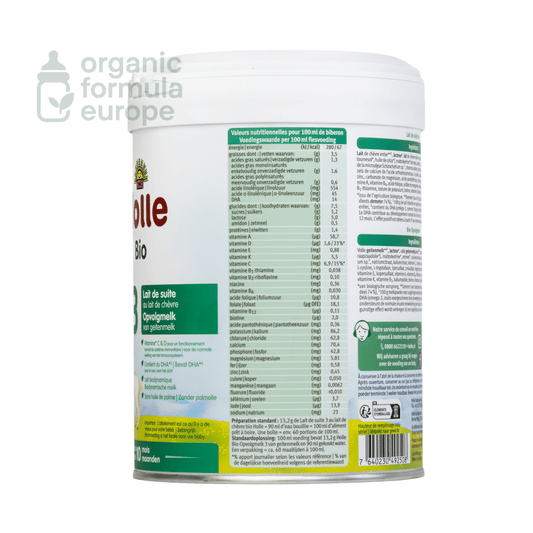
One reason many families choose Holle Bio Stage 3 is because the ingredients are simple and easy to understand, without a long list of confusing extras.
-
Organic milk source: The foundation of this formula is Demeter-certified biodynamic milk, one of the strictest organic standards. All three Stage 3 versions, the cow's milk option and both goat's milk options, follow EU organic and Demeter rules, so there are no routine synthetic pesticides or unnecessary additives in the feed. The result is a milk base produced to high biodynamic standards for a growing baby's diet.
-
Organic lactose: For carbohydrates, the formula primarily uses organic lactose, which is the same naturally occurring milk sugar found in breast milk. Lactose helps provide steady energy and is generally well tolerated by most babies. The formula also includes small amounts of organic starch and organic maltodextrin, which support satiety.
-
Healthy fats: The fat blend uses carefully selected organic vegetable oils. The cow's milk Stage 3 contains organic palm oil alongside organic rapeseed and sunflower oil, while both goat's milk Stage 3 formulas use organic rapeseed and sunflower oil only and contain no palm oil.
-
Nutrients: You'll also find vitamins and minerals on the label, so the formula provides what your toddler needs for follow-on feeding at this stage. The cow's milk Stage 3 includes organic whey powder and skim milk to balance the protein profile, while both goat's milk Stage 3 formulas are made from full-cream goat milk, goat milk powder and lactose, without added whey or skim milk powder.
Holle Stages Explained Simply
Your baby’s nutritional needs changes as they grow. Because of that, you’ll need to feed them the appropriate organic formula at the right time. Here’s how each stage breaks down, so you can confidently choose the right option for your energetic kiddo:
-
Holle Pre: This option is similar to traditional infant formula and is for newborns who rely solely on milk for nutrition. The carbohydrate source is lactose only, which mirrors the main carbohydrate found in breast milk.
-
Stage 1: The next step is Stage 1 formula, designed for babies during the first months of life. Like Pre, this stage supports full milk feeding but is slightly adapted for growing appetites.
-
Stage 2: Around 6 months, when babies start experimenting with purées and other baby food, parents often transition to Stage 2 formula (sometimes called milk stage 2). At this point, milk is still a major source of nutrition, but the formula is adjusted to support a baby who is beginning to eat a more varied diet.
-
Stage 3: Designed for babies from about 10 months, Stage 3 supports little ones who are constantly on the move. Milk feeds are still important, but they work alongside solid meals and snacks to fuel your baby.
-
Stage 4: Once your child turns about 12 months, some families move into stage 4, often referred to as toddler formula. This stage is adapted for older babies and toddlers whose diets are becoming increasingly diverse but who still benefit from a reliable milk-based option.
Holle Bio Stage 3 Instructions
Preparing Holle Bio Stage 3 is simple once you’ve done it a few times. The most important thing is to follow the preparation steps carefully so your baby gets the right amount of formula every time.
-
Boil fresh water and allow it to cool to about 122°F (50°C), as stated in the preparation instructions on your tin of Holle formula, since this helps protect the heat-sensitive nutrients in the milk. Please note that the US CDC and WHO recommend preparing powdered formula with hotter water, around 158°F (70°C), to reduce the small risk of Cronobacter, then letting it cool before feeding. Follow the instructions on your box and ask your pediatrician if you are unsure.
-
Pour the water into a clean bottle. Always use sterilized bottles, nipples, and preparation tools.
-
Add the formula powder. Use the scoop provided in the box and level each scoop evenly. Don’t pack the powder down.
-
Shake well. Close the bottle securely and shake until the milk powder is fully dissolved with no clumps.
-
Check the temperature before feeding. A few drops on your wrist should feel warm, not hot.
If your baby is transitioning from Stage 2 formula or from breast milk, it’s perfectly normal for their feeding patterns to change slightly at first. Every little one is different, and gradual transitions usually work best. If you ever have questions about feeding routines or your baby’s specific needs, checking in with your pediatrician is always a good idea.
Looking for authentic European organic baby formula you can trust? Explore Holle Bio Stage 3 and other carefully selected Holle products at Organic Formula Europe. Our pre-vetted store ensures you can shop with confidence, knowing you’re getting fresh, high-quality options sourced directly from Europe.
Frequently Asked Questions
Does Holle Bio Stage 3 contain added sugar?
No added sugar here. The main carbohydrate is organic lactose, the same naturally occurring milk sugar that is also present in breast milk. The Stage 3 formulas do also contain organic maltodextrin and starch as additional carbohydrates, but no added sugars such as sucrose or glucose syrup.
Where does the DHA come from?
The DHA in Holle Bio Stage 3 comes from algae instead of fish oil. Many parents like this option because it offers omega-3 support without a fishy taste.
Is Holle Bio Stage 3 non-GMO?
Yes. Like all Holle organic products, Stage 3 is made without GMOs and follows strict European production guidelines.
Should I choose cow’s milk or goat’s milk formula?
It depends. Some parents find goat’s milk easier on sensitive tummies, while others do perfectly well with traditional cow’s milk formulas. If you’re unsure, your pediatrician can help you decide what’s best.
How much formula should my baby be drinking at this stage?
There’s no exact rule because every baby is different. Around 10 months, many babies naturally reduce the amount of milk they drink as they eat more solids. Use the feeding guide on the package as a starting point and adjust based on your baby’s appetite, growth, and routine.
European Baby Formula Brands
-

HiPP Formula
HiPP Formula, Organic European Infant Nutrition from Birth to Toddler For more...
-

Holle Formula
Confused About Holle Formula? Start Here There’s no shortage of options when...
-

Kendamil Formula
Kendamil Formula, British Whole Milk Infant Nutrition Choosing the right formula is...


