


Why isn't HiPP Baby Formula FDA Approved?
Table of contents

Ashlen Wilder
Ashlen Wilder is a freelance writer with over seven years of experience covering food, nutrition, business, and consumer products. Her articles on infant nutrition draw on reputable medical and government sources, emphasizing evidence-based information to help parents make informed decisions.
Overview:
- HiPP is manufactured for the European market and complies with European Union regulations rather than U.S. FDA requirements
- The FDA does not "approve" infant formulas like medications; manufacturers must instead meet federal regulations and complete a required premarket notification
- HiPP formulas are produced under strict European safety, nutrition, and quality standards
- Not being FDA approved does not mean HiPP formula is unsafe; it simply means the product was not developed or marketed for sale under the U.S. regulatory system
If you're a parent researching European formulas like HiPP, you've probably come across one question often: Why is HiPP baby formula not FDA-approved? Since HiPP is one of the most well-known European brands for infant formula, it's understandable why this raises concerns for parents who want the safest formula for their child.
The reality is that the U.S. Food and Drug Administration (FDA) does not "approve" most infant formula before it reaches store shelves. Instead, a formula sold in the United States must meet specific regulatory requirements to be legally marketed.
HiPP is manufactured primarily for the European market, where it follows a different set of regulations than formula in the United States. While the company is known for its commitment to organic farming practices and high-quality organic ingredients, its products are not widely sold through traditional U.S. retail channels because they were developed to meet European, not American, requirements. That distinction often leads to confusion about whether HiPP is safe or legally available.
In this guide, we'll explain why HiPP isn't considered FDA-approved, how European formula regulations differ from those in the United States, whether HiPP organic formula is safe, and what parents should know before deciding if it's the right formula for your baby.
What does "FDA-approved" mean for baby formula?
One of the biggest misconceptions about infant formula is that every product on store shelves has been individually approved by the FDA before it can be sold. In reality, the Food and Drug Administration does not "approve" most infant formula products in the same way it approves certain medications or medical devices.
Instead, infant formula manufacturers are responsible for ensuring their products meet FDA requirements for nutrient content, manufacturing practices, labeling, and safety.¹ Before marketing a new formula in the United States, manufacturers must notify the agency and demonstrate that the product complies with applicable regulations. This means a formula can be regulated by the FDA without ever being officially described as "FDA approved."
| Main FDA requirement | What the FDA requires |
|---|---|
| Nutritional standards | Infant formula must contain required minimum levels of essential nutrients and stay within established maximum levels for certain nutrients. |
| Safe ingredients | Ingredients must be safe and suitable for use in infant formula under U.S. regulations. |
| Good manufacturing practices | Manufacturers must follow strict quality-control and sanitation procedures to help ensure products are produced safely and consistently. |
| Product testing | Formula must undergo testing to verify nutrient content, microbiological safety, and other quality standards. |
| Premarket notification | Manufacturers must notify the FDA at least 90 days before marketing a new infant formula in the United States. |
| Manufacturer registration | Companies selling infant formula in the U.S. must register their manufacturing facilities with the FDA. |
| Written compliance documentation | Manufacturers must provide documentation demonstrating that a new formula meets applicable FDA requirements. |
| Labeling requirements | Formula labels must include required nutrient information, preparation instructions, storage guidance, and other mandatory statements. |
| Recordkeeping | Manufacturers must maintain production and testing records and make them available to the FDA when required. |
| Inspections and oversight | FDA-regulated manufacturing facilities are subject to inspections and ongoing regulatory oversight to help ensure compliance. |
Why isn't HiPP organic formula sold in the U.S.?
HiPP formula was developed for the European market rather than the United States, so it follows European regulations instead of U.S. requirements. While HiPP is manufactured to meet strict standards established by European authorities, there are differences between European and American rules for infant formula, including labeling requirements, minimum nutrient levels, packaging, and certain ingredient specifications.² Because of these regulatory differences, HiPP products generally are not sold through traditional U.S. retailers in the same way as domestic formula brands.
It's important to note that this does not automatically mean HiPP is less safe or lower quality than formula available in the U.S. Instead, it reflects the fact that different countries have their own regulatory systems.

European formula vs. American formula
Both European formula and American formula are designed to provide complete nutrition for babies, but they are regulated under different systems. In Europe, products must comply with standards established by the European Food Safety Authority (EFSA) and European Union legislation,³ while formula sold in the United States must meet FDA regulations. Both systems establish requirements for nutrient composition, manufacturing practices, and product safety, but they may differ in areas such as minimum nutrient levels, labeling rules, and approved ingredients.
These differences have contributed to the growing popularity of European baby formula brands among some U.S. families. Many parents are drawn to HiPP and other European formula brands because of their organic options and ingredient philosophy, while others prefer American formula because it is readily available and specifically formulated to meet U.S. regulations.
Ultimately, neither regulatory system is universally considered superior. The best choice depends on your baby's individual needs, your pediatrician's guidance, and selecting a product from a reputable manufacturer that meets the standards of the market where it is sold.

Is HiPP Formula Safe?
Although HiPP is not marketed through the same regulatory pathway as formula sold in the United States, it is manufactured under strict European safety and quality standards. Like all infant formula, HiPP products must meet detailed requirements for nutritional composition, ingredient quality, and manufacturing practices before they can be sold in Europe.³ The company also performs routine quality testing throughout production to help ensure each batch meets established safety standards.
For parents, one of the most important considerations is purchasing authentic formula from a reputable retailer. Whether you choose HiPP or another formula brand, proper storage, intact packaging, and checking expiration dates all play an important role in ensuring a safe infant formula. If you're considering imported formula, it's also worth discussing your choice with your pediatrician, particularly if your baby has specific nutritional needs or requires a specialty formula.
HiPP's Commitment to Organic Ingredients
One of the biggest factors that sets HiPP apart is its long-standing commitment to organic farming and carefully sourced ingredients. HiPP Organic products are made with ingredients that meet European organic standards, which place restrictions on the use of synthetic pesticides, chemical fertilizers, and genetically modified organisms (GMOs). The company also works closely with its network of farms to promote sustainable agricultural practices and maintain consistent ingredient quality.
Many parents who choose HiPP are specifically looking for an organic baby formula made with high-quality organic ingredients. The ingredients in HiPP Organic Baby Formula vary slightly depending on the specific product, but they typically include organic skim milk or organic milk, lactose as the primary carbohydrate source in standard formulas, vegetable oils, vitamins, and minerals to support healthy growth and development.
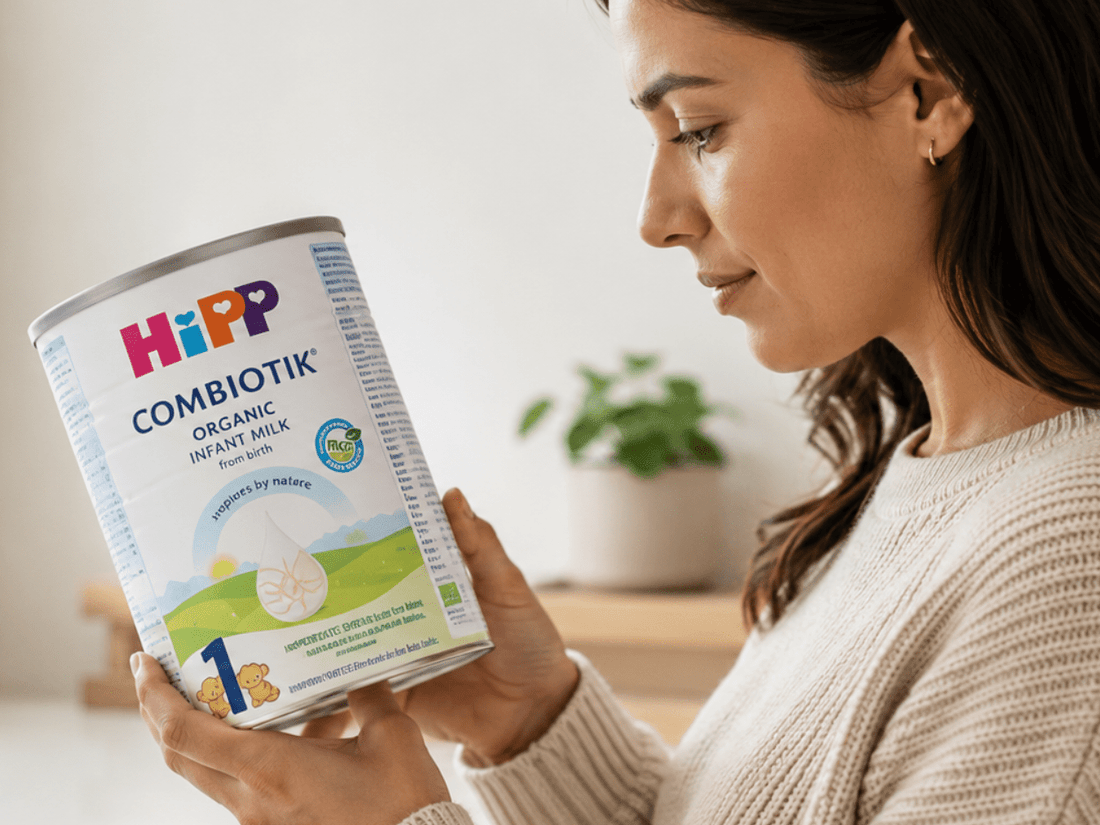
Many packages also display the HiPP Organic Seal, which indicates that the product meets the company's organic production standards in addition to European regulatory requirements. While organic certification doesn't necessarily make one formula healthier than another, it can be an important consideration for families who prioritize organic farming practices when selecting a formula for their baby.
HiPP Formula Options
HiPP offers a wide range of formula types designed to meet different feeding needs from birth through toddlerhood. For healthy, full-term newborns, HiPP Stage 1 Formula and HiPP Dutch Stage 1 are among the most popular choices, providing complete nutrition from birth.
As babies grow, parents can transition to follow-on formula, which is intended for older infants beginning around 6 months of age alongside complementary foods. HiPP also produces specialty formula options for babies with specific feeding challenges, including HiPP Comfort for digestive discomfort, HiPP Anti-Reflux for frequent spit-up, and HiPP HA, a partially hydrolyzed milk formula designed for infants who may benefit from this type of protein under the guidance of a healthcare professional.
Because the company manufactures products for different European markets, the formula available may vary slightly by country. For example, Dutch HiPP formulas differ somewhat from German and UK versions in packaging, stages, and ingredient formulations, although all are designed to meet European nutritional requirements. Whether you're looking for standard HiPP infant milk formula or one of the brand's specialty products, your pediatrician can help determine which HiPP formula option is most appropriate.
Where Can You Buy HiPP Formula?
Because HiPP products are not widely sold through traditional retail stores in the United States, many parents choose to buy HiPP formula from online retailers that specialize in European products. If you decide to buy European baby formula or order HiPP formula online, it's important to purchase from a reputable seller that clearly lists expiration dates, batch information, and proper storage practices. This can help reduce the risk of receiving counterfeit, expired, or improperly handled products.
When shopping for formula online, avoid retailers that cannot provide clear information about where the product came from or how it was stored during shipping. Parents interested in importing baby formula should also be aware that U.S. import policies can change over time, particularly during periods of high demand or supply disruptions. Taking a few extra minutes to research the retailer can help ensure the formula is safe to buy and arrives in good condition.
Takeaway
HiPP has become one of the most recognized European formula brands, but its absence from most U.S. store shelves is often misunderstood. The reason HiPP isn't sold in the U.S. as a mainstream product is because the company manufactures its formulas to comply with European formula regulations rather than the specific requirements for marketing infant formula in the United States. In other words, the issue is regulatory compliance, not necessarily formula quality.
If you're considering HiPP infant formula, focus on purchasing from a reputable retailer, selecting the appropriate stage or specialty product for your baby's needs, and discussing any concerns with your pediatrician. Whether you choose HiPP or another trusted brand, the right formula for your baby is one that provides complete nutrition, supports healthy growth and development, and is appropriate for your child's individual needs.
FAQs
Has HiPP Ever Had a Baby Formula Recall?
Like virtually every major baby formula manufacturer, HiPP has experienced product recalls over the years. However, a baby formula recall does not necessarily indicate that a brand is unsafe or has ongoing quality issues. Recalls can occur for many reasons, including packaging defects, labeling errors, or the potential for contamination, and they are often issued out of an abundance of caution. If you're using HiPP, it's a good idea to periodically check the manufacturer's website and the appropriate regulatory authorities for any current recall notices.
Did the Infant Formula Shortage Increase Interest in HiPP?
Yes. During the U.S. infant formula shortage, many families began looking beyond domestic brands after finding empty store shelves. The formula shortage prompted increased interest in European products like HiPP, particularly through online retailers. During this period, the U.S. government temporarily allowed certain imported formulas to enter the country under emergency measures to help improve supply, although not every European product qualified under those programs.
Can You Import HiPP Into the United States?
Many parents purchase imported formula from specialty retailers, but it's important to understand that import policies and enforcement can change over time. If you're considering ordering HiPP from overseas, buy from a trusted retailer, verify the product's authenticity, and consult your pediatrician if you have any questions about choosing or switching formulas. Regulations may evolve, so it's always worth checking the latest guidance before placing an order.
Citations
1. FDA. Infant Formula Homepage. Updated July 2026. Accessed August 3, 2026. https://www.fda.gov/food/resources-you-food/infant-formula-homepage
2. FDA. Guidance for Industry: Frequently Asked Questions About FDA's Regulation of Infant Formula. Updated March 2006. Accessed August 3, 2026. https://www.fda.gov/regulatory-information/search-fda-guidance-documents/guidance-industry-frequently-asked-questions-about-fdas-regulation-infant-formula
3. European Commission. Commission Delegated Regulation (EU) 2016/127 on infant formula and follow-on formula. Official Journal of the European Union.
Commission Delegated Regulation (EU) 2016/127