



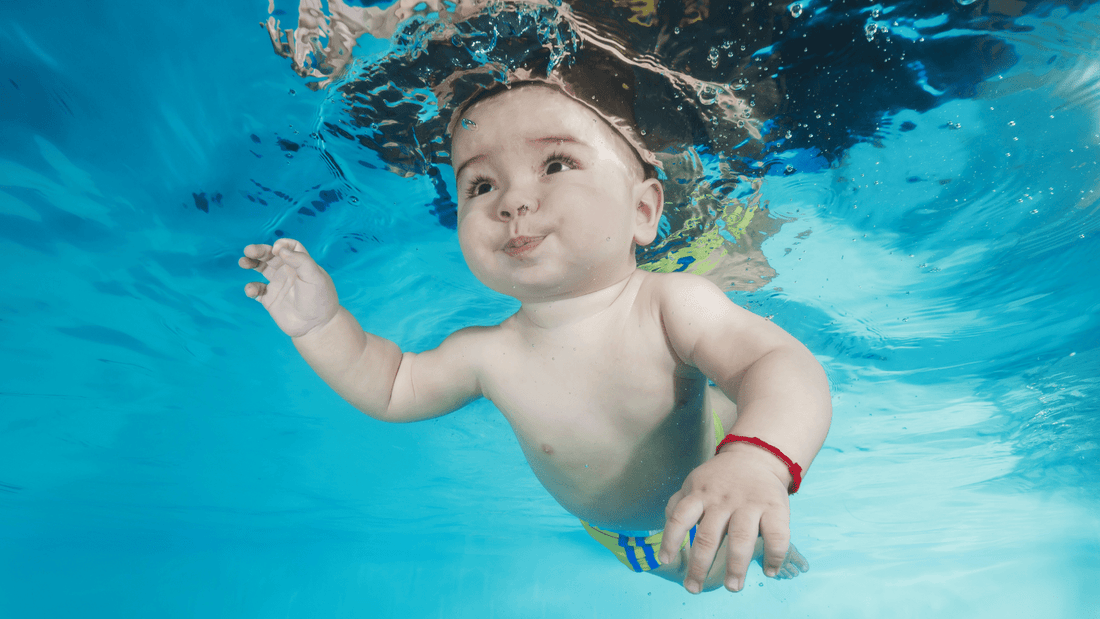
Baby Swimming Explained
Table of contents

Organic Formula Europe Team
Organic Formula Europe Team is the editorial team behind our Knowledge blog. We are a family business based in Germany that supplies European infant formula to families across the United States. Our articles are built on primary sources from the FDA, AAP, CDC, NIH, ESPGHAN and NHS, and are reviewed by a physician.
Overview
- Babies can go in the water early. The NHS says there is no need to wait until your baby has been vaccinated before a first swim.⁵
- Water play is not a swim lesson. Under the age of 1, pool time is about comfort, bonding and getting used to water, not learning to swim.
- Formal lessons come later. The American Academy of Pediatrics suggests swim lessons can begin for many children from age 1.¹
- No class makes a baby drown proof. Close, touch level supervision stays the most important layer of protection at every age.¹˒²
Is it too early? Is the pool warm enough? Does your baby need a special swim diaper, and what happens if they go under? Parents who are thinking about baby swimming often have more questions than answers, and many class descriptions promise more than any baby can actually deliver.
This guide explains what baby swimming really is, when babies can start, what the leading health bodies say about lessons and drowning risk, and how to prepare for a calm first visit.
Every baby develops at their own pace. If your baby was born early, has a health condition or has recently been unwell, talk to your pediatrician before you book a class.

What Is Baby Swimming?
Baby swimming usually means a parent and baby water session, either in a structured class or during a quiet slot at a public pool. You stay in the water, hold your baby close and guide them through gentle movement, songs, splashing and floating with support.
The goal is not technique. It is familiarity. A baby who feels relaxed in water, enjoys the sensation and trusts the adult holding them has a good foundation for lessons later on. The American Academy of Pediatrics describes parent and child water play as a way to help a baby get used to the pool that "can be a fun activity to enjoy together."¹
Many parents also value what happens around the water: undivided time with their baby, skin to skin contact, and a shared routine that has nothing to do with screens.
What Is the Difference Between Baby Swimming and Swim Lessons?
The two terms are often used interchangeably, but they describe different things.
- Water play. Adult led, relaxed and focused on comfort. Your baby is held or supported at all times. This is what almost all classes for babies under 1 actually offer.
- Swim lessons. Structured teaching of water competency skills: getting back to the surface, moving through the water and getting out safely. The AAP recommends lessons that build these skills, not just strokes, and notes that they can help reduce drowning risk for children between ages 1 and 4.¹
- Survival or "self rescue" training. Some programs claim to teach babies to roll onto their backs and float. The AAP notes that some babies aged 6 to 12 months can be trained to float on their backs, but they "may not be developmentally able to swim" and cannot yet lift their heads out of the water well enough to breathe.¹
When Can Babies Start Swimming?
There is no single start date. Most babies can enjoy short, warm water sessions from the early months, while formal lessons make more sense once a child is older. The table below shows what is realistic at each stage.
| Age | What is realistic | What the experts say |
|---|---|---|
| 0 to 6 months | Short water play sessions held close to you, gentle floating with full support, getting used to splashes | No need to wait for vaccinations (NHS).⁵ Warm water is essential. |
| 6 to 12 months | Kicking, splashing, supported back floating, songs and simple routines | No evidence that infant swim programs under 1 lower drowning risk (AAP).¹ |
| 1 to 4 years | Parent and child lessons that build water competency step by step | Swim lessons can begin for many children from age 1 (AAP).¹˒² |
| 4 years and older | Treading water, reaching an exit point, first strokes | Most children are ready for lessons by their 4th birthday; many master front crawl by 5 or 6 (AAP).¹ |
Readiness matters more than the date on the calendar. The AAP points out that children "develop at different rates" and that emotional maturity, physical abilities and comfort in the water all play a role.¹ Your pediatrician can help you judge when your child is ready for the next step.
Do Babies Need Their Vaccinations Before Swimming?
No. The NHS is direct about it: "You can take your baby swimming from a very young age – there's no need to wait until they've been vaccinated."⁵
Many parents grew up hearing the opposite, which is why the question comes up so often. What does matter is how your baby feels on the day. If they are unsettled or unwell after a vaccination appointment, it makes sense to wait until they are back to their usual self.
Does Baby Swimming Prevent Drowning?
No, and that is worth stating plainly rather than talking around. The AAP states that there is currently no evidence that infant swim programs for babies under 1 year old lower their drowning risk.¹ Its updated drowning prevention recommendations advise beginning swim classes after a child's first birthday.²
Even later on, lessons are only one layer of protection. The AAP puts it clearly: swim lessons do not make children "drown proof."¹ Constant, close and focused supervision remains essential.
The numbers explain why. According to the CDC, more children aged 1 to 4 die from drowning than from any other cause of death.³ Among infants under 1, three quarters of all drownings happen in bathtubs.⁴ Drowning is often quick and silent, and it can happen in very little water.
So baby swimming is a lovely activity and a good start for later lessons. However, it is not a safety measure on its own.
How Do You Choose a Parent and Baby Swim Class?
Class quality varies a lot. Before you book, it helps to watch a session or ask the provider a few direct questions. The AAP recommends that parents be allowed to observe a class first.¹
| What to look for | Why it matters |
|---|---|
| Warm water | Young children lose heat quickly. The AAP recommends water heated to 87 to 94°F (about 30.5 to 34.5°C) for classes for children aged 3 and under.¹ |
| Parent in the water | An adult should stay within arm's reach for touch supervision, even during a lesson.¹ |
| Trained instructors | Instructors should be certified through a recognized learn to swim curriculum; lifeguards should hold current CPR and first aid certification.¹ |
| Clean water and snug swimwear | Babies are more likely to swallow water. Programs should require swimwear that fits snugly at the legs.¹ |
| Calm, age appropriate pace | No forced dunking or pressure. Your baby's comfort should set the tempo. |
| Small groups | Fewer families in the water means more attention and a quieter environment. |
How Do You Prepare for Your Baby's First Swim?
A little planning makes the first visit calmer for both of you. Four details make the biggest difference:
- Check the water temperature. Ask the pool before you go. Very young babies need noticeably warmer water than a standard lap pool.
- Choose snug swimwear. Most pools require a swim diaper, and many recommend a reusable swim diaper or snug swim pants on top. Check the rules of your pool.
- Keep the first session short. A few minutes of relaxed contact is a success. Watch your baby, not the clock, and get out while they are still happy.
- Plan for warming up afterwards. Bring a hooded towel, a warm layer and a hat. Babies cool down quickly once they are out of the water.
It also helps to time the visit around naps and feeds, so your baby is neither overtired nor hungry. And bring what you need for yourself: getting a baby changed, dried and dressed takes longer than most parents expect.
When Should You Skip the Pool?
Some days are simply not swim days. Stay home if your baby:
- has diarrhea or has had it recently, to protect other swimmers and your baby
- has a fever, a cold or seems unwell
- has a skin rash, broken skin or an ear infection
- is unusually tired, unsettled or not feeding well
If you are unsure, ask your pediatrician. And if your baby cries, shivers or turns pale in the water, end the session. There will always be another one.
How Do You Keep Your Baby Safe Around Water at Home?
Most of the risk for babies is not at the pool. It is at home. Because the CDC reports that three quarters of infant drownings happen in bathtubs,⁴ the everyday routines matter most.
- Stay within arm's reach. The AAP recommends that an adult provide touch supervision for infants and toddlers in or near any water, including bathtubs.²
- Never leave the room, even briefly. Do not leave a baby alone or in the care of another child near water, not even for a moment.¹˒²
- Empty it straight away. Empty baths, buckets and paddling pools right after use.
- Learn CPR. The AAP encourages parents and caregivers to learn CPR, because when drowning occurs, seconds matter.²
How Can Organic Formula Europe Help on Swim Days?
A pool visit changes the rhythm of the day. Your baby is awake and active in the water, gets changed twice and often arrives home hungry and ready for a nap. For families who formula feed or combine breast milk and formula, a little planning around feeds makes swim days easier.
- Plan feeds around the session. A baby who is neither very hungry nor just fed tends to settle more easily in the water. Many parents offer a feed afterwards, once their baby is dry and warm, as part of a calm routine.
- Pack for a fresh bottle. Bring pre measured powder in a clean container and prepare the bottle when your baby is ready, following the instructions on the can you actually bought.
- Keep your usual formula. A swim day is not the time to switch lines or stages. Familiar food helps keep the rest of the day predictable.
Organic Formula Europe is a family business based in Germany that helps parents find the right European organic formula, from HiPP, Kendamil or Holle.
Takeaway
Swimming with your baby can be a warm, playful way to spend time together and to build early confidence in the water. Babies can start young, with no need to wait for vaccinations, but pool time under the age of 1 is water play, not a swim lesson, and it does not lower drowning risk. Formal lessons can begin for many children from age 1, and supervision stays the most important protection at every age. Choose a warm pool, keep sessions short, and stay within arm's reach.
Citations
- American Academy of Pediatrics. Swim Lessons for Children: When to Start & What to Consider, HealthyChildren.org. https://www.healthychildren.org/English/safety-prevention/at-play/Pages/Swim-Lessons.aspx
- American Academy of Pediatrics. AAP Releases Updated Drowning Prevention Recommendations, HealthyChildren.org. https://www.healthychildren.org/English/news/Pages/AAP-releases-updated-drowning-prevention-recommendations.aspx
- Centers for Disease Control and Prevention. Drowning Facts. https://www.cdc.gov/drowning/data-research/facts/index.html
- Centers for Disease Control and Prevention. Risk Factors for Drowning. https://www.cdc.gov/drowning/risk-factors/index.html
- National Health Service (NHS). How to keep your baby or toddler active. https://www.nhs.uk/baby/babys-development/play-and-learning/keep-baby-or-toddler-active/
FAQs
Is swimming good for babies?
For most babies, gentle water play is a pleasant, active experience and a chance for close one to one time with a parent. It can also make later swim lessons easier because the water already feels familiar. It is not a drowning prevention measure for babies under 1.
Can babies hold their breath underwater?
Babies may make reflex "swimming" movements in water, but they cannot yet lift their heads out of the water well enough to breathe. A reflex is not a safety skill, so avoid dunking and keep your baby's face above water unless an experienced instructor guides you.
How warm should the pool be for a baby?
Warmer than most lap pools. The AAP recommends water heated to 87 to 94°F (about 30.5 to 34.5°C) for classes for children aged 3 and under. Ask the pool about the temperature before your first visit.
How long should a baby stay in the pool?
Keep early sessions short and follow your baby's cues. Get out as soon as your baby seems cold, tired or unhappy, and build up time gradually as they grow more comfortable.
When can a baby learn to swim on their own?
Not in the first year. The AAP notes that most children are ready for swim lessons by their 4th birthday and can learn skills like treading water, and that many master the front crawl by age 5 or 6. Earlier lessons from age 1 focus on water competency with a parent close by.