



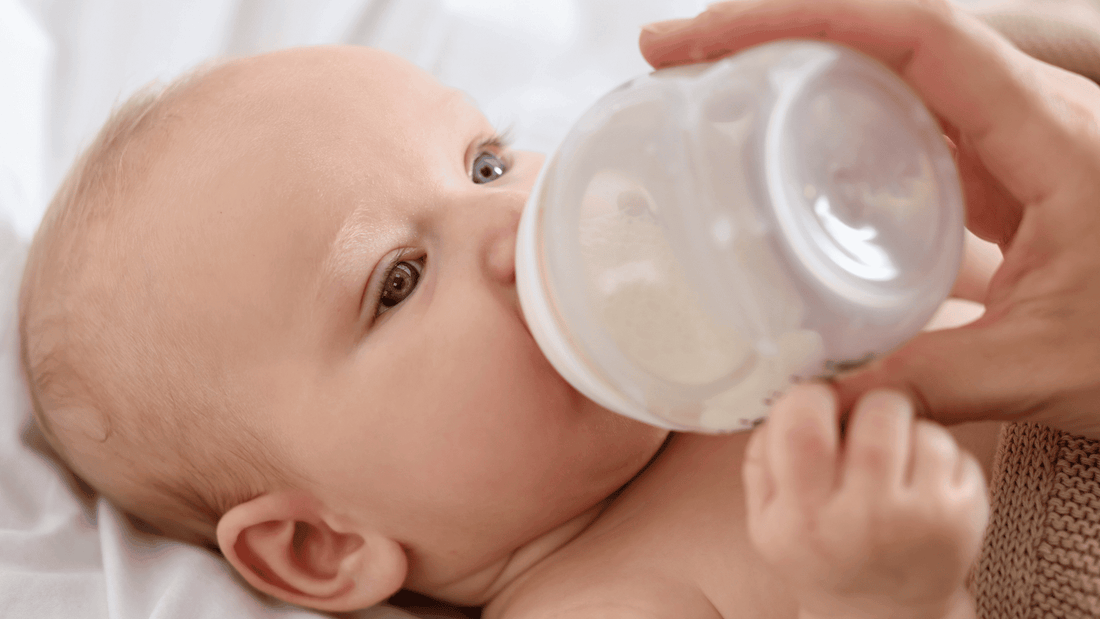
Should You Use Purified Water for Baby Formula?
Table of contents

Ashlen Wilder
Ashlen Wilder is a freelance writer with over seven years of experience covering food, nutrition, business, and consumer products. Her articles on infant nutrition draw on reputable medical and government sources, emphasizing evidence-based information to help parents make informed decisions.
Overview
- According to the CDC, boiled tap water is generally safe to use for baby formula.¹
- Purified water is considered an acceptable choice for mixing with baby formula, especially when tap water is not safe.²
- It removes all contaminants, dissolved solids, and most or all minerals.
- Always follow the formula manufacturer and pediatric guidelines when preparing bottles.
Purified Water for Baby Formula
When preparing baby formula, every small decision can feel significant. From choosing the right formula stage to sterilizing bottles properly, parents naturally want to ensure that every step supports their baby’s health. A common question parents have when it comes to formula is if they should always use purified water for baby formula, and if it is the safest and most appropriate choice.
There are a lot of different types of water to choose from for infant feeding, ranging from plain tap water to bottled options. Because powdered formula is carefully designed to deliver precise nutrients, the water used to mix it should not alter taste, texture, or mineral composition. Boiled tap water is generally a safe choice, but bottled distilled or purified water is also acceptable.
Understanding what purified water is, how it compares to other options, and when you should use it can help parents feel more confident during daily bottle preparation.
What Is Purified Water?
Purified water is water that has been treated to remove contaminants such as bacteria, parasites, minerals, and particles. It also removes most or all minerals, and is often used in medical and laboratory settings.³ According to the FDA, to be labeled as purified water, it must go through a process like reverse osmosis, distillation, ozonation, or a combination of these systems.⁴
Unlike untreated tap water, purified water undergoes additional processing to improve consistency and safety. At the same time, it is not as heavily processed as distilled water, which removes virtually all minerals through evaporation and condensation.
However, the term “purified” can vary slightly depending on the manufacturer. Some purified water products remove nearly everything and then add small amounts of minerals back for taste. Others focus strictly on contaminant removal. For this reason, reading labels and understanding the purification method can be helpful, especially when the water will be used for infant formula.
Is Purified Water Safe for Baby Formula?
In most situations, using boiled and cooled tap water is completely fine for infant formula. Distilled water and purified water are also fine for preparing powdered infant formula, especially when tap water is not considered safe. These processed water options should be used during emergencies or natural disasters when the safety of tap water has been compromised.¹
Babies, especially newborns under two months of age, have developing immune systems and kidneys, so it's crucial to prepare powdered infant formula with clean water. Their bodies are more sensitive to environmental exposures compared to adults. Because of this, minimizing unnecessary contaminants in drinking water is a reasonable precaution.
It is important to understand, however, that babies do not depend on water for nutrition. Infant formula already contains precisely measured minerals such as calcium, iron, and zinc. The role of water is simply to dissolve and deliver those nutrients in the correct concentration. If the water contains excessive minerals, it could slightly alter the intended nutritional balance of the prepared bottle.
Parents should always follow the preparation instructions on their formula packaging. Some health authorities recommend boiling water for babies under a certain age—even if the water source is purified—particularly in the first months of life.
Ultimately, safety depends not only on the type of water chosen but also on how it is stored, handled, and prepared.
Purified Water vs Other Water Types for Formula
When deciding on the best water for formula, parents often compare purified water with tap water, distilled water, filtered water, or bottled mineral water.
Tap water is regulated in many countries and can be perfectly safe. However, mineral content varies depending on the region, making it important to consider using distilled water in areas with high mineral content. Hard water areas may have elevated calcium or magnesium levels. Older plumbing systems may introduce trace metals, which is why it's advisable to use bottled water when preparing infant formula. While many municipal supplies are safe, some parents prefer additional control.
Distilled water undergoes a more intensive purification process. Because it removes nearly all minerals, it offers extreme consistency. Some parents appreciate this level of purity. Both options can be appropriate, and parents should refer to the formula manufacturer's guidance.
Filtered tap water, such as water passed through a household carbon filter, may remove chlorine and certain impurities but does not always eliminate all minerals, chemicals, or dissolved solids. The effectiveness depends on the type and maintenance of the filter.⁵
When Purified Water Makes Sense
There are specific scenarios where purified water becomes particularly practical.
Families living in areas with inconsistent tap water quality may find peace of mind in using bottled water or distilled water for their baby’s nutrition. Homes with older pipes, rural wells, or frequent municipal advisories may also benefit from a more controlled source.
Travel is another common situation. When away from home, parents may not know the mineral composition of local tap water. In these cases, bottled purified water provides predictability and convenience.
Some parents also prefer purified water simply for peace of mind. The early months of parenting often come with heightened awareness and careful decision-making. Choosing purified water can reduce uncertainty and create a routine that feels safe and manageable.

Proper Preparation Still Matters
Even when using distilled or purified water, safe preparation practices remain essential. Some health experts recommend boiling the water even if it is purified or bottled.⁶ Water should be stored in a clean, sealed container and kept away from potential contamination. Bottles, nipples, and preparation surfaces should be properly sterilized according to age guidelines.
Some health authorities recommend heating water to a certain temperature before mixing formula to reduce potential bacterial contamination from the formula powder itself, especially for babies under two months.¹ This recommendation applies regardless of whether the water is purified, distilled, or tap.
Measuring accurately, mixing thoroughly, and following storage instructions ensure that your baby receives the intended nutrition safely.
Final Thoughts
Choosing purified water for baby formula is about creating a feeding routine that feels safe, consistent, and manageable. While multiple water options may be acceptable depending on location and medical guidance, purified water offers a lot of benefits, such as being free of potential contaminants and having a stable composition of minerals.
Understanding your local tap water quality, following formula preparation guidelines, and consulting healthcare professionals are always recommended to ensure safe feeding routines for your baby.
Do I need to boil purified water before making formula?
For healthy full-term infants in many regions, boiling purified water may not be necessary. However, some pediatric recommendations to recommend boiling any type of water always, and especially so for babies under two months or those born prematurely. Always consult local guidelines when deciding whether to use bottled water or boil the water for your baby's formula.
Is purified water better than distilled water?
Neither is universally “better.” Both are low in contaminants. Purified water may retain minimal minerals depending on the process, while distilled water removes nearly all. The difference is often about preference and guidance rather than safety.
Can purified water be used every day?
Yes, purified water can typically be used daily for formula preparation when it meets quality standards.
Does purified water contain fluoride?
Most purified water contains little to no fluoride unless added back intentionally. Parents concerned about fluoride exposure or supplementation should discuss this with their pediatrician.
Citations
1. Centers for Disease Control and Prevention. Infant formula preparation and storage. Updated December 19, 2024. Accessed March 21, 2026. https://www.cdc.gov/infant-toddler-nutrition/formula-feeding/preparation-and-storage.html
2. Nationwide Children’s Hospital. Bottle feeding: formula preparation. Revised 2021. Accessed March 21, 2026. https://www.nationwidechildrens.org/family-resources-education/health-wellness-and-safety-resources/helping-hands/bottle-feeding-formula-preparation
3. ScienceDirect. Purified water. In: Nursing and Health Professions. Elsevier. Accessed March 21, 2026. https://www.sciencedirect.com/topics/nursing-and-health-professions/purified-water
4. U.S. Food and Drug Administration. Bottled water everywhere: keeping it safe. Updated April 22, 2022. Accessed March 19, 2026. https://www.fda.gov/consumers/consumer-updates/bottled-water-everywhere-keeping-it-safe
5. Centers for Disease Control and Prevention. About choosing home water filters. Updated August 26, 2025. Accessed March 21, 2026. https://www.cdc.gov/drinking-water/prevention/about-choosing-home-water-filters.html