



Table of contents

Pia Kraus
Pia Kraus is a Germany-based expert and mother writing about organic baby formula and infant nutrition. With empathy and careful research, she addresses the real questions parents face, helping families feel more confident and supported in their everyday nutrition decisions.
The Most Important Things Summarized
+ Breast milk and formula both provide essential nutrition for babies
+ Breast milk contains antibodies that support immune function
+ Formula provides essential nutrition and is strictly regulated and designed to support healthy growth, ensuring that formula-fed babies receive adequate nutrition.
+ Feeding decisions are influenced by health, lifestyle, and emotional factors
Few parenting topics stir up as many emotions as feeding choices, whether it’s breastfeeding vs baby formula. Whether you are pregnant and planning ahead or holding a newborn at three in the morning wondering if they are getting enough, the question of breastmilk vs formula can feel heavy.
You may have heard strong opinions from friends, family, social media, or even strangers. Some say breast milk is the only way, but it is important to recognize that formula feeding allows for flexibility in feeding routines. Others insist the formula is just as good. Somewhere in the noise, you are simply trying to do what is best for your baby and your family.
This article offers a calm, balanced look at breastmilk vs formula. No guilt should be felt by parents who choose to breastfeed or formula feed their baby. No pressure. Just clear information so you can make a confident, informed decision.
Understanding Breast milk vs Formula in Simple Terms
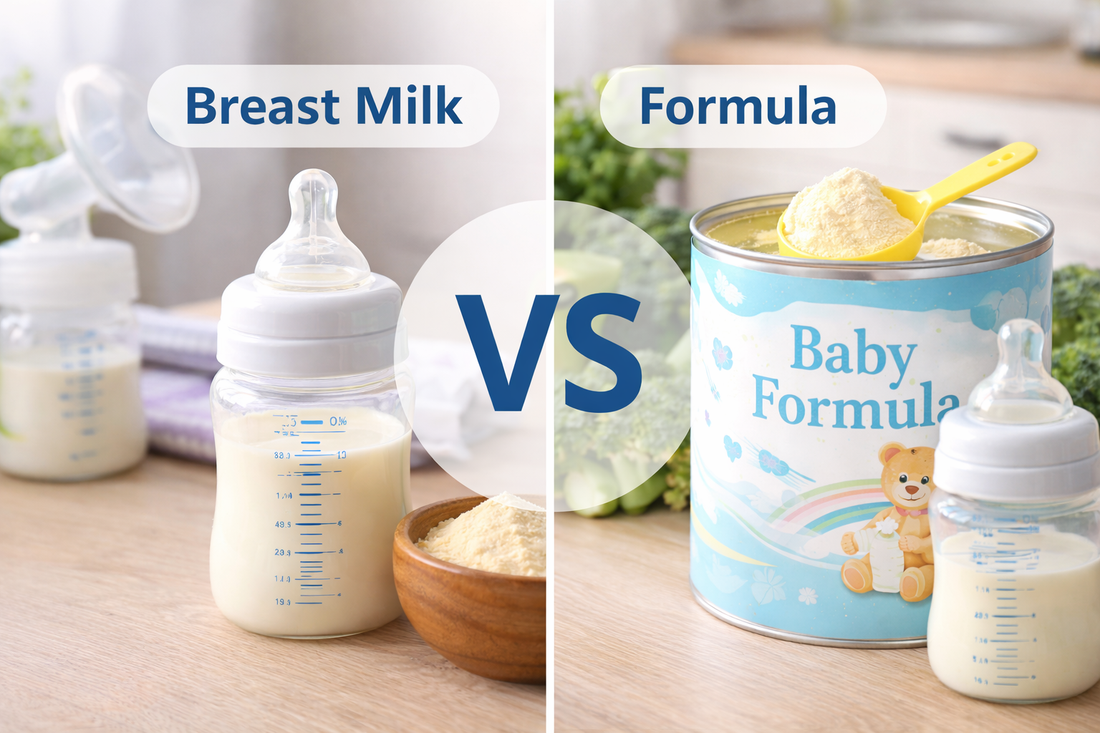
At the most basic level, both breast milk and infant formula are designed to nourish babies during their first year of life.
Breast milk is naturally produced by a mother’s body. It changes over time to meet a baby’s developmental needs. It contains antibodies, enzymes, hormones, and living cells that support immune function and growth.
Formula is manufactured to mimic the nutritional profile of breast milk as closely as possible to meet baby needs. It contains carefully measured amounts of protein, carbohydrates, fats, vitamins, and minerals. In the United States, formula is strictly regulated to ensure it supports healthy growth, as emphasized by the American Academy of Pediatrics.
When discussing formula vs breast milk facts, the key point is this: both can nourish a baby. The differences lie in composition, flexibility, cost, and personal circumstances.

Nutritional Differences: What Is Inside
Breast milk contains a unique combination of nutrients and bioactive components. It adapts over time. Colostrum, produced in the first few days after birth, is rich in antibodies. Mature milk adjusts in fat content depending on the stage of feeding.
Formula, on the other hand, has a consistent composition, providing a reliable option for feeding your baby. It does not change from feeding to feeding. However, it is designed to provide complete nutrition, unlike breast milk, which may be preferred for its digestibility.
In terms of macronutrients, both contain:
Protein for growth
Fat for brain development is crucial, especially for baby formula designed to support this need.
Carbohydrates for energy
Essential vitamins and minerals
One key difference is immune support. Breast milk contains antibodies that help protect against infections. Formula does not contain live antibodies, though some formulas include added prebiotics and probiotics to support gut health.
Still, babies raised on formula grow, develop, and thrive every day. Proper nutrition can come from both sources.
Immune System and Health Considerations
One of the most discussed formula vs breast milk facts involves immunity.
Breast milk contains immunoglobulins, especially IgA, which help protect a baby’s digestive and respiratory systems. Research shows that breastfeeding may reduce the risk of certain infections, especially in early infancy.
That said, access to clean water, safe formula preparation, and modern healthcare significantly influence outcomes for those who choose to formula feed.
For example, in households with reliable sanitation and medical care, the health gap between breastfed and formula fed babies narrows considerably.
It is also important to consider maternal health. Some mothers cannot breastfeed due to medical conditions, medication use, low milk supply, or previous surgery, as noted by the American Academy of Pediatrics. In these cases, formula is not a compromise, especially when it is formulated to include nutrients found in breast milk. It is a necessary and safe alternative for parents who choose to supplement with formula, especially since formula is less digestible for some babies.
Emotional and Lifestyle Factors
Breastmilk vs formula is not just a nutritional debate. It is a lifestyle decision.
Breastfeeding can be deeply bonding and convenient in some ways, especially for breastfed babies, and can also help mothers pump breast milk for later use. There is no need to measure or mix. Milk is always available and at the right temperature, whether it is breast milk or formula.
However, breastfeeding can also be physically demanding. It may involve sore nipples, sleep disruption, pumping schedules, or concerns about supply.
Formula feeding offers flexibility. Partners and caregivers can share feeding responsibilities. Mothers returning to work may find formula more manageable.
Consider a new mother recovering from a difficult birth while also caring for older children. For her, formula feeding may reduce stress and improve overall family wellbeing, allowing her to share feeding duties with her partner.
Feeding choices are not made in isolation, especially when influenced by factors like breast cancer awareness and support. They are shaped by real life.
Cost and Accessibility
Breastfeeding is often described as free, but that is not entirely accurate when considering the costs associated with making breastfeeding successful. There may be costs for nursing bras, breast pumps, storage bags, lactation consultations, or time off work.
Formula requires ongoing purchases. Depending on brand and type, formula can be a significant monthly expense, especially when considering the cost of specialized formulas for babies with milk protein allergies.
Families should realistically assess their budget. If breastfeeding requires unpaid leave that creates financial strain, that is part of the equation.
There is no universal right answer. There is only what works for your circumstances.
Preparation and Safety
When discussing breastmilk vs formula, preparation is another practical difference.
Breast milk does not require mixing. However, it does require safe storage and handling if pumped.
Formula must be prepared carefully according to instructions. Clean water, proper measurements, and sterilized bottles are important when you choose to formula feed your baby.
Following preparation guidelines ensures that the formula remains safe and nutritionally balanced.
Parents sometimes worry about making mistakes. Reading instructions carefully and consulting a pediatrician can provide reassurance.
As one expert explains, the benefits of both human milk and formula should be considered in the discussion.
"Boiling water for formula preparation is primarily a safety precaution. Especially for young infants or when water quality is uncertain."
Feeding decisions can affect mental health.
Some mothers feel intense pressure to breastfeed and experience guilt if it does not work out. Others may feel judged for choosing formula from the start, despite the fact that formula provides babies with necessary nutrients.
Stress and anxiety can impact the postpartum experience significantly. A calm, supported parent is vital to a baby’s wellbeing.
If breastfeeding is causing persistent pain, emotional distress, or physical exhaustion, seeking help from a lactation consultant is a good first step. If challenges continue, transitioning to formula is a valid and loving choice to feed your baby.
A nourished baby and a healthy parent matter more than meeting an external expectation, regardless of whether they choose human milk or formula.
Mental Health and Feeding Choices
Combination Feeding: A Middle Ground
Breastmilk vs formula does not always mean choosing one exclusively, as many families choose to formula feed in addition to breastfeeding.
Many families use combination feeding. This may involve breastfeeding during certain times of day and offering formula at others.
For example, a working mother may breastfeed in the morning and evening while caregivers provide formula during the day, allowing for a balance in feeding duties.
Combination feeding can offer flexibility while maintaining some breastfeeding benefits. It may also reduce pressure on milk supply.
Every family can tailor feeding to their needs, whether they choose to breastfeed or use baby formula.
Real World Scenario: Two Healthy Babies, Two Different Paths
Imagine two babies born in the same hospital, one receiving human milk and the other formula.
One baby may be exclusively breastfed while another may be formula-fed. The other is formula fed from birth because the mother had a medical condition that prevented breastfeeding.
At six months, both babies are smiling, growing, and meeting milestones. They have regular pediatric checkups and supportive caregivers.
Their feeding journeys were different. Their health and happiness are equally important.
This is the heart of the breastmilk vs formula conversation, particularly when considering the decision to breastfeed or formula feed your baby through breast milk or formula. There are multiple safe paths to raising a healthy child.
Making the Decision That Fits Your Family
If you are deciding between breast milk and formula, ask yourself: how does each option fit into your family's lifestyle and feeding duties?
What is realistic for my physical and mental health may include the choice to breastfeed or formula feed.
What support do I have
What works with my work schedule and family structure
What does my pediatrician recommend for my baby
There is no perfect feeding plan. There is only the one that supports your baby’s growth and your family’s stability.
Avoid comparing your journey to someone else’s, as every family's decision on breastfeeding vs formula feeding is unique, and some may find that bottle feeding works best for them. Every parent and every baby is unique.
Is breast milk always better than formula?
Breast milk offers immune benefits and adapts to a baby’s needs, which is one of the key benefits of breastfeeding, while formula provides balanced nutrition. However, formula is a safe and nutritionally complete alternative. The best choice depends on individual circumstances.
Do formula fed babies grow differently?
In most cases, formula fed babies grow and develop normally when fed appropriately. Pediatricians monitor growth patterns regardless of feeding method, whether a baby is breastfed or formula fed.
Can I switch from breastfeeding to formula?
Yes. Many families transition partially or fully to formula. It is best to consult your pediatrician for guidance on gradual changes, particularly when transitioning from exclusive breastfeeding to formula feeding.
Is combination feeding safe?
Yes. Combination feeding is common and safe. It can provide flexibility while still offering some benefits of breast milk, especially during the first 6 months.