



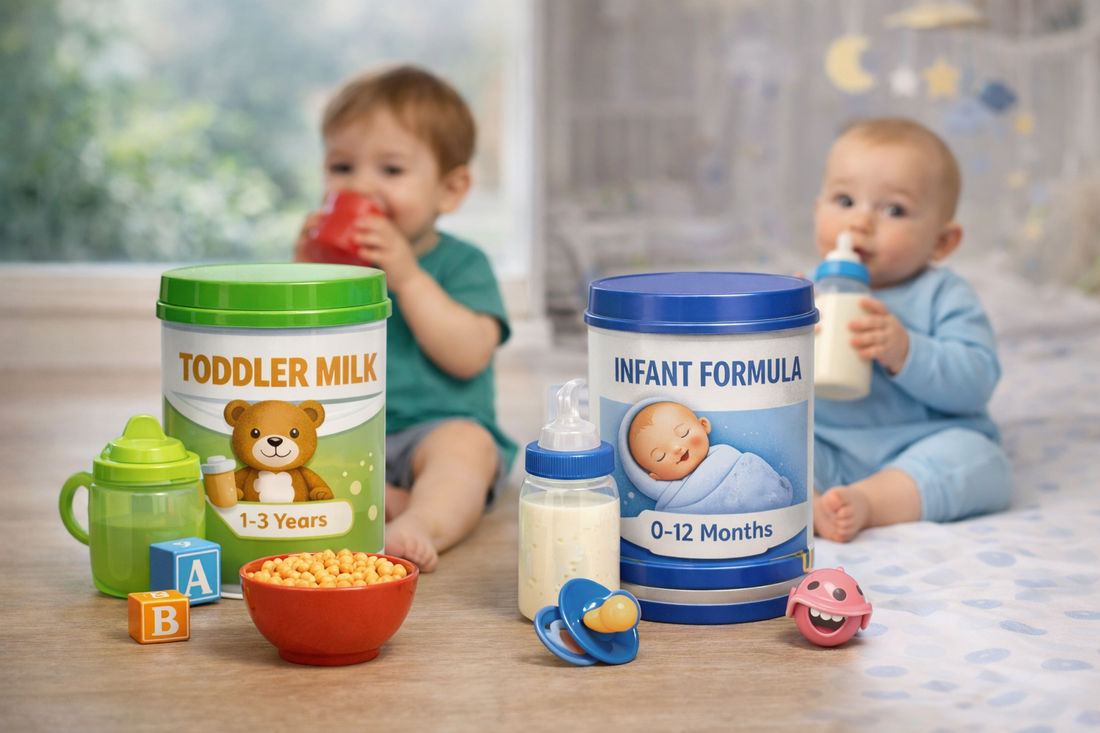
Baby Formula vs Toddler Milk: What’s the Difference?
Table of Contents

Ashlen Wilder
Ashlen Wilder is a freelance writer with over seven years of experience covering food, nutrition, business, and consumer products. Her articles on infant nutrition draw on reputable medical and government sources, emphasizing evidence-based information to help parents make informed decisions.
Overview
Baby formula is specifically designed for infants and provides essential nutrients for growth during the first year.
Toddler milk is for children over 12 months and is designed to complement their solid food intake.
Baby formula is designed to closely mimic breast milk, and its ingredients are regulated by the FDA.
Not all toddlers need toddler milk. A balanced diet may be enough, but toddler milk can help fill in any nutritional gaps in certain situations.
As a parent, there are many options to make when it comes to feeding your little one in the first months of life. For formula-fed babies, it’s easy to feel overwhelmed by the various brands and formula stages available in the United States. A common question parents have as their baby grows is what the difference is between infant formula and toddler milk.
While baby formula and toddler milk may seem similar, they are designed for different stages of your child’s development. Infant formula is designed to be a direct replacement for breast milk, while toddler milk is for children over 12 months of age who are transitioning away from breastmilk or infant formula.
We'll break it down: what’s the difference between baby formula and toddler milk, when toddler milk might be needed, and when you should make the switch according to the FDA and U.S. pediatrics guidelines.

What is Baby Formula?
Baby formula is specifically designed to meet the nutritional needs of newborns and infants up to around 12 months. It's made to closely resemble breast milk in terms of nutrients, although it lacks the immune-boosting benefits of breast milk.¹ Baby formulas come in different types, including cow’s milk-based, soy-based, and specialized formulas for babies with allergies or sensitivities.
The FDA, or more specifically, The Center for Food Safety and Applied Nutrition, regulates infant formula. This organization has strict standards for formulation and sets a minimum for 29 ingredients and a maximum for 9 ingredients.²
At this early stage, babies have unique nutritional requirements that are critical for their growth and development, especially when considering infant and toddler formulas. Baby formula provides a balanced mix of proteins, fats, carbohydrates, vitamins, and minerals to support these needs. For families who are not breastfeeding or supplementing breast milk, powdered formula is the go-to option for ensuring that their baby gets the right nutrition.
What is Toddler Milk?
Toddler milk, also known as toddler formula or follow-on milk, is designed for children older than 12 months. Toddler milk is typically a dairy-based drink, and it is formulated to provide additional nutrients to support growth and development. It contains added vitamins and minerals like infant formula, and has the benefit of containing more vitamin D and iron than cow's milk.
Toddler milk may use whole milk or non-fat milk as the base. Like infant formula, it contains a blend of vegetable oils and/or fish oil. Popular American brands often add corn syrup to the formulation, but European brands do not.
Unlike infant formula, toddler formula is not intended to be a complete meal but rather a supplement to a varied diet. Most children do not need toddler's milk, and pediatricians may recommend it in specific situations to fill in nutritional gaps. If your child has allergies, issues gaining weight, is struggling to transition to solid foods, or has a feeding disability, toddler milk may help.
Key Differences Between Baby Formula and Toddler Milk
1. Nutritional Composition
One of the biggest differences between infant formula and toddler milk is their nutritional composition. Infant formula is regulated by the FDA and has strict ingredient requirements. Toddler formula is not a regulated product and therefore does not follow any guidelines or requirements when it comes to ingredients.
Baby formula is richer in fat and protein, which are needed during the first year of life for rapid growth and brain development. Toddler milk is generally higher in calories and carbohydrates, and often contains added sugars.
2. Age Appropriateness
Baby formula is designed for infants with developing digestive systems and immune function. The ingredients are carefully calculated to ensure your baby gets the correct nutrition in the first year of life. Toddler milk is intended for children over the age of one who are transitioning to solid foods.
3. Protein Content
Baby formula generally contains more protein than toddler milk, as it is needed in the first year of life to support the growth of tissues and organs. Protein is still necessary for toddlers, but they should be getting most of their protein now from a varied diet.
4. Vitamins and Minerals
Both baby formula and toddler milk contain added vitamins and minerals that support growth and development. In both, you'll find calcium, iron, Vitamin D, Vitamin A, Vitamin K, and others. Toddler milk may contain more iron and vitamin D than both formula and cow's milk, which support the development of healthy bones, immune function, and cognitive abilities.
What the Science Says
- The WHO and the American Academy of Pediatrics (AAP) do not recommend this product due to the potential for unnecessary weight gain and cavities from added sugars.⁶
- Research from the American Academy of Pediatrics highlights that marketing, not medical guidance or clinical evidence, is often what drives interest in toddler milk. These products are frequently packaged and branded to closely resemble infant formula, with labels suggesting they are a “next step” in a child’s development. ⁴
Conclusion: Most children do not need toddler milk, and this product is an unnecessary expense for families.
When Should You Make the Switch from Infant Formula?
After your baby reaches 12 months, they can begin start eating solid foods and drinking cow's milk. During this transition period, they may still drink formula or breast milk. However, at this point, your baby is no longer exclusively dependent on milk for nutrition, and their dietary needs have evolved.
If your toddler meets any of the specific medical conditions, such as allergies, weight gain issues, or a feeding disability, this is when toddler milk may make sense. They would then transition from infant formula to a specialized toddler milk.⁵ These, however, are not the same as the toddler milks you will find on shelves and are almost always recommended by pediatricians. Babies under the age of 12 months should never consume toddler milk, as it is not formulated for their developing digestive systems and specific nutrient needs.
Takeaway
Babies under 12 months should receive human milk or standard infant formula, not toddler milk, toddler drinks, or cow’s milk. Toddler milks are not needed to meet the nutritional needs of most young children and often contain added sugars.
Can I continue giving baby formula after my baby turns 1?
Yes, you can continue with baby formula after your baby turns one, but it’s recommended to start the transition to whole milk or a non-dairy alternative.
Do I have to use toddler milk after my baby turns 1?
No, toddler milk is not necessary for the majority of children, especially if they are meeting their nutritional needs through a variety of foods and cow's milk.
Is toddler milk better than regular cow’s milk?
Cow's milk is the recommended option for children over one, if they can tolerate dairy products. Toddler milk is typically made from cow's milk, and often enriched with additional vitamins and minerals that can help fill in nutritional gaps if present.
Can toddler milk be used as a substitute for meals?
Toddler milk is intended to supplement a toddler’s diet, not replace solid food meals. It provides extra nutrition but should not be used as a primary food source.
Citations
1. Hamdan TA, Alkhateeb S, Oriquat G, Alzoubi A, Ahmed KAA. Impact of breastfeeding and formula feeding on immune cell populations and blood cell parameters: an observational study. J Int Med Res. 2024;52(12):03000605241307217. Published December 28, 2024. doi:10.1177/03000605241307217
2. U.S. Food and Drug Administration. Guidance for industry: Frequently asked questions about FDA’s regulation of infant formula. Published March 2006.
3. Fuchs GJ 3rd, Abrams SA, Amevor AA; Committee on Nutrition. Older infant–young child “formulas.” Pediatrics. 2023;152(5):e2023064050. Published November 2023.
4. American Academy of Pediatrics. AAP clinical report: Toddler formulas offer no nutritional benefit. AAP News. October 20, 2023.
5. Harvard Health Publishing. Do toddler formulas deliver on nutrition claims? Published November 27, 2023. Accessed April 9, 2026.
6. World Health Organization; UNICEF. Cross-promotion of infant formula and toddler milks. Published May 22, 2019. Accessed April 9, 2026.