


Is Filtered Water Safe For Baby Formula?
Table of contents

Ashlen Wilder
Ashlen Wilder is a freelance writer with over seven years of experience covering food, nutrition, business, and consumer products. Her articles on infant nutrition draw on reputable medical and government sources, emphasizing evidence-based information to help parents make informed decisions.
Overview
Filtered water is a safe option for making baby formula, and ensures that there are no harmful contaminants present
However, not all filters remove the same contaminants, so the filter you choose is important. Filtered bottled water is also an option.
Some filtration systems may remove essential minerals like calcium and magnesium, but this isn't a concern because baby formula provides all necessary nutrients
As a parent, every decision you make for your child feels crucial, especially when it comes to their nutrition. Infant formula provides all the nutrients your child needs for the first year of life, but it requires one other ingredient: water. What is the best type of water to use? Is tap water from the sink okay? Or is filtered water always the safest option?
Governing bodies like the CDC explain that most of the time tap water is safe, but if you have concerns that it is not, you should always opt for another option, such as filtered water.¹ We'll dive into the details on what filtered water is, if it's better than tap water, and the situations you should consider using it.

Why Does Water Quality Matter for Baby Formula?
Formula is a complete meal for your baby, but the only thing it's missing is water. Because formula contains all necessary nutrients, it doesn't matter if the water contains minerals or not. What matters is if the water is safe or not. Babies’ immune systems and organs, especially their kidneys, are still developing, which means they’re more sensitive to impurities and contaminants in water.
Water that contains bacteria poses a serious risk to your baby’s health. Although tap water is considered safe to drink in most of the United States, it is not always completely free of germs.² Some households are supplied by well water, and this is not considered a safe option for preparing baby formula. The CDC recommends boiling water for baby formula, mixing it, and letting it cool before feeding to your baby.¹
What Is Filtered Water?
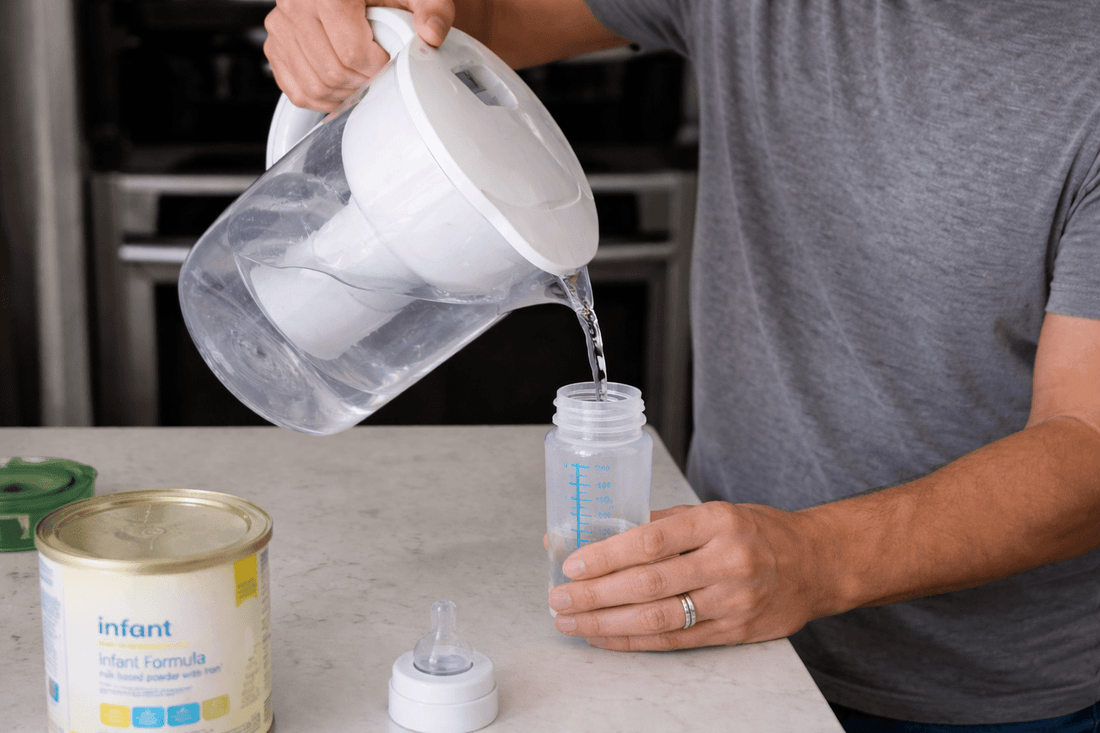
Filtered water is water that has passed through a filtration system to remove impurities such as chlorine, bacteria, lead, and other chemicals that can be present in tap water. There are various types of water filters, such as carbon filters, reverse osmosis filters, and distillation systems.³ If buying bottled water at the store, regardless of what system it has passed through, it will be labeled as filtered water. Some brands choose to include what filter they use on the label.
The Pros of Using Filtered Water for Baby Formula
1. Reduces Harmful Contaminants
Filtered water helps remove unwanted substances found in tap water, such as chlorine (added to kill bacteria), lead, and bacteria. Lead, for example, is a major concern in some areas, especially in older homes with aging plumbing. A high-quality filter or buying bottled filtered water can reduce or eliminate these potentially harmful substances.
2. Improved Taste and Smell
Some parents find that tap water has an unpleasant taste or smell due to chlorine or minerals.⁴ This could lead to your baby rejecting the powdered formula, as they can be incredibly picky when it comes to taste and smell. Filtered water, on the other hand, tends to have a fresher, neutral taste, which may make feeding time more pleasant for your baby if you find that they're rejecting the bottle.
3. Better Control Over Water Quality
If you’re using a water filter that’s regularly maintained and replaced, you can have peace of mind knowing the drinking water quality is being consistently controlled. In contrast, tap water quality can fluctuate depending on your local water supply.
Downsides of Filtered Water for Baby Formula
Filtered water is considered a safe option to use for making baby formula, but there are some considerations to keep in mind before using it.
1. Cost
Using tap water is essentially free. If you choose to use filtered water to make formula, you'll end up spending money on buying bottles from the store. For filtered water at home, you'll need to invest in the initial filtration system, as well as replacement filters over time. However, if your family already uses some type of filtration system, then there is less to consider.
2. Not All Filters Are Created Equal
Not all water filters remove the same contaminants, and may not be as efficient as others. Some may be effective at removing bacteria, chlorine, and lead, but they may not address other contaminants like pesticides or forever chemicals. Always check the specifications of your filter to ensure it removes the maximum amount of contaminants.
3. Remembering to change the filter
With a baby in the house, remembering to change the filter can easily slip your mind. When too much time has passed, your "filtered" water can become the equivalent of tap water. How frequently you should change filters depends on the brand, but many suggest every 2-3 months or after filtering 40-60 gallons of water.
When is Filtered Water Best for Baby Formula?
There are some situations where tap water is not considered safe, and you should only rely on filtered water or purified water for preparing infant formula:

What the Science Says: The Best Water Filters
Unfortunately, not all home water filters remove everything you might want to avoid. There are multiple style of home filters to choose from, including whole home systems that filter all water from the pipes, over or under the sink filters, and pitcher style filters. Whichever you opt for, here is some info to keep in mind:
1. Look for filters that have an absolute pore size of 0.3 micron or smaller to remove both bacteria, parasites, and amoebas.²
2. The Environmental Working Group found three water filters to remove 100% of PFAs, of forever chemicals: Travel Berky, Zero Water, and Clearly Filtered.
3. Gear Lab ran water quality lab tests and concluded that the under-sink filtration system, APEC ROES-50 Essence Series, was almost perfect in contaminant removal.
Conclusion
Most of the time, tap water is perfectly safe for baby formula. However, in certain situations, filtered water is the more ideal, and ensures that your baby has access to clean and safe nutrition. If you're unsure if your tap water is safe, test it, or call your local government office to confirm. Buying bottled, filtered water is one option, or a home filter can be purchased.
Is filtered water better than tap water for baby formula?
Tap water is generally safe to use for making baby formula. Filtered water can sometimes be a safer choice than tap water because it removes harmful contaminants such as chlorine, lead, and bacteria, making it a better water source for preparing infant formula.
Do I need to boil filtered water for baby formula?
If your baby is under three months old or is immunocompromised, the CDC recommends boiling water before mixing it with formula.
Can I use bottled water instead of filtered water for baby formula?
Yes, most bottled water is filtered water. Bottled purified water is also fine to mix with baby formula.
How can I know if my filter is working properly?
Check your filter’s specifications and replacement schedule. Many filters will have an indicator to show when they need to be replaced. It’s also a good idea to regularly test your water for contaminants.
Citations
1. Centers for Disease Control and Prevention. Infant formula preparation and storage. Updated December 19, 2024. Accessed April 19, 2026. https://www.cdc.gov/infant-toddler-nutrition/formula-feeding/preparation-and-storage.html
2. Centers for Disease Control and Prevention. Preventing waterborne germs at home. Updated March 15, 2024. Accessed April 19, 2026. https://www.cdc.gov/drinking-water/prevention/preventing-waterborne-germs-at-home.html
3. Culligan. Filtered water vs. tap water: what’s the difference? Published December 12, 2024. Accessed April 19, 2026. https://www.culligan.com/blog/filtered-water-vs-tap-water-whats-the-difference
4. Hague Quality Water of SoCal. Is LA tap water safe for babies and formula? A guide for parents. Published March 2024. Accessed April 19, 2026. https://www.haguewatersocal.com/post/is-la-tap-water-safe-for-babies-and-formula-a-guide-for-parents